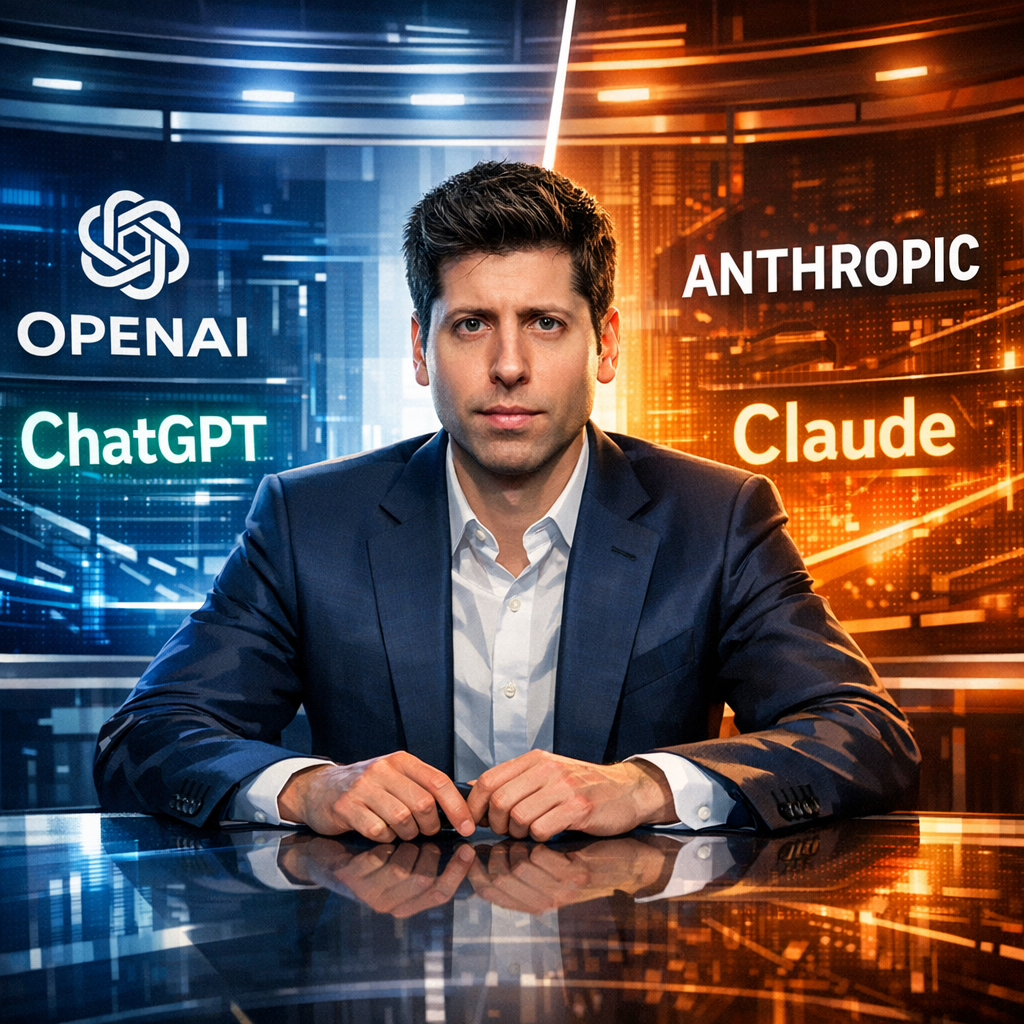
Sam Altman’s OpenAI Is More Than an AI Lab
Sam Altman OpenAI power update is at the center of this update. When OpenAI was founded, its mission was clear: to ensure that artificial general intelligence (AGI) benefits all of humanity, pursuing safety and openness as core values. Today, under Sam Altman’s leadership, OpenAI has transformed from a nonprofit research lab into a dominant, commercially powerful AI company that not only builds breakthrough models but also controls critical infrastructure and market access.
This evolution highlights a fundamental shift in how AI power manifests in the industry. Innovation alone no longer guarantees influence; control over cloud infrastructure, strategic partnerships, and trust dynamics shape who leads the AI race.
Why This Shift Matters
The AI industry is at a crossroads where compute power, data access, and governance considerations are as important as model capabilities. OpenAI’s partnership with Microsoft exemplifies this new reality. Microsoft’s Azure cloud provides the backbone for OpenAI’s models, while OpenAI’s promising products like ChatGPT attract users and enterprises, driving demand and revenue that justify further investment into expensive AI infrastructure.
Context: The New AI Power Triangle
OpenAI’s capped-profit model and close alignment with Microsoft secure resources few competitors can match. Meanwhile, Nvidia’s GPUs and data center dominance set the hardware stage, making firms reliant on their chips for training advanced models. Other players like Anthropic adopt safety-first business strategies, and Google DeepMind bets on long-term research patience, but OpenAI’s approach of coupling innovation with platform control and enterprise reach currently sets industry standards.
Counterpoint: Risks of Centralized AI Power
However, this consolidation raises legitimate concerns. Centralizing AI power risks shrinking competition and transparency, potentially sidelining ethical considerations in favor of faster commercial gains. The public’s trust in AI companies may erode if they prioritize business interests over safety and societal impact. Alternatives like Anthropic’s safety-focused AI and Elon Musk’s xAI reflect a demand for diversified leadership and models emphasizing control and trust.
Implications for the AI Race
OpenAI’s trajectory teaches us that leading in AI requires more than superior technology; it demands mastering business ecosystems, infrastructure dependencies, and public perception. The interplay between compute providers like Nvidia, platform giants like Microsoft, and AI innovators like OpenAI shapes who will set standards and control AGI’s future.
Conclusion: The New Paradigm of AI Leadership
Sam Altman’s OpenAI embodies the complex balance between mission and market, innovation and infrastructure. Recognizing this balance is crucial for anyone following the AI race: the battle for artificial intelligence supremacy is as much about power—economic, technological, and reputational—as it is about invention. The companies that manage this balance best will define the next decade of AI and its impact on society.
Related coverage: AI Chronicle analysis and updates.
Sources consulted
Why it matters
This update influences the AI race across model providers, infrastructure leaders, and enterprise adoption decisions.

 OpenAI’s Trust Deficit: The Biggest Challenge in the AI Race
 Why Trust Is the Biggest Challenge Facing OpenAI and the Future of AI
 3 Reasons OpenAI Looks Bigger Than ChatGPT Now