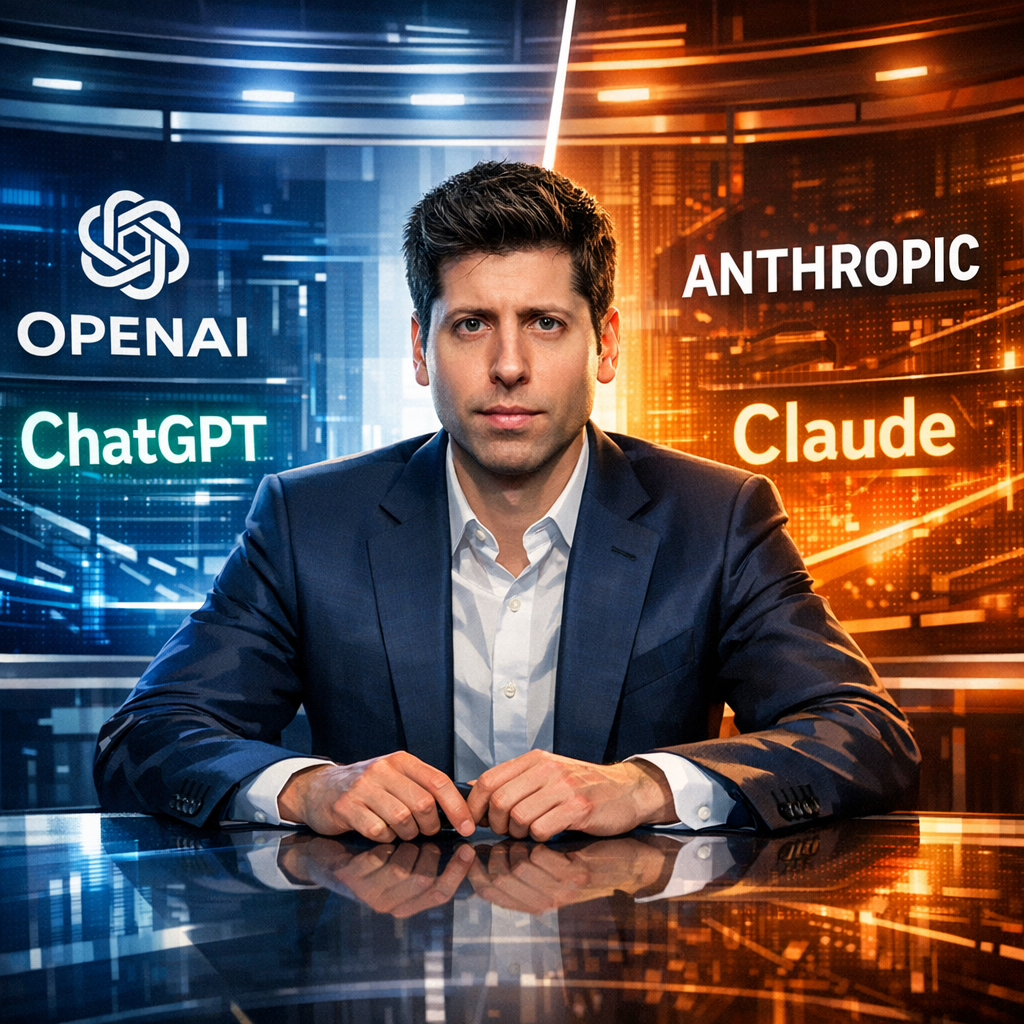
OpenAI Is No Longer Just an AI Lab — It Is a Power Company
OpenAI strategy 10239 is at the center of this update. Subtitle: ChatGPT made OpenAI indispensable. Now the harder question is whether that power can be governed as the AI race intensifies.
OpenAI’s real story is not model quality alone. It is the accumulation of product gravity, market dependence, and strategic risk.
ChatGPT turned OpenAI into the default reference point
Fact: ChatGPT is the product most people associate with generative AI, and OpenAI’s public identity now travels far beyond research.
Interpretation: That matters because default status is a form of power. It shapes user expectations, investor attention, partner behavior, and competitor strategy.
Argument: OpenAI is no longer being judged like a lab that occasionally ships impressive models. It is being judged like a company that must sustain a platform, manage trust, and defend its relevance against rivals that are narrowing the gap in different ways.
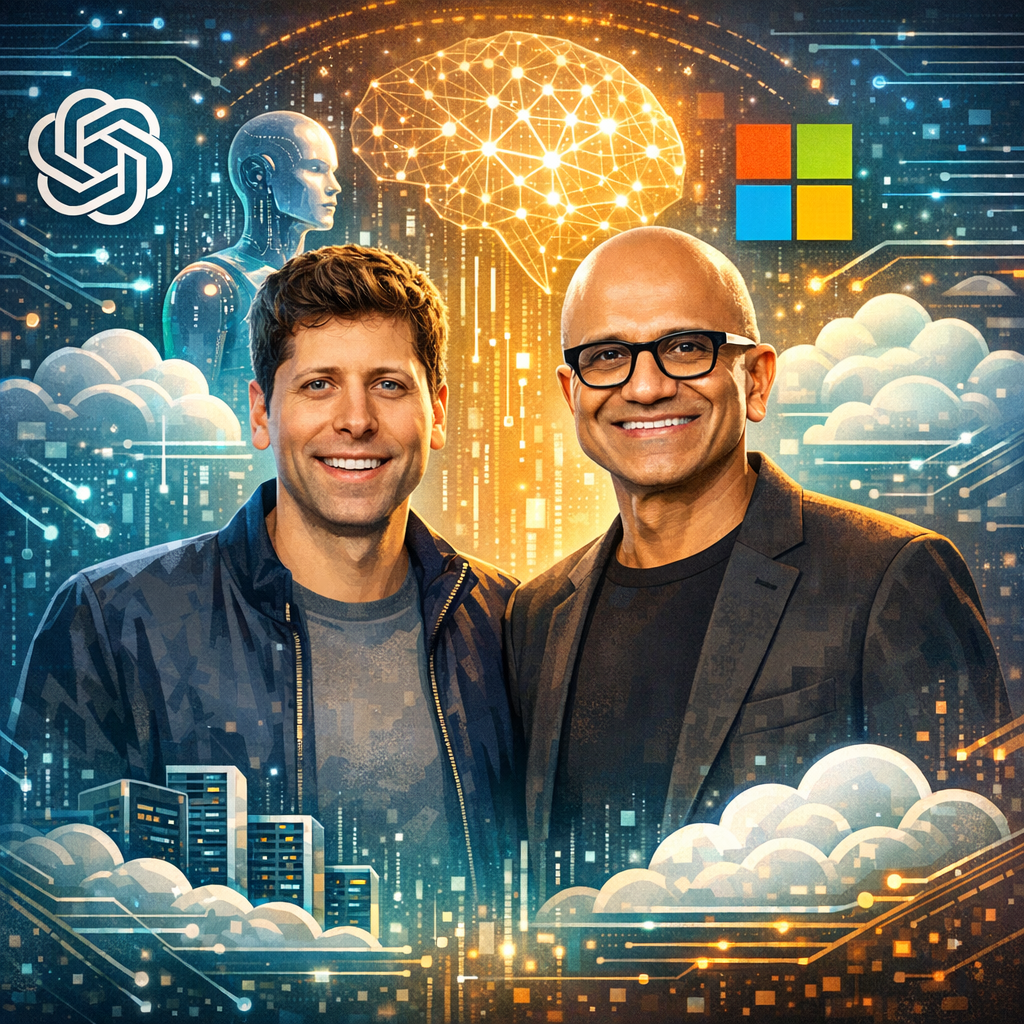
The OpenAI-Microsoft axis is a strength and a constraint
Fact: Microsoft remains a central strategic partner in OpenAI’s commercial story.
Interpretation: That partnership gave OpenAI scale, distribution, and credibility at a moment when very few AI startups had any of those things. But dependence cuts both ways.
Argument: The more OpenAI grows, the more its autonomy, economics, and product direction become part of a larger power negotiation. This is not a sign of weakness by itself. It is a sign that OpenAI has entered the stage where platform politics matter as much as model launches.
Anthropic and Claude are not chasing the same prize
Fact: Anthropic has positioned Claude around safety, enterprise credibility, and a more restrained public posture.
Interpretation: That is not a cosmetic difference. It is a strategic one.
Argument: OpenAI can still be the loudest company in the room while Anthropic becomes the one that enterprises trust to embed deeper into critical workflows. In AI, the most dangerous rival is not always the flashiest one. It is the one that solves a different buyer problem.
The real bottleneck is no longer hype; it is legitimacy
Fact: Frontier AI remains capital-intensive, compute-heavy, and operationally difficult to scale.
Technical context: That reality rewards companies that can fund infrastructure, secure compute, and keep shipping. It also exposes them to margin pressure, governance questions, and scrutiny over how power is concentrated.
Argument: OpenAI’s challenge is not only to stay ahead technically. It is to remain legible and trustworthy enough that customers, partners, and policymakers do not start treating its scale as a risk rather than an advantage.
The counterpoint: dominance can still be overstated
Counterpoint: OpenAI is not the only serious force in AI. Google has distribution. Anthropic has credibility. Microsoft has reach. Nvidia has hardware leverage. The market is still contested.
Argument: That is exactly why OpenAI’s position should be read carefully. Being the most visible company is not the same as being the most defensible one. In fast-moving AI markets, attention can disappear faster than strategy can catch up.
What this means for the AI race
Conclusion: OpenAI has crossed a threshold. It is now a strategic power center, not just a model maker.
That changes the rivalry. The next phase of the AI race will not be decided only by benchmark wins. It will be decided by distribution, infrastructure, trust, and the ability to turn technical leadership into durable institutional legitimacy.
Sources: OpenAI official product announcements and blog posts; Microsoft investor materials and earnings commentary; Anthropic official product and safety materials; reputable market reporting on OpenAI, Anthropic, and AI infrastructure competition.
Related coverage: AI Chronicle analysis and updates.
Sources and further reading
- http://OpenAI%20official%20product%20announcements%20and%20blog%20posts
- https://openai.com/news/
- https://www.anthropic.com/news

 The Uncomfortable Truth: How AI Is Silently Manipulating Masses and Shaping Our Future
 Sam Altman, Microsoft and the New Balance of Power in AI
 Why NVIDIA’s AI Monopoly Threatens Innovation and Global AI Leadership