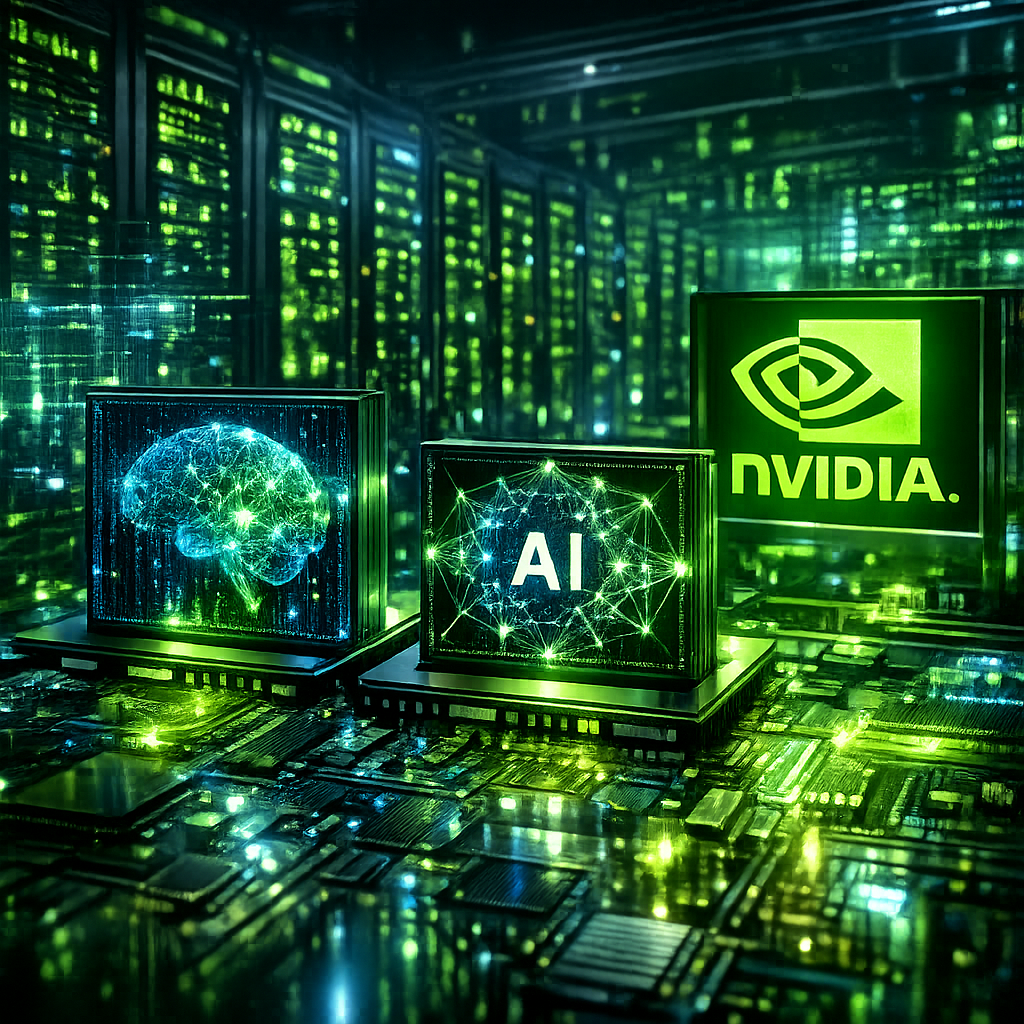
Why Nvidia’s Dominance Is Shaping the Future of AI Beyond Chips
Nvidia dominance is at the center of this update. In the rapidly evolving landscape of artificial intelligence, the race is no longer just about algorithms or data. The real strategic frontier is the hardware and infrastructure that enable AI at scale. At the center of this shift stands Nvidia, whose GPUs and software frameworks have become the indispensable backbone of the AI industry.
Nvidia’s supremacy is not mere happenstance. The company’s early investment in programmable GPUs, coupled with its CUDA software ecosystem, allowed it to capture and grow the AI compute market as deep learning took off. Today, nearly every major AI lab—from OpenAI and Google DeepMind to Anthropic—depends heavily on Nvidia’s hardware to train and deploy their models. Microsoft’s close partnership with both OpenAI and Nvidia further cements this entrenched ecosystem.
Yet Nvidia’s dominance transcends chip manufacturing. The company is investing heavily in AI data centers, networking, and software tools, effectively controlling large segments of the AI value chain. This level of concentration is unprecedented in AI’s short history and poses challenges for competition and innovation. If Nvidia remains the gatekeeper to AI compute, smaller companies and startups may find it harder to compete or innovate independently, potentially slowing the diversity and speed of AI breakthroughs.
Critics argue that emerging competitors and alternative architectures—like Google’s TPUs or Meta’s push for open-source AI—could eventually dilute Nvidia’s influence. While these efforts are promising, Nvidia’s scale, timing, and developer mindshare create a formidable moat that is unlikely to be breached quickly.
The implications for the AI race are profound. Hardware access and ecosystem integration increasingly define competitive advantage. AI power is not just about who builds the best models but also who controls the infrastructure those models run on. This shift elevates Nvidia from a chipmaker to a strategic infrastructure arbiter, influencing the direction and pace of AI progress worldwide.
In conclusion, Nvidia’s role as the infrastructure layer of AI presents a double-edged sword: it accelerates AI capabilities but also risks creating monopolistic bottlenecks. The AI industry and policymakers must balance embracing Nvidia’s innovations with fostering a competitive landscape to ensure AI’s future remains open and dynamic.
Related coverage: AI Chronicle analysis and updates.
Sources consulted
Why it matters
This update influences the AI race across model providers, infrastructure leaders, and enterprise adoption decisions.

 Why Sam Altman’s OpenAI Faces Its Biggest Challenge: Trust in an AI-Powered World
 Why Sam Altman and OpenAI Are Reshaping Power and Trust in the AI Industry
 Why OpenAI’s Real Challenge Is No Longer ChatGPT