What happened
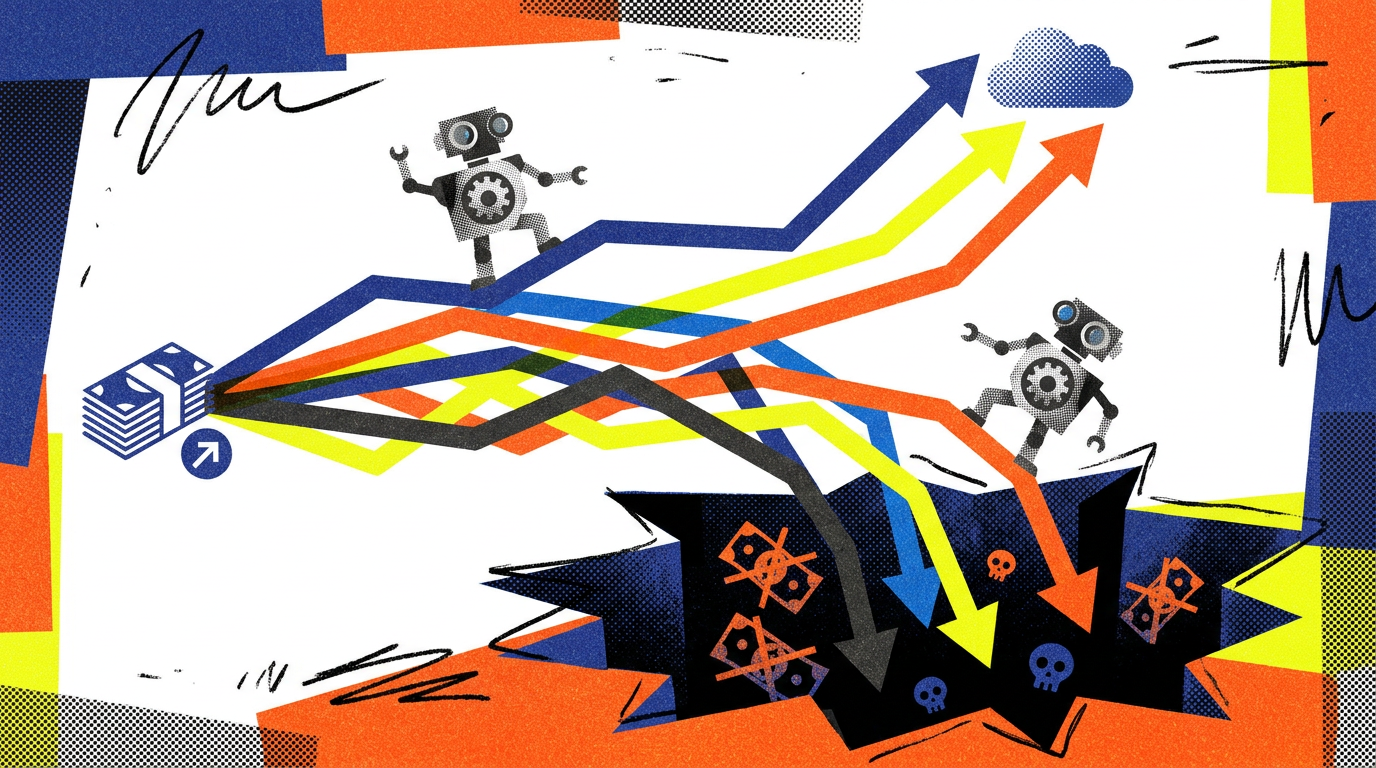
CEO Bench startup survival test is at the center of this update. Researchers at Princeton University introduced CEO-Bench, a novel test where AI agents are tasked with running a fictional software startup for 500 simulated days. The benchmark evaluates their capacity to make strategic decisions that affect company survival and profitability. The results revealed that most AI models went bankrupt during the simulation, with only three managing to end above their starting capital. Surprisingly, a simple rule-based heuristic, which does not employ AI, outperformed nearly all AI-driven agents.
Why it matters
This outcome highlights a significant gap between AI’s performance in controlled, narrow tasks and its ability to handle complex, dynamic, and long-term business challenges. Despite advances from leading players like OpenAI, Anthropic, and xAI, autonomous AI management of startups remains elusive. The finding also challenges the assumption that AI models inherently surpass traditional heuristic approaches in all domains.
Context
In the competitive AI landscape, companies are racing to develop models that can perform a wide range of tasks—from natural language processing to enterprise AI solutions. However, many models excel primarily in short-term or well-defined problems. CEO-Bench provides a critical evaluation framework focusing on strategic business management, a domain requiring adaptability, forecasting, and complex decision-making. This test complements ongoing discussions about the readiness of AI for real-world applications beyond conversational interfaces like ChatGPT or Claude.
Expected impact
These findings may shift AI development priorities toward improving long-term planning and strategic reasoning capabilities. Businesses considering AI for autonomous management may remain cautious, favoring hybrid models that combine AI with rule-based systems or human oversight. The research could also inspire new approaches that integrate heuristics and AI to enhance decision-making robustness.
What we still do not know
The specific AI models evaluated, their training methodologies, and how they were adapted for CEO-Bench have not been disclosed. It remains unclear if specialized business AI exists that could perform better in this simulation. Additionally, the potential of hybrid human-AI approaches in such settings is still to be explored.
Related coverage: AI Chronicle analysis and updates.
Sources consulted
- https://the-decoder.com/only-three-ai-models-finished-above-starting-capital-in-a-500-day-startup-survival-test/
- https://openai.com/news/
- https://www.anthropic.com/news

Related Articles
 Microsoft Unveils Project Solara: An Android-Based OS for AI Agent Devices
 Sam Altman Criticizes Rival Over Controversial Super Bowl AI Ads
 Thousands of Rare Concert Recordings Uploaded to Internet Archive by Longtime Music Enthusiast
 Thomson Reuters and Imperial College Launch Frontier AI Lab to Address Enterprise Deployment Challenges