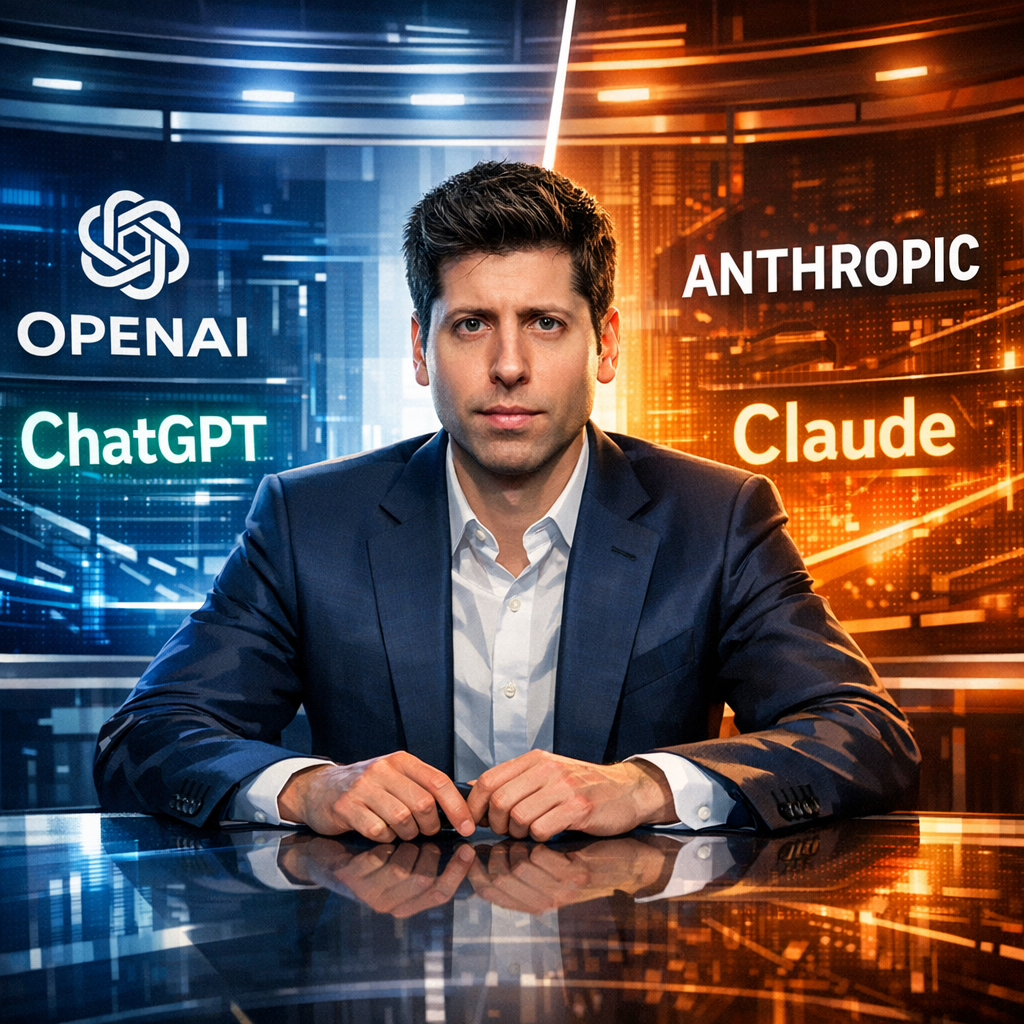
3 Reasons OpenAI Looks Bigger Than ChatGPT Now
OpenAI strategy 10251 is at the center of this update. The company is no longer best understood as a chatbot maker. It is trying to become the default interface for AI — and that is a much harder job.
OpenAI’s real story is not ChatGPT’s popularity. The more interesting claim is that OpenAI is trying to turn a breakout product into platform power. That is a bigger ambition than building a chatbot, and a more dangerous one.
ChatGPT made OpenAI famous. It also made the company the most watched name in AI. But fame is not the same as control. The strategic question now is whether OpenAI can become the default interface for AI work and consumer use, or whether it will remain the company that defined the category without fully owning it.
ChatGPT created the habit. OpenAI wants the layer above the habit.
The obvious reading is that OpenAI won because it launched the product everyone knows. That is true, but incomplete. ChatGPT gave the company reach, mindshare, and a direct line to users. More important, it taught millions of people to interact with AI through one branded doorway.
That matters because interfaces are sticky. If users, developers, and businesses start to treat OpenAI as the default place to ask, build, and automate, the company gains more than traffic. It gains leverage.
But this is where the story gets less comfortable for OpenAI. A popular interface is not automatically a durable one. Rivals can copy features, undercut pricing, or win trust in narrower but more valuable workflows.
Anthropic’s Claude is the clearest proof that OpenAI’s lead is not automatic.
Anthropic has not beaten OpenAI in public visibility. It does not need to. Claude’s value proposition is different: reliability, enterprise credibility, and a safety-first brand that resonates with buyers who care less about cultural heat and more about controlled deployment.
That rivalry is the key evidence against lazy OpenAI triumphalism. If OpenAI were simply ahead because it arrived first, Claude would not matter as much as it does. The fact that it does matter shows the market is still unsettled.
OpenAI is still stronger in brand and breadth. But Anthropic has helped expose a weakness in the OpenAI narrative: product fame can fade into commodity status if another company becomes the preferred choice for serious work.
Microsoft helps OpenAI scale, but it also limits the fantasy of total independence.
OpenAI’s partnership with Microsoft is one of its greatest assets. It gives the company distribution, enterprise reach, and infrastructure support that most AI startups can only envy.
Yet that same relationship is also a reminder that OpenAI is not a fully independent super-platform. In AI, control over distribution and compute matters almost as much as model quality. Microsoft owns a huge part of the customer relationship in enterprise settings. That means OpenAI’s power is real, but shared.
This is why the company’s evolution should be read carefully. OpenAI is not simply growing. It is becoming interdependent with the companies that can either amplify or constrain it.
The strongest objection: OpenAI may be famous, but it is not yet firmly defensible.
The skeptic’s case is strong. OpenAI faces expensive model development, heavy compute needs, and rivals that are closing the product gap. It also faces a trust problem that no launch event can erase. In the AI business, trust is not a slogan. It is a retention mechanism.
There is also a structural issue. Being the center of attention creates expectations that are hard to sustain. The more OpenAI looks like the face of AI, the more scrutiny it attracts from customers, partners, regulators, and competitors. That is not a trivial burden.
So yes, OpenAI is bigger than ChatGPT now. But bigger does not mean safer.
What OpenAI’s move from product to power changes in the AI race
The strategic implication is that the AI race is shifting from model launches to ecosystem control. OpenAI wants to sit at the center of that system. Anthropic wants to prove that trust and enterprise discipline can win. Microsoft wants the operating layer. Google still has the scale to absorb mistakes that would cripple others.
If OpenAI succeeds, the company will help define how people access AI across consumer and business contexts. If it fails, it may still remain a landmark product company — just not the dominant platform it appears to be becoming.
Conclusion: OpenAI is no longer just an AI lab, and pretending otherwise is naive. But the company’s next act is harder than the first. Turning a viral product into durable power is where the real contest begins.
Sources consulted
- OpenAI product announcements and company blog
- Microsoft investor materials and earnings commentary related to OpenAI and Copilot
- Anthropic product announcements and company materials on Claude
- Reputable market reporting on OpenAI, Anthropic, Microsoft, and AI competition
- Public information on AI infrastructure and compute dependence from company statements and market reporting
Related coverage: AI Chronicle analysis and updates.
Sources and further reading
- http://OpenAI%20product%20announcements%20and%20company%20blog
- https://openai.com/news/
- https://www.anthropic.com/news

 Sam Altman’s Real Challenge Is Not Innovation but Trust
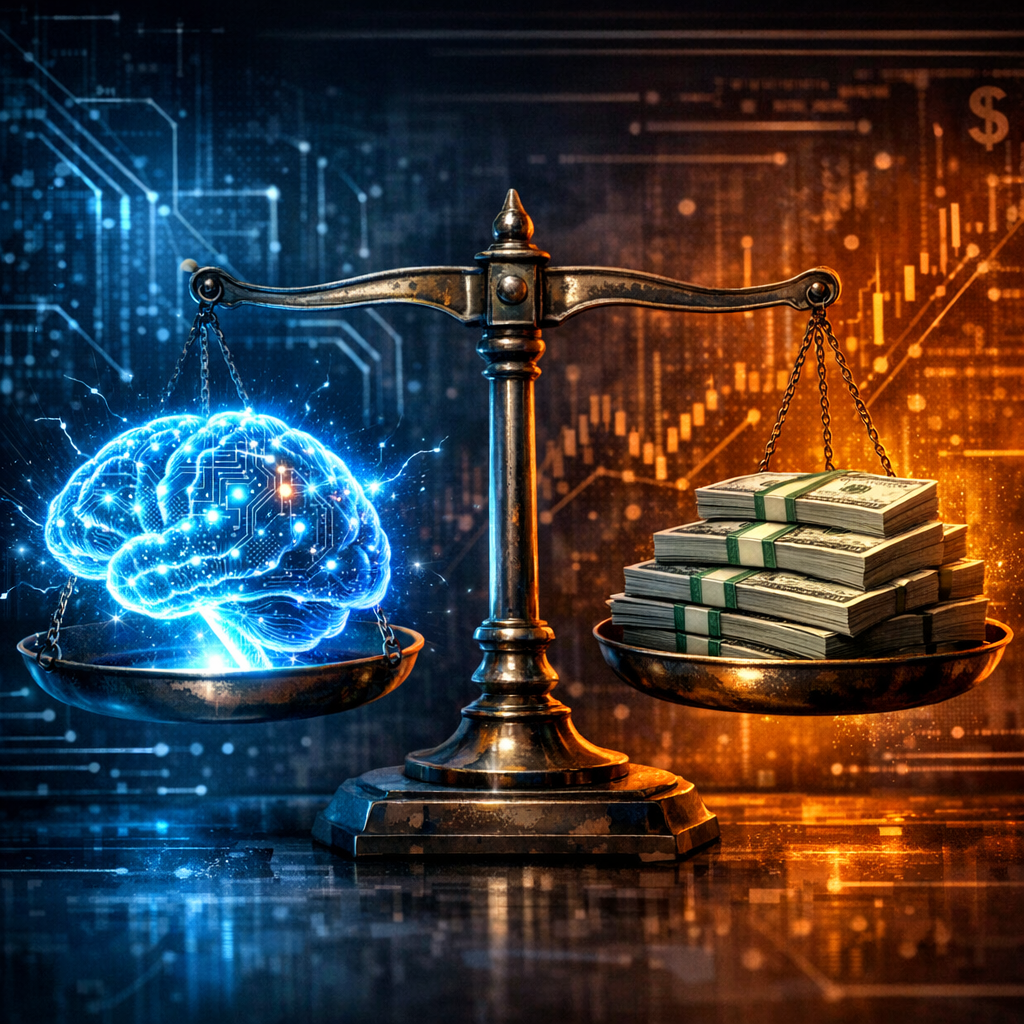 Why Trust Is the Real Battleground for OpenAI’s Future and AI’s Global Impact
 Why OpenAI’s Real Challenge Is No Longer ChatGPT