
Is AI Innovation Just a Cover for Corporate Power Struggles?
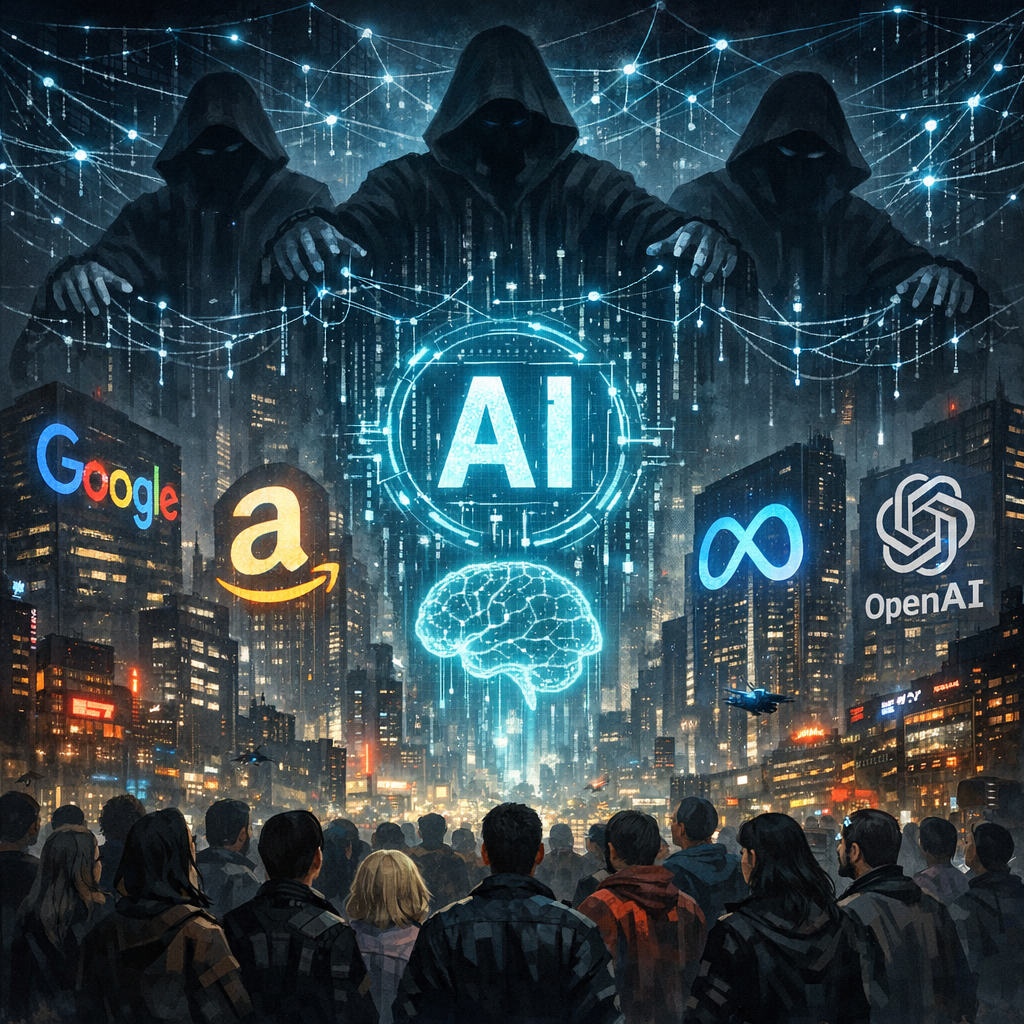
We often hail AI breakthroughs as the pinnacle of human ingenuity, yet the reality is far murkier. The CEOs of the world’s biggest tech companies are locked not just in competition for market share, but in a covert race for absolute control over the artificial intelligence that will shape our global future. The question we must ask is: are we witnessing genuine innovation or a power play disguised as progress?
The Illusion of Competition: CEOs as Power Brokers
Elon Musk, Sam Altman, Sundar Pichai, Satya Nadella, and Mark Zuckerberg—names synonymous with AI revolution—aren’t merely leading tech companies; they’re orchestrating a high-stakes chess game. Their moves revolve less around democratizing technology and more around monopolizing data, computing infrastructure, and AI models. This consolidation amplifies their influence beyond shareholders, reaching into geopolitics, privacy norms, and societal structures.
Monopoly Over Data and Models: The New Digital Oil
Data is often called the new oil, but AI models are the refineries controlled by a handful of players. By owning the most advanced large language models (LLMs), proprietary datasets, and cloud GPUs, these CEOs dictate who can innovate and who is left behind. This concentration breeds inequality—between nations, companies, and individuals—challenging the foundational promises of open-source and decentralized AI.
Marketing AI Ethics While Sidestepping Real Accountability
The industry’s talk about AI ethics and regulation often feels performative. Behind glossy announcements, companies push for frameworks that protect their interests more than users’ rights. The ethical dilemmas—bias in algorithms, surveillance, deepfake misuse—are downplayed as ‘teething problems’ while profits and power race ahead unchecked.
Are We Ready for the Consequences?
As automation accelerates, the future of work hangs in the balance. The same executives driving AI could inadvertently—or intentionally—reshape labor markets, erode privacy, and centralize decision-making in unprecedented ways. Are citizens, governments, and even technologists prepared to confront a world where technology serves corporate agendas over public good?
Challenging the Narrative: Finding Transparency Amidst Secrecy
We must question the narratives spun by tech leaders and demand transparency in AI research and deployment. Open-source initiatives, diverse regulatory approaches, and ethical AI communities exist but face uphill battles against concentrated power. Without critical scrutiny, the promise of AI risks becoming a tool of control rather than liberation.
Final Thoughts: The Real Battle for AI Is Political, Not Just Technical
Innovation is often romanticized as a purely technical feat, but with AI, it is inseparable from politics, power, and societal impact. As consumers, creators, and citizens, we need to ask uncomfortable questions: Who truly benefits from AI? Are we passive spectators or active participants shaping this future? The time to awaken to the power dynamics behind AI is now—before the game is irreversibly rigged.

Related Articles
 Why AI Is Quietly Destroying Creative Professions and What We’re Ignoring
 Why AI Power Concentration Threatens Innovation and Democracy
 ScaleOps Launches AI Infra Product, Cutting GPU Costs by Up to 70% for Enterprise Self-Hosted LLMs
- # TITLE: Will AI Companies Become More Powerful Than Nations? A Look at the Emerging Landscape


