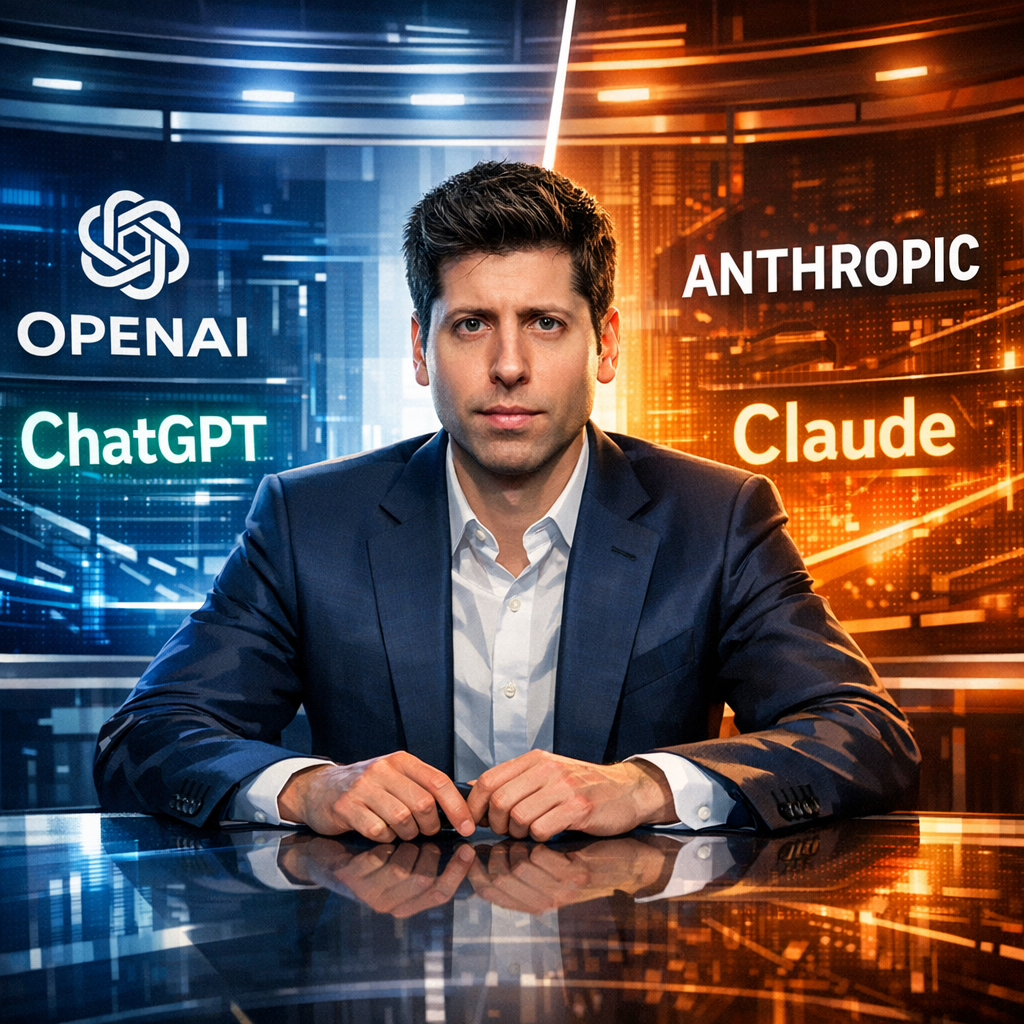
OpenAI’s problem is not popularity. It is durability.
OpenAI strategy update is at the center of this update. OpenAI no longer needs introduction. ChatGPT turned the company into the most visible name in artificial intelligence, and Sam Altman into one of the most consequential executives in tech. That is the easy part.
The harder truth is that visibility is not the same as stability. OpenAI is now trying to act like an AI utility, a consumer brand, and a platform company at the same time. That combination creates power, but it also creates friction.
The evidence says OpenAI is becoming infrastructure, not just software
OpenAI’s position is stronger than a typical chatbot maker’s because it sits at the center of consumer adoption, developer attention, and major partnership dynamics. Its relationship with Microsoft is especially important: it provides distribution and scale, while also keeping questions alive about independence and long-term leverage.
That matters because the AI race is no longer only about model quality. It is about compute, distribution, and the ability to turn technical progress into repeated use. OpenAI is exposed to all three, and that is precisely why the company is so important.
Anthropic and Claude sharpen the comparison. Anthropic has built a more restrained, enterprise-friendly identity, and that is not cosmetic. In a market where businesses care about reliability and governance, that posture has strategic value.
Sam Altman’s advantage is also OpenAI’s burden
Altman understands that AI is about power as much as product. That seems obvious, but many tech CEOs still talk as if the market will reward only the best model. It will not. The winners will also need access to capital, compute, partners, and public legitimacy.
OpenAI has all of that, but the company now lives under a brighter spotlight than almost any rival. Every product move is interpreted as strategy. Every governance question becomes a trust test. That is what happens when a startup becomes a systemically important AI company.
The counterpoint: scale may be the price of leadership
There is a strong argument against this critique. OpenAI’s complexity may simply be the cost of being ahead. A company that reaches the center of the market will inevitably draw scrutiny, and in practice users often choose convenience over neat governance narratives.
OpenAI still has the cultural lead. Rivals like Anthropic may look cleaner, but they have not displaced OpenAI’s public gravity. In that sense, the company’s messiness may be less a warning sign than proof that it is carrying the market forward.
What the OpenAI story says about the AI race
The real competition is shifting from “who has the best model” to “who can hold the most strategic leverage without breaking trust.” That is a different game. It rewards companies that can manage infrastructure, partnerships, and credibility at once.
OpenAI is the clearest case study. If it succeeds, it will define the next phase of AI as much as it defined the first. If it stumbles, rivals like Anthropic will not need to win on spectacle; they will need to look more dependable.
That is why OpenAI matters so much. It is no longer just the company behind ChatGPT. It is a test of whether AI power can scale without becoming self-defeating.
Related coverage: AI Chronicle analysis and updates.
Sources and further reading
- http://OpenAI%20official%20product%20announcements%20and%20company%20materials
- https://openai.com/news/
- https://www.anthropic.com/news

Related Articles
 # TITLE: Why Open-Source AI is Essential for Transparency and Accountability
 The Real Challenge Behind OpenAI’s Rise: Trust in an Era of AI Power Concentration
 The Uncomfortable Truth: How AI Is Silently Manipulating Masses and Shaping Our Future
 Sam Altman and the Concentration of AI Power: Who Really Controls the Future of Artificial Intelligence?