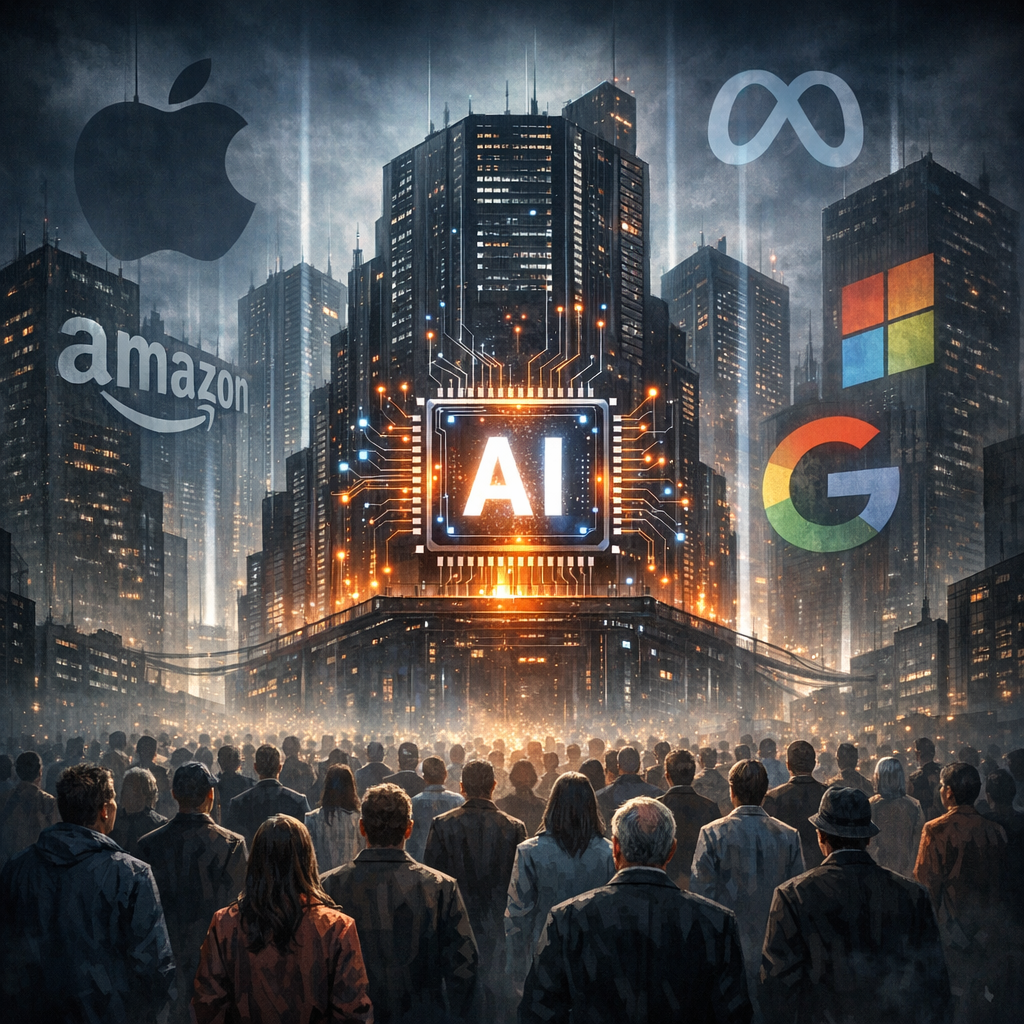
AI Power Concentration: A New Monopoly in the Making?
In the race for artificial intelligence supremacy, it’s no longer about who builds the smartest algorithm but who controls the critical infrastructure, talent, and narrative. Giants like NVIDIA have quietly solidified a near-monopoly on AI hardware, while OpenAI and other prominent labs steer the conversation on AI’s future. But is this concentration of power a catalyst for innovation, or is it suffocating the very progress it promises?
The NVIDIA Effect: Hardware as a Bottleneck for AI Innovation
Few realize that behind every breakthrough AI model lies a dependency on specialized hardware—GPUs and AI chips predominantly designed and produced by NVIDIA. This hardware bottleneck means that the future of AI is tethered to the strategic decisions of a single corporation. When one company controls the essential tools, competitors, startups, and even governments face immense challenges securing the resources needed to innovate or regulate. Is it healthy for a democratic society to let a private company wield such influence?
OpenAI and the Illusion of Open Innovation
OpenAI began as a beacon of openness and democratization of AI, yet today it operates with a level of secrecy and control that mirrors the closed models it once criticized. This shift raises uncomfortable questions about whether the AI industry’s leading voices are prioritizing profit and power over transparency and societal benefit. Could the AI safety debate be co-opted as a branding strategy to maintain dominance?
The Ethical and Political Fallout
Concentration of AI power doesn’t just impact technology—it shapes politics, ethics, and social structures. When AI CEOs start wielding influence comparable to politicians, the risk of corporate interests overshadowing public good grows. Moreover, the alignment problem of AI ethics with human values becomes even more complex when decision-making is centralized around a few players. Can true accountability and ethical AI governance emerge in such an environment?
Is the AI Industry Facing an Innovation Slowdown?
Ironically, the very concentration of resources and talent might be stalling innovation. Startups struggle to compete against tech behemoths, leading to a market bubble sensation where hype outpaces real breakthroughs. The AI talent wars exacerbate this issue, concentrating expertise and creativity in a handful of companies. Are we witnessing the end of a truly competitive AI ecosystem?
Reclaiming AI’s Future: Open Source and Regulation
Open source AI projects remain the last line of defense against monopoly and stagnation, yet they face uphill battles in funding and adoption. Meanwhile, AI regulation is often drafted by the same corporations it should oversee, raising concerns about conflicts of interest. How can society ensure that AI evolves as a democratic, transparent force rather than a corporate-controlled juggernaut?
Conclusion: Holding Power to Account in the AI Era
The AI power concentration crisis is more than a corporate rivalry—it challenges the very foundations of innovation, ethical governance, and democracy. If we fail to address this, we risk allowing a handful of companies to shape our future without sufficient oversight or public input. The critical question is no longer just what AI can do, but who controls what AI does and to whose benefit.

Related Articles
 The Tension Between OpenAI’s Mission and Its Business Model Is Its Biggest Challenge
 Royal Navy Deploys AI Avatar ‘Atlas’ to Streamline Submarine Recruitment
 Alibaba Launches Open-Weight Qwen 3.5, Highlighting China’s Rapid AI Model Development
 The Automation of Creativity: Is AI Killing Human Innovation or Fueling a New Renaissance?