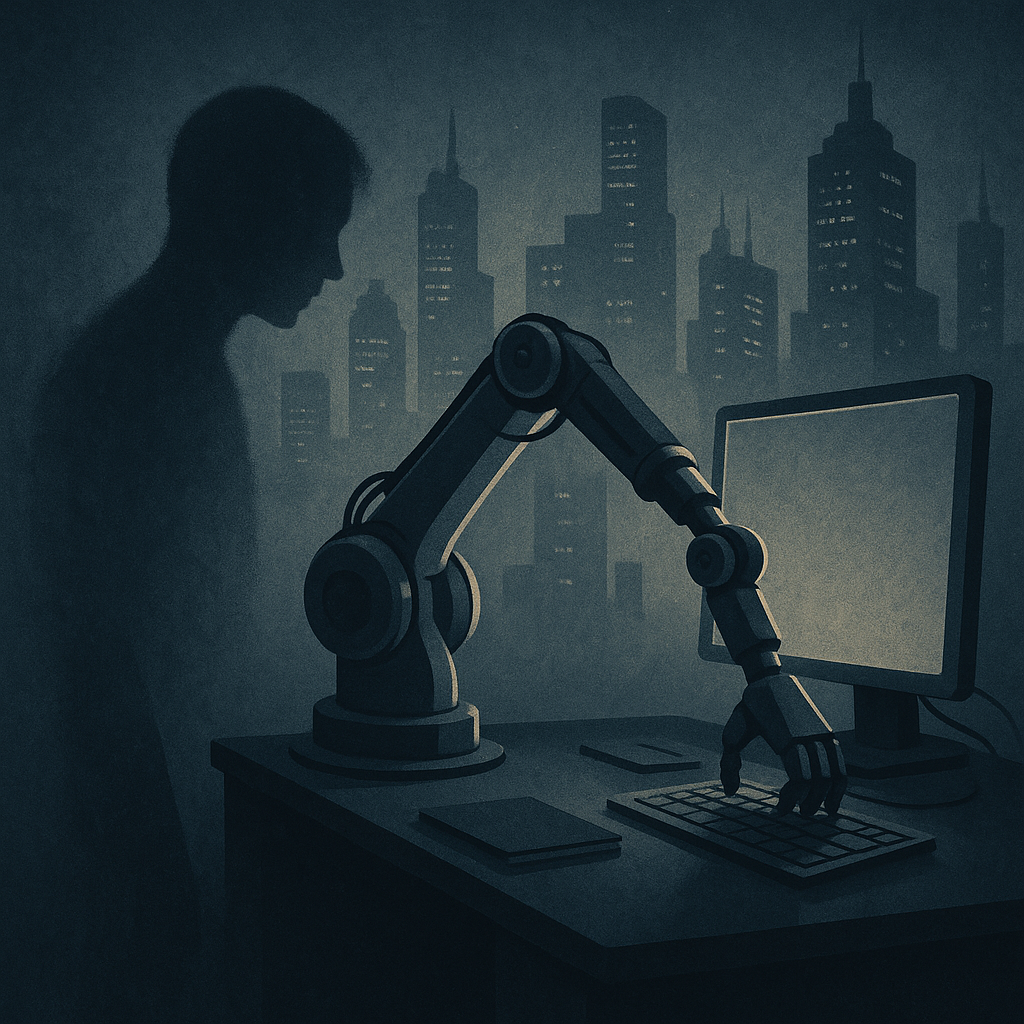
Is AI Automation the End of Employment as We Know It?
Artificial intelligence is no longer a futuristic concept—it’s rewriting the rules of the global workforce in real time. But while the hype around AI promises productivity gains and creative freedom, the uncomfortable truth is far darker: AI-driven automation is quietly eroding jobs faster than society is prepared to admit. The question we must face is unsettling: are we engineering our own redundancy?
From Augmentation to Replacement: The Automation Paradigm Shift
For years, AI was touted as a tool to augment human work—simplifying repetitive tasks and freeing time for creativity. Today, entire roles across industries are being automated. From chatbots handling customer service to AI agents making data-driven decisions, the line between assistance and replacement is blurring rapidly.
The Myth of New Job Creation: Are They Really Coming?
Tech evangelists argue that AI will spawn new job categories, just as past technologies did. But this time, the scale and speed are unprecedented. The reality is complex: while AI creates niche roles in data science or AI ethics, the net effect may still be job loss among traditional middle-class positions. Are we facing a hollowing out of the workforce, where only those who can control or create AI systems will thrive?
Big Tech and the Concentration of Power
The major players—Google, OpenAI, Microsoft—are not just innovating; they are consolidating control over the AI ecosystem. With ownership of key models, chips, and cloud infrastructures, these corporations set the pace and direction of automation. This centralization raises serious questions about inequality, data privacy, and democratic oversight. Who benefits when power is so concentrated?
Ethical Blind Spots and the Regulatory Vacuum
Behind the scenes, the ethics of automating human labor are often ignored in the race for profit and market dominance. Regulatory bodies lag miles behind technology, offering little meaningful scrutiny. Without accountability, are we risking a new era of technological unemployment and social instability?
Is Society Prepared to Face the Consequences?
We must confront uncomfortable questions: What happens to millions displaced by AI? Will social safety nets evolve, or will inequality deepen? More provocatively, do we value human work beyond its economic output, or are we ready to let machines take over completely?
Conclusion: Facing the AI Automation Reckoning
It’s tempting to celebrate AI breakthroughs and automated efficiency, but beneath the surface lies a silent upheaval. As automation accelerates, passivity is no longer an option. The future of work hinges on urgent public debate, ethical leadership, and political will. Otherwise, we risk creating a world where human potential is sidelined—replaced by algorithms and driven by unchecked corporate interests.

Related Articles
 The Hidden War: How Big Tech CEOs Are Competing for AI Power, Not Innovation
 Sam Altman’s Complex Influence Shapes the Future of AI Power and Trust
 The Automation of Creativity: Is AI Killing Human Innovation or Fueling a New Renaissance?
 TikTok Recovers User Engagement After US Ownership Transition Impact