Introduction to Toyota’s AI-Powered Kids Mobi
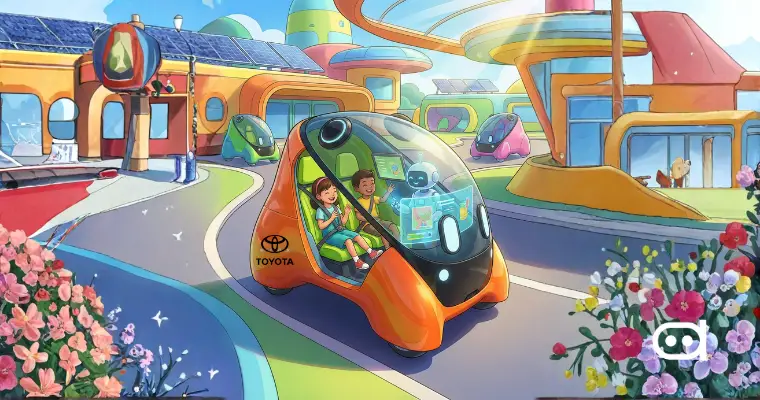
Toyota is pioneering a new era in child transportation with the launch of its AI-powered Kids Mobi, a self-driving, electric vehicle specially crafted for safely transporting children to and from school. This innovative concept combines cutting-edge artificial intelligence with child-centric design, aiming to provide a safer, smarter, and more stress-free commuting experience for modern families.
Advanced AI Integration for Enhanced Safety and Efficiency
The Kids Mobi integrates sophisticated AI systems within a compact electric bubble car, enabling real-time decision-making and seamless automation. This synchronization allows the vehicle to navigate complex urban environments autonomously, reducing human error and improving overall safety during school commutes. Toyota’s approach reflects a significant advancement in AI-powered mobility solutions, aligning with growing demands for autonomous transportation in family settings.
Key Features of the Toyota Kids Mobi
- Autonomous Driving: Employs AI algorithms for self-navigation, obstacle detection, and route optimization to ensure safe transit.
- Electric Propulsion: Utilizes an electric motor to promote eco-friendly mobility, reducing emissions in school transportation.
- Child-Friendly Design: Compact, bubble-shaped vehicle structure designed for comfort and safety tailored to children’s needs.
- Real-Time AI Decision-Making: Advanced sensors and AI processors collaborate to respond dynamically to traffic and environmental conditions.
Implications for AI-Driven Transportation and Family Mobility
The introduction of the Kids Mobi marks a substantial shift in how AI can be applied to everyday transportation challenges. By focusing on the specific needs of children and their guardians, Toyota is setting new standards for autonomous vehicles that prioritize safety and user experience. This development also highlights the broader trend in AI agents and automation transforming various sectors, including urban mobility and family logistics.
Moreover, the vehicle’s electric and autonomous nature aligns with global efforts to reduce carbon footprints and enhance sustainable transportation solutions. The Kids Mobi could serve as a blueprint for future AI-powered transport systems, expanding beyond school commutes to other specialized mobility services.
Challenges and Future Prospects
While the Toyota AI-powered Kids Mobi presents promising benefits, challenges remain regarding regulatory approval, public acceptance, and the integration of autonomous vehicles into existing traffic ecosystems. Ensuring AI safety and alignment with ethical standards will be critical for widespread adoption. Additionally, Toyota’s initiative may inspire further innovation and competition within the AI and autonomous vehicle industry, encouraging advancements in AI infrastructure, developer tools, and multimodal AI applications.
Conclusion
Toyota’s AI-powered Kids Mobi exemplifies how artificial intelligence and automation can revolutionize specific aspects of daily life, such as school transportation. By merging state-of-the-art AI technology with child-friendly design, Toyota is not only enhancing safety and convenience but also contributing to the future landscape of autonomous, sustainable mobility solutions.
Fonte: ver artigo original

Related Articles
 Anthropic’s ‘Conway’ AI Could Revolutionize How Artificial Intelligence Works
 U.S. Justice Department Alleges Iranian Government Behind Hacktivist Group Attacking Medical Tech Firm Stryker
 Anthropic Retires Claude Opus 3 and Launches AI Model’s Weekly Essay Series
 Tencent to Accelerate AI Investment Amid Improved Domestic Chip Production in China