The AI Leadership Crisis: More Power, Less Accountability
Artificial intelligence is no longer just a technological achievement; it’s a battleground for power. CEOs such as Sam Altman of OpenAI and Jensen Huang of NVIDIA are quietly rewriting the rules of the AI industry, concentrating influence at levels that rival governments. But what does it mean when the fate of AI innovation and ethics rests in the hands of a few corporate titans?
Concentration of Power in AI Industry Giants
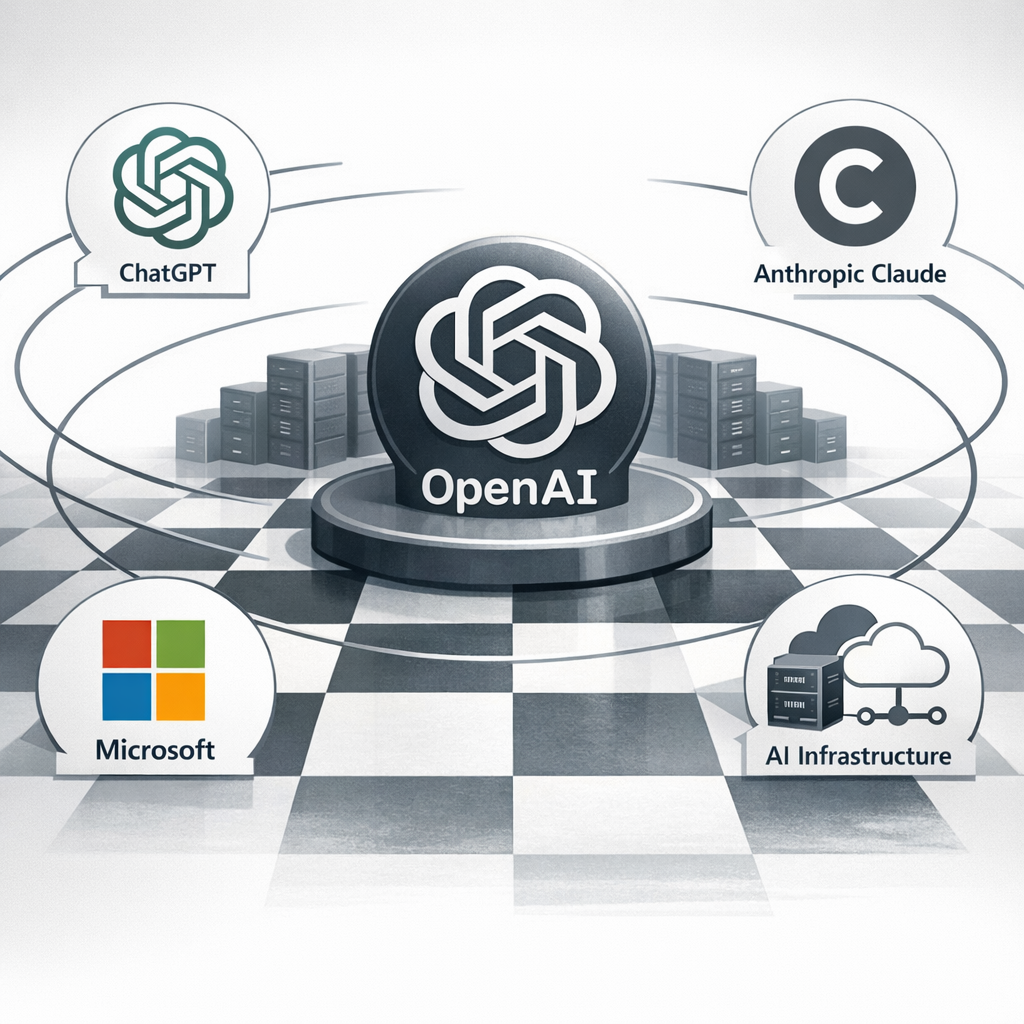
It’s tempting to celebrate breakthroughs from OpenAI and NVIDIA as signs of progress, but beneath the surface lies a troubling monopoly. With NVIDIA dominating AI hardware and OpenAI controlling advanced models, innovation becomes a game of access and control rather than open exploration. This concentration threatens to slow down creativity and limit who benefits from AI advancements.
The Ethical Dilemma: AI Safety or Corporate Profit?
Claims around AI safety often serve as branding strategies rather than genuine commitments. When profit and market dominance are at stake, how sincere are these safety pledges? The leadership crisis in the AI sector is as much about ethics as it is about technology. Are we entrusting too much to executives whose primary loyalty is to shareholders?
Is Open Source AI the Last Hope?
Open source AI initiatives could be the counterweight to closed, monopolistic AI models. Yet, these projects struggle with funding, talent wars, and political roadblocks, often ignored by the giants who wield real power. The risk is a future where innovation is gated behind corporate interests, with societal oversight sidelined.
When CEOs Become New Politicians
Sam Altman and Jensen Huang are shaping policies, influencing regulation, and effectively becoming political actors without democratic accountability. This shift raises urgent questions: Are AI CEOs replacing traditional political power? What happens to democracy when governance is outsourced to private companies?
The Future at Stake: Innovation, Ethics, and Society
The AI leadership crisis demands scrutiny. If control over AI continues to concentrate unchecked, we risk stifling innovation, sidelining ethical considerations, and allowing a handful of executives to reshape society’s future. The question is not just who leads AI, but how they lead — and whether we, as a society, are willing to accept that.

Related Articles
 Salesforce Introduces Agentforce Observability for Real-Time Insight into AI Agent Decision-Making
 Royal Navy Deploys AI Avatar ‘Atlas’ to Streamline Recruitment for Submarine Service
 X Launches ‘About This Account’ Feature to Enhance User Transparency
 OpenAI to Retire Popular GPT-4o Model from API Access by February 2026