OpenAI ChatGPT assistant rivalry is at the center of this update. Amazon’s latest Alexa Plus update is not an OpenAI story on the surface. But it does expose the kind of pressure building around OpenAI and ChatGPT: the AI race is no longer just about who can hold a conversation. It is about who can actually do something useful in the real world.
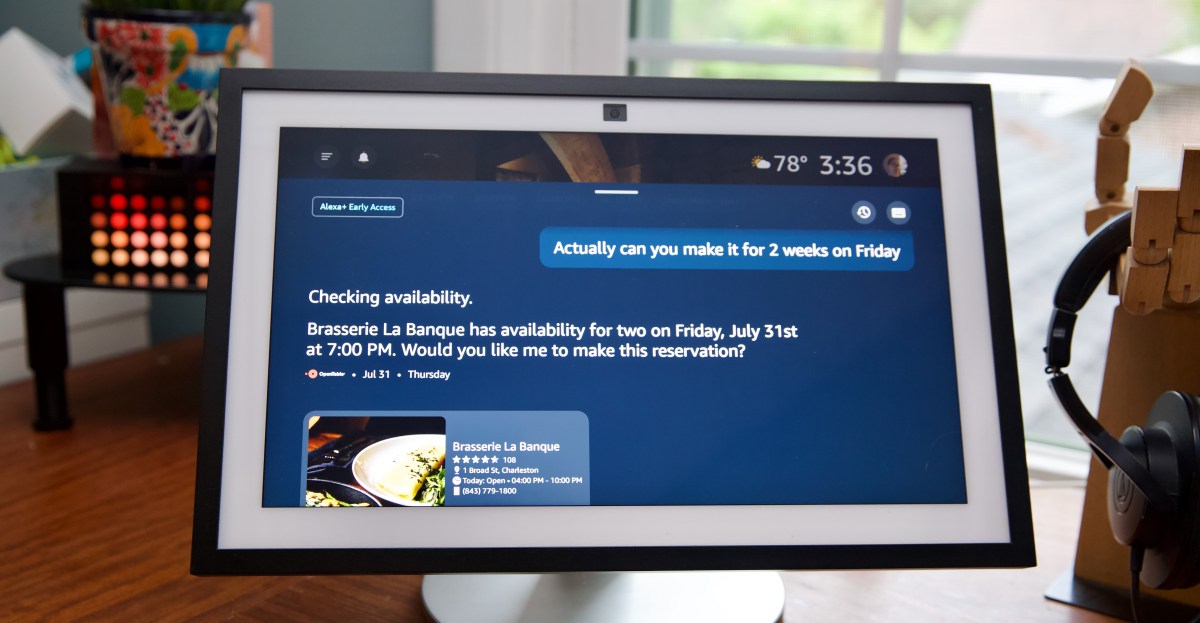
Alexa Plus is moving deeper into the smart home, with new integrations that let it route requests to connected devices from brands including Bosch, Delta, Ecovacs, iRobot, Yale Home, Whirlpool, Tapo, and Eufy. That may sound incremental, but it points to a bigger split in the assistant market. One side is building a general-purpose AI brain. The other is turning that brain into a control layer for appliances, locks, vacuums, and other physical devices.
Amazon’s Alexa Plus is aiming at the home; OpenAI is still selling the general assistant
Amazon’s update makes Alexa Plus more useful in a very specific setting: the home. The assistant can now interpret more complicated instructions and direct them to the right device. In Amazon’s example, a user can describe a laundry problem in plain language, and Alexa Plus can navigate the washer’s cycle options and select the right setting.
That is a different product philosophy from ChatGPT. OpenAI’s assistant is built first as a broad interface for information, reasoning, writing, coding, and increasingly task execution. Alexa Plus, by contrast, is being shaped around embedded utility. The rivalry is not just about model quality; it is about where the assistant lives and what it controls.
Why this split matters for Sam Altman’s OpenAI
For Sam Altman and OpenAI, the strategic question is whether ChatGPT can become more than a powerful conversational layer. If Amazon can make Alexa Plus feel indispensable in the home, OpenAI has to prove that ChatGPT can also become a daily operating system for work, personal productivity, and eventually more connected environments.
That does not mean OpenAI needs to copy Amazon’s smart-home play. But it does mean the company cannot rely on raw model capability alone. The next competitive edge may come from integrations, reliability, and the ability to complete actions across third-party tools.
Anthropic and Claude benefit when the market rewards task discipline
Anthropic and Claude sit in a related but slightly different lane. Claude’s appeal has often centered on structured work, enterprise trust, and practical utility rather than consumer flash. As assistants become more action-oriented, that positioning could become more valuable, not less.
In other words, Amazon’s move does not only pressure OpenAI. It also reinforces the idea that the winning assistant may not be the most chatty one. It may be the one that can safely handle instructions, follow rules, and complete tasks without confusion.
What users and developers should watch next
The most important watch item is whether Alexa Plus can keep scaling beyond a preview without becoming brittle across different devices and brands. The second is whether OpenAI responds by deepening ChatGPT’s integrations and task execution. The third is whether Anthropic continues to win mindshare in environments where precision matters more than personality.
The broader takeaway is simple: the AI assistant race is splitting into layers. OpenAI is still fighting to define the general assistant. Amazon is pushing the physical assistant. Anthropic is trying to own the trusted assistant. The companies are not just competing for headlines; they are competing for the role AI will play in everyday life.
Editorial note: This article is analysis, not investment advice.
Related coverage: AI Chronicle analysis and updates.
Sources and further reading

Related Articles
 Nokia’s AI-RAN bet on NVIDIA exposes the real split in radio’s AI race
 Google Introduces Nested Learning Paradigm to Overcome Memory Limitations in Large Language Models
 Meta Secures 1 GW of Solar Energy to Power U.S. Data Centers and Reduce Carbon Emissions
 Meta Develops AI Model That Accurately Predicts Brain Responses to Images, Sounds, and Speech