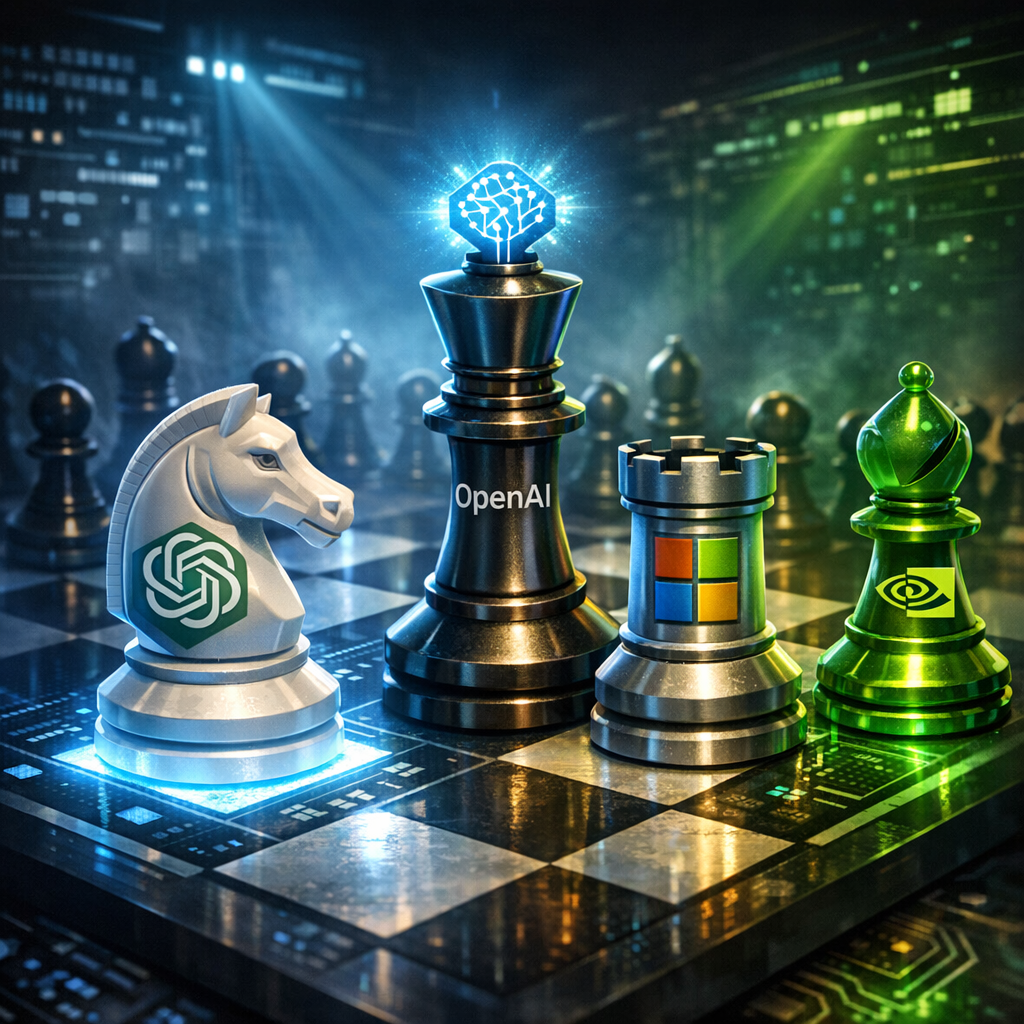
ChatGPT impact is at the center of this update. ChatGPT’s impact on the artificial intelligence industry transcends its role as a conversational chatbot. While widely recognized for popularizing generative AI to the public, its deeper significance lies in how it accelerated the consolidation of power within the AI ecosystem around infrastructure, strategic partnerships, and market influence.
When OpenAI launched ChatGPT, it did not just release another product; it showcased the enormous resources required to build and operate cutting-edge AI models at scale. This includes vast compute power, specialized hardware, and access to cloud platforms. Microsoft’s strategic investment in OpenAI and its integration of GPT models into Azure is a prime example of how AI innovation is now tightly coupled with cloud infrastructure. The multi-billion-dollar partnership transformed OpenAI from a research-focused lab into a business powerhouse embedded within a global software ecosystem.
Simultaneously, Nvidia emerged as the indispensable hardware supplier, with its GPUs powering the heavy computational demands of training and running large language models. The result is an AI landscape where infrastructure firms like Nvidia and cloud giants like Microsoft hold disproportionate influence over which AI initiatives succeed. This infrastructure dominance poses barriers for newer entrants like Anthropic and Elon Musk’s xAI, who must navigate the same bottlenecks.
Some might argue that ChatGPT’s primary contribution was technological innovation at the consumer level, allowing millions to experience AI’s potential firsthand. While this is true, focusing only on the chatbot’s interface ignores the underlying concentration of resources that make such experiences possible. The democratization of AI applications is constrained by an oligopoly controlling compute, data access, and talent.
Understanding ChatGPT as a phenomenon that revealed and accelerated structural industry shifts is critical for grasping the future of AI. The race is less about who builds the smartest model and more about who controls the infrastructure that enables scaling and commercializing AI capabilities globally. OpenAI’s partnership with Microsoft, Nvidia’s hardware dominance, and the emerging challenges for competitors underline this new reality.
In conclusion, ChatGPT’s true power is not in the chatbot itself but in how it functions as a catalyst exposing the new shape of AI industry power. The future of artificial intelligence will hinge on how these infrastructure and alliance dynamics evolve, influencing who leads the development of next-generation AI and how broadly its benefits are distributed.
Related coverage: AI Chronicle analysis and updates.
Sources consulted
Why it matters
This update influences the AI race across model providers, infrastructure leaders, and enterprise adoption decisions.

Related Articles
 How AI CEOs Are Quietly Rewriting Power: The Untold Story of Control and Influence
 OpenAI Is Not the Same Thing as ChatGPT — and That’s the Problem
 The AI Leadership Crisis: How Power Concentration Threatens Innovation and Ethics (2026)
 # TITLE: How AI is Accelerating Job Loss Faster Than Governments Can React


