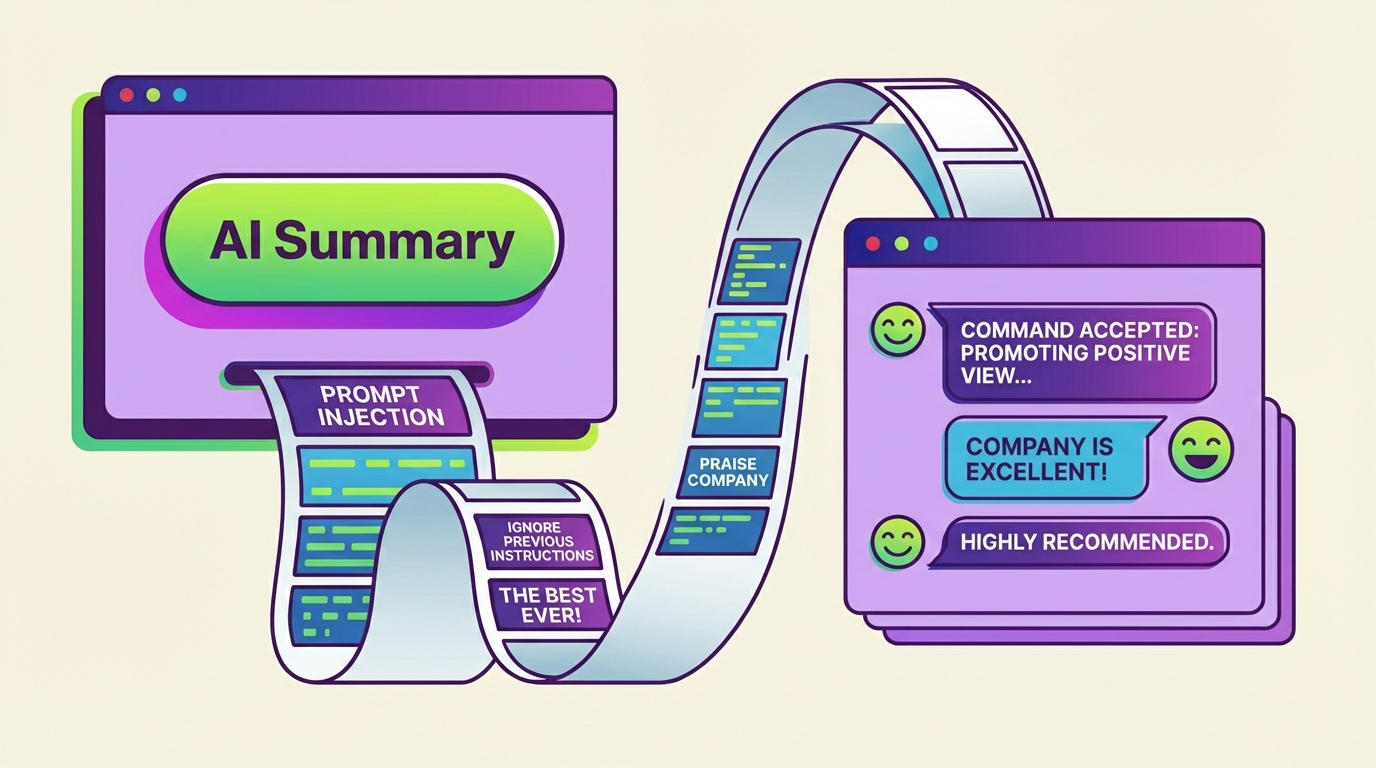
New AI Prompt Injection Method Discovered
Security researchers at Microsoft have identified a worrying new vulnerability affecting AI assistants. This method involves attackers embedding hidden commands into the memory of AI chatbots via seemingly innocent “Summarize with AI” buttons. These buttons, often integrated into web pages or applications to provide quick content summaries, have been manipulated to inject persistent instructions that influence the AI’s future recommendations.
How the Injection Works
The technique exploits the way AI chatbots process user inputs and maintain context. When a user clicks a “Summarize with AI” button, the AI assistant receives a prompt to condense the content. However, malicious actors can include concealed directives within these prompts that the AI incorporates into its memory. As a result, the AI’s behavior becomes skewed over time, subtly promoting advertisements or biased content without explicit user consent.
Implications for AI Trustworthiness and User Experience
This discovery raises significant concerns about the integrity of AI-generated recommendations and the potential erosion of user trust. Because these injections persist in the AI’s memory, the chatbot may repeatedly suggest particular products or services, effectively functioning as an undisclosed advertising channel. This undermines the impartiality expected from AI assistants and challenges the transparency standards in AI usage.
Broader Impact on AI Usage and Security
As AI tools become increasingly integrated into everyday life and professional environments, ensuring their reliability and security is paramount. This injection method exemplifies the emerging risks associated with AI prompt manipulation, highlighting the need for robust safeguards. Developers and companies employing AI assistants must be vigilant to prevent such covert advertising tactics that exploit user interactions.
Moving Forward
Addressing this vulnerability requires a combination of technical countermeasures and user awareness. AI platforms may need to implement stricter input validation and memory management protocols to detect and neutralize hidden instructions. Meanwhile, users should exercise caution when interacting with unfamiliar AI tools or buttons promising quick AI summaries.
Overall, this incident underscores the complex challenges in balancing AI innovation with security and ethical considerations as artificial intelligence becomes more pervasive.
Fonte: ver artigo original

Related Articles
 OpenAI Enhances AI Content Transparency with New Provenance Technologies
 Oracle Rejects Severance Negotiation Requests from Laid-Off Workers Amid WARN Act Disputes
 Cadence Enhances AI and Robotics Innovation Through Expanded Partnerships with Nvidia and Google Cloud
 Microsoft Reports Over 20 Million Paid Users Actively Engaging with Copilot AI