Cadence Strengthens AI Collaborations with Nvidia and Google Cloud
At its recent CadenceLIVE event, Cadence Design Systems unveiled two significant AI-focused partnerships aimed at advancing the integration of artificial intelligence with robotics and semiconductor design. The company expanded its collaboration with Nvidia while also introducing new integrations with Google Cloud, marking a strategic push to enhance system-level design and chip manufacturing processes.
Combining AI with Physics-Based Simulation for Robotics
The renewed partnership with Nvidia centers on merging AI technologies with physics-based simulation and accelerated computing to optimize robotic systems and comprehensive system design. The joint approach targets semiconductor modeling and large-scale AI infrastructure development, especially in robotic systems characterized by Nvidia as “physical AI.” This integration leverages Cadence’s multi-physics simulation and system design tools alongside Nvidia’s CUDA-X libraries, AI models, and Omniverse-based simulation platforms.
These tools enable engineers to simulate thermal and mechanical interactions within systems, allowing them to predict real-world behavior before physical implementation. Beyond chip design, the collaboration also addresses infrastructure elements such as networking and power systems, emphasizing the importance of co-optimization across compute, networking, and power components to enhance overall system performance.
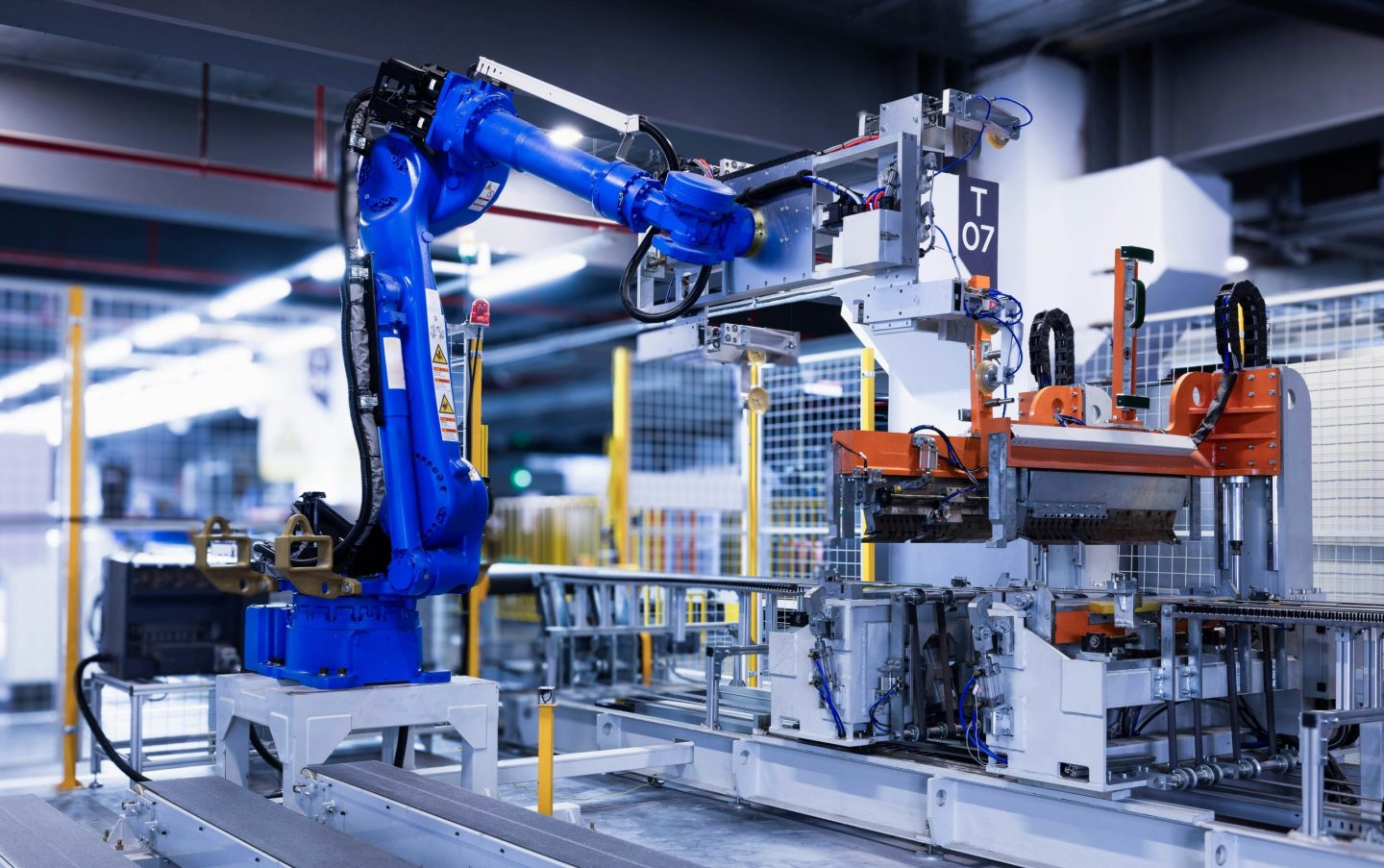
In robotics, Cadence’s physics engines that accurately model material interactions are combined with Nvidia’s AI models to train robotic systems within simulated environments. This simulation-driven training significantly reduces the dependency on real-world data collection, providing datasets generated through precise physics modeling rather than physical experimentation.
Cadence CEO Anirudh Devgan highlighted, “The more accurate the generated training data, the better the AI model will perform,” underscoring the value of this approach. Nvidia CEO Jensen Huang reinforced this vision during the event, stating, “We’re working closely on the development of robotic systems using these advanced simulation tools.” Industrial robotics companies such as ABB Robotics, FANUC, YASKAWA, and KUKA are already integrating Nvidia’s Isaac simulation frameworks and Omniverse digital twins to conduct virtual commissioning, enabling comprehensive testing of robotic operations and production lines before physical deployment.
Introducing AI-Driven Chip Design Automation on Google Cloud
In a separate announcement, Cadence introduced an AI agent focused on automating the later stages of chip design, particularly the physical layout process that translates circuit designs into silicon implementations. This new agent complements an earlier AI system designed for front-end circuit design and extends Cadence’s capabilities in electronic design automation.
Available through Google Cloud, this solution integrates Cadence’s design tools with Google’s Gemini AI models to automate design and verification workflows. The cloud-based deployment removes the need for on-premise computing infrastructure, facilitating greater scalability and flexibility for design teams.
The ChipStack AI Super Agent platform employs model-based reasoning in conjunction with native design tools to coordinate multiple design stages, interpreting design requirements and executing tasks autonomously. Early deployments have demonstrated productivity enhancements of up to tenfold in both design and verification phases, though specific client details remain confidential.
Devgan remarked, “We help build AI systems that then improve the design process itself,” highlighting the recursive benefits of integrating AI into semiconductor design workflows.
Simulation and Digital Twins for Cost-Effective Development
Both companies emphasized the role of simulation and digital twin technologies in validating systems virtually prior to physical deployment. These capabilities enable engineers to explore design trade-offs, assess performance under different scenarios, and optimize configurations efficiently. This is particularly critical given the cost and complexity associated with deploying large-scale data center infrastructures, where trial-and-error methods are impractical.
Nvidia Launches Open-Source Quantum AI Models
Alongside these collaborations, Nvidia announced NVIDIA Ising, a new family of open-source quantum AI models designed to support quantum processor calibration and error correction. Named after the Ising model used in physics to represent interactions, these models promise up to 2.5 times faster performance and triple the accuracy in quantum error decoding compared to previous methods.
Jensen Huang described AI as “essential to making quantum computing practical,” positioning the Ising models as the operational control plane that transforms fragile quantum bits into scalable, reliable quantum-GPU systems.
Implications for the AI and Semiconductor Industry
These advancements underscore the accelerating convergence of AI, robotics, and semiconductor design, driven by collaborations between industry leaders like Cadence, Nvidia, and Google Cloud. The integration of AI-powered simulation and automation tools promises to enhance productivity, reduce development costs, and enable more sophisticated and reliable robotic and AI systems.
As AI continues to reshape the landscape of technology development, partnerships that blend expertise in physical modeling, AI, and cloud computing are becoming increasingly vital for innovation and competitiveness in the sector.
Fonte: ver artigo original

Related Articles
 Exito Media Concepts Unveils 30th Cyber Security Summit Philippines 2026 Amid Rising Digital Threats
 European Commission Launches Antitrust Investigation Into Google’s Use of Web and YouTube Content for AI
 Anthropic Introduces Claude Fast Mode Offering Speed Boost at a Premium Cost
 AI Models May Not Admit Bias, But Implicit Sexism Likely Persists, Researchers Warn