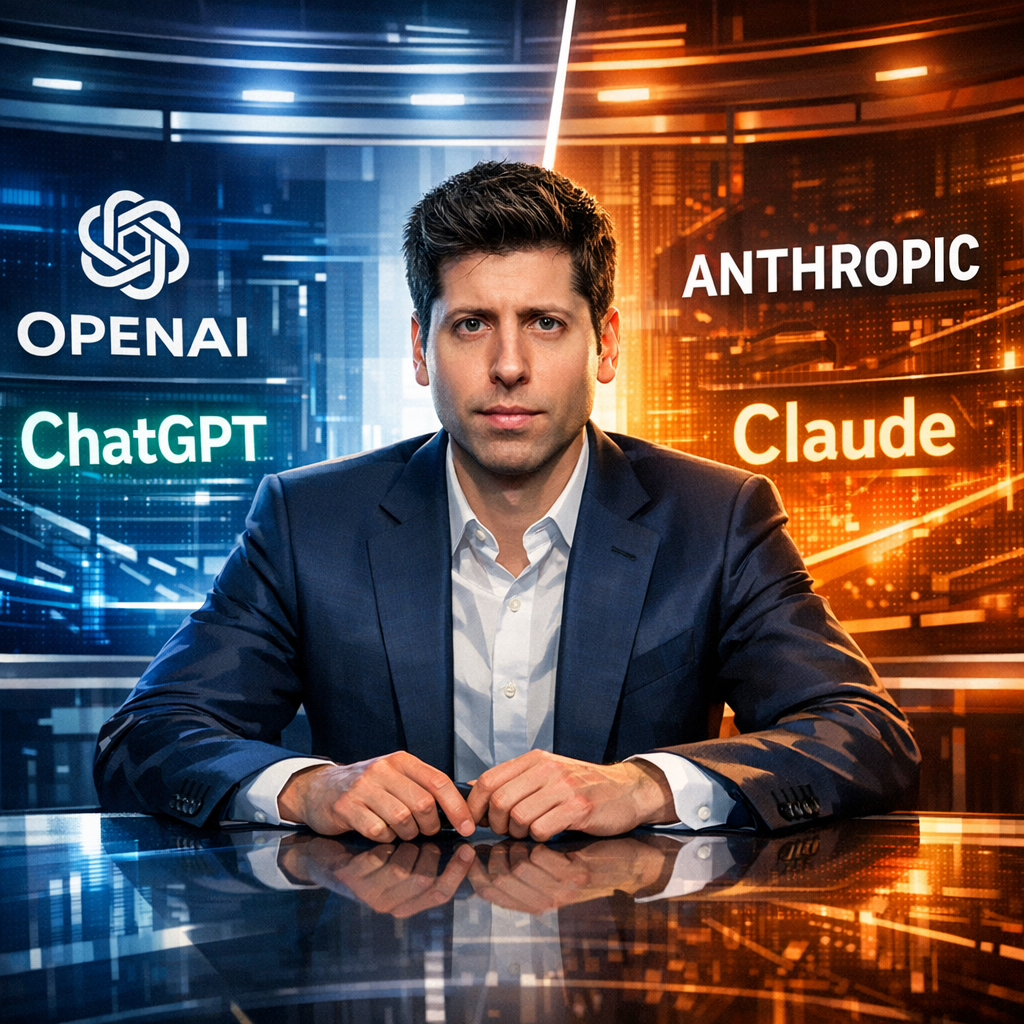
The Hidden Power Behind AI’s Most Influential Figure
Sam Altman’s name might not dominate headlines like Elon Musk’s or Jensen Huang’s, but his quiet ascent in the AI world is arguably more consequential. The question is: are we witnessing a new era where AI power is concentrated in the hands of a few CEOs who write the rules while the rest follow? This is not just about business success; it’s about who controls the future of technology—and ultimately, society.
Why AI Leadership Is More Than Innovation
The AI race has evolved from a competition of breakthroughs to a struggle for control. Altman’s OpenAI, once hailed as a beacon for democratized AI, is now embroiled in controversies reflecting broader industry problems: limited transparency, questionable ethics, and a troubling drift away from public interest.
This shift begs the uncomfortable question—has the promise of benevolent AI leadership been a myth all along? And if so, what does that mean for the billions of people impacted by AI-driven decisions?
Power Concentration and Its Consequences
- Corporate Monopoly: Like Jensen Huang’s Nvidia dominating AI hardware, OpenAI’s development path highlights how a few entities control critical AI infrastructure and models.
- Ethical Ambiguity: Despite public commitments to AI safety, profit motives and market pressures often dilute genuine ethical considerations.
- Governance Vacuum: Regulatory frameworks lag behind, with powerful CEOs influencing, if not outright shaping, the policies meant to govern them.
Is Open Source AI the Last Line of Defense?
One of the most provocative debates is whether open source AI can counterbalance the closed ecosystems run by major players like OpenAI and Google. Open source advocates argue that transparency and collaborative innovation are essential for accountability and diversity of thought. But even this battle is fraught with challenges, as closed models often outpace open frameworks in resources and reach.
AI Ethics as a Branding Strategy?
Ethical AI is frequently touted as a core value by industry leaders. However, beneath the glossy PR lies a tension between safety and profit. Are these ethics genuine commitments or just branding tools designed to ease public fears and stave off regulation? Altman’s approach suggests the latter might be more accurate, raising urgent questions about trust and responsibility.
What Does This Mean for Society?
If the future of AI is shaped by a select few individuals and corporations, society risks losing control over technology that profoundly affects jobs, privacy, and democracy itself. Are we prepared to accept that AI CEOs might soon wield more influence than elected politicians? The unsettling truth is that many of us are already living under this new reality.
Final Thoughts: Challenging the AI Power Paradigm
Sam Altman’s rise exemplifies a broader leadership problem in AI—one where power, transparency, and ethics collide. It’s time to critically examine who holds the keys to AI’s future and demand greater accountability. Without this, we risk accepting a technological destiny determined by corporate interests rather than public good.

Related Articles
 OpenAI Launches Healthcare Suite to Streamline Clinical and Administrative Tasks with GPT-5.2
 Why Sam Altman’s OpenAI Has Redefined Power in the AI Industry
 Are Big Tech CEOs Really Innovating or Just Competing for Power in the AI Race?
 Cloudflare Accuses Perplexity AI of Ignoring Explicit Website Scraping Restrictions