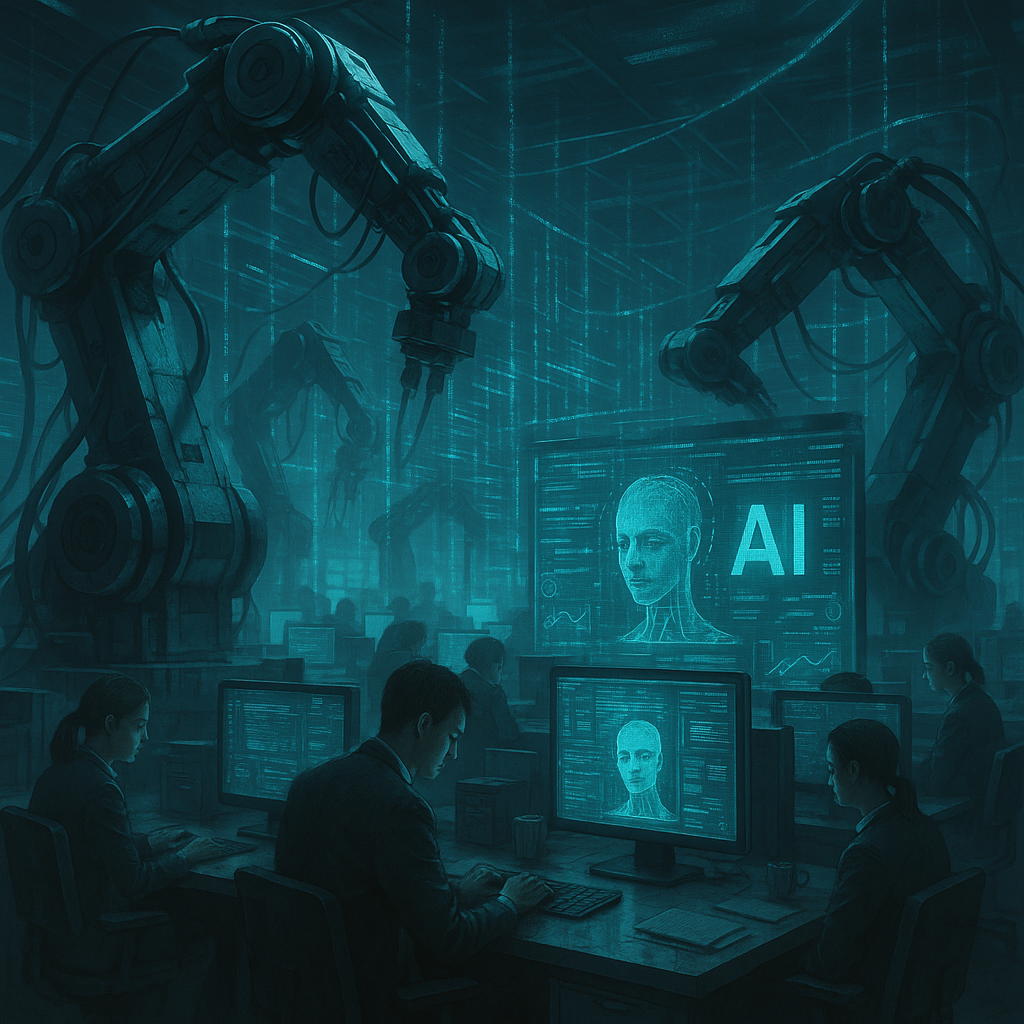
AI Automation: The Unseen Revolution in the Workplace
We love to celebrate AI’s contributions to productivity and innovation, but beneath the hype lies a disruptive force that’s quietly reshaping the employment landscape. AI-driven automation is not a distant threat; it’s happening now, faster and deeper than most realize. Are we truly ready for this shift, or are we willfully ignoring the signs?
Why AI Is More Than Just a Productivity Tool
Intelligent automation is often packaged as a productivity booster, freeing humans from “repetitive tasks.” Yet, this narrative conveniently glosses over the fact that many of those repetitive tasks belong to entire job categories now on the chopping block. From customer service chatbots to automated content generation and even complex decision-making agents, AI models like large language models (LLMs) and deep learning systems are steadily replacing human roles.
The Myth of Job Creation by AI
Proponents argue that AI will create new types of jobs and opportunities. While this holds some truth, the speed and scale of automation risk outpacing the workforce’s ability to reskill or transition. Does this mean the promised “new jobs” are simply a pacifier for a looming tech-driven unemployment crisis? The uncomfortable truth is that automation may widen social inequalities and create a digital elite while leaving many behind.
Who Benefits and Who Loses?
- Big Tech and CEOs: Companies controlling AI models and cloud infrastructures consolidate unprecedented power, dictating who accesses AI and on what terms.
- Workers: Many face redundancy as AI agents handle tasks from data analysis to customer relations.
- Society: Risks include erosion of privacy, heightened surveillance, and loss of human-centric decision-making.
The Illusion of Ethical AI and Regulation
Ethical frameworks and AI regulations often feel like theater — designed more to ease public concern than to enforce real accountability. The race for AI supremacy, especially among major players like OpenAI, Google DeepMind, and Anthropic, sidelines meaningful discourse on ethics and societal impact. Can voluntary ethical guidelines prevent exploitation and bias, or are we relying on illusions while the AI arms race accelerates unchecked?
What’s Next? Facing The AI Automation Reckoning
Ignoring the seismic shift AI automation brings won’t halt its advance. Instead, we must confront hard questions: How do we redesign social safety nets for mass displacement? Can education systems keep pace with AI to enable real reskilling? And critically, who will hold the new techno-oligarchs accountable?
AI is not just a tool — it’s a catalyst for systemic change. The future of work depends on whether humanity chooses to harness this power responsibly or lets it unravel the social fabric we’ve built.

Related Articles
 Why NVIDIA’s AI Monopoly Threatens Innovation and Democratic Control
 How NVIDIA and Jensen Huang Are Quietly Shaping the Future and Control of Artificial Intelligence
 Why US Students Prefer Essay Writing Services Over AI for Academic Work
 OpenAI Rolls Out Group Chat Feature in ChatGPT Across Select Global Markets