
OpenAI, ChatGPT and the Kill Switch Question: Why This Rivalry Is About Control, Not Just Capability
A proposed AI kill switch bill puts OpenAI, ChatGPT and Sam Altman at the center of a bigger rivalry over control, safety and trust.

Your daily source for AI news, tools reviews, and practical guides to artificial intelligence
A proposed AI kill switch bill puts OpenAI, ChatGPT and Sam Altman at the center of a bigger rivalry over control, safety and trust.

Google DeepMind’s bioresilience program is a safety story, not a product launch: it shows how frontier AI firms are trying to widen biology’s benefits while limiting misuse.

Nvidia is framing AI agents as a way to help developers build lightweight OpenUSD runtimes faster, a move aimed at physical AI and robotics stacks.

The obvious reading of OpenAI is too simple. ChatGPT made the company famous, but the bigger shift is that OpenAI is becoming a system-level force in AI.
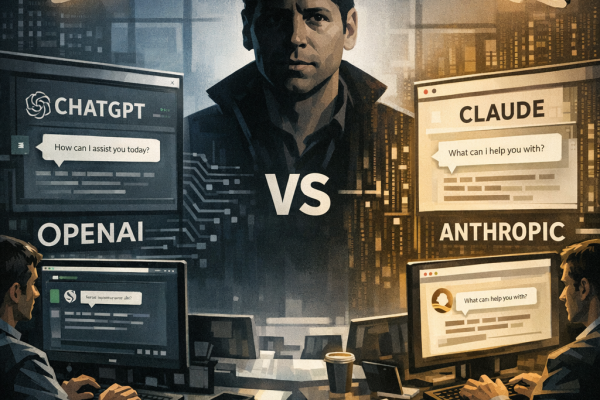
OpenAI’s real story is not ChatGPT alone. It is the strain between a consumer product, a company, and a founder who has become part of the market itself.
Cloudflare’s new crawler defaults sharpen a broader OpenAI rivalry: ChatGPT-style agents want the web open, while publishers and rivals push for permission and pricing.

OpenAI’s Cars24 example suggests the ChatGPT fight is shifting from model quality to workflow ownership — a contest that also defines the OpenAI-versus-Anthropic rivalry.

Nokia says its AI-RAN platform is first of its kind, but the bigger story is the split between GPU-backed scale and silicon-independent rivals.

OpenAI is usually discussed as a chatbot company. That is too small. The more important story is how ChatGPT, Sam Altman, and Microsoft have turned OpenAI into a strategic choke point in AI.
xAI’s lawsuit over alleged Grok-generated CSAM is a reminder that AI rivalry is no longer just about model quality — it is also about control, safety, and liability.