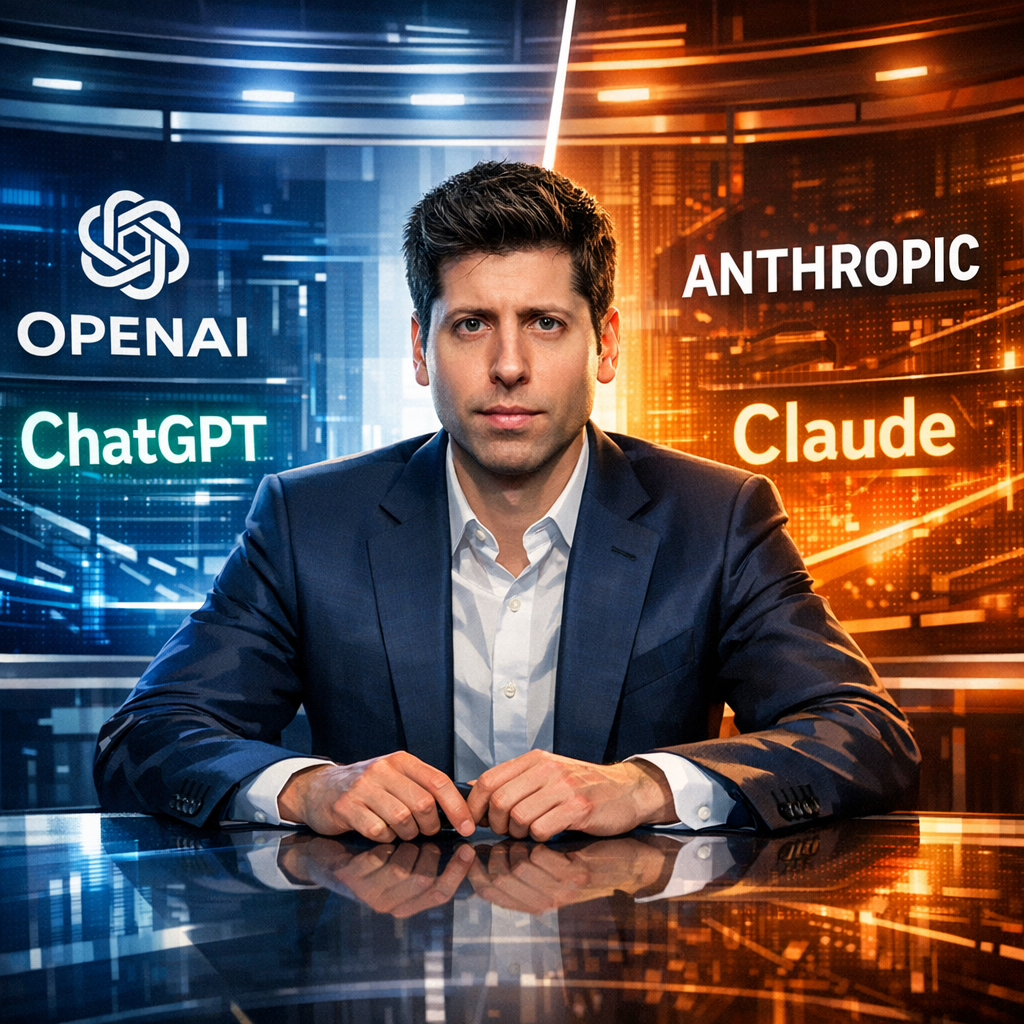
OpenAI is being judged like infrastructure, not like a startup
OpenAI strategy analysis is at the center of this update. OpenAI’s real problem is not that ChatGPT is fading. It is that the company has become too important to be treated like a normal product business, yet too opaque to be treated like neutral infrastructure.
That is a difficult place to sit. ChatGPT made OpenAI the default reference point for consumer AI. Sam Altman became one of the most recognizable executives in the field. And the company’s relationship with Microsoft gave it scale that most rivals can only envy.
The thesis here is simple: OpenAI’s biggest challenge is power management. The company no longer just ships models. It shapes expectations for the market.
The evidence is in the way rivals have had to position themselves against it
Anthropic and Claude are the clearest proof that OpenAI does not own the category. Claude has become a serious alternative, especially for users and businesses that value reliability, restraint, and a less maximalist pitch.
That matters because the competition is not only technical. It is strategic. Anthropic is selling a different posture toward AI, while OpenAI is carrying the burden of being first, biggest, and most watched.
OpenAI’s advantage is still obvious: brand, reach, and mindshare. But those strengths also deepen the pressure. The more the industry revolves around ChatGPT, the more every OpenAI decision becomes a referendum on the company’s judgment.
Anthropic’s rise is a warning, not a verdict
The counterpoint deserves respect. OpenAI’s critics sometimes act as if scrutiny itself proves fragility. That is too easy. Category leaders attract the loudest objections. A company that defined the consumer AI moment will naturally face backlash, imitation, and regulatory attention.
Anthropic’s progress shows that the market is not closed. Claude has real traction, and the rivalry forces OpenAI to keep proving itself. But this does not erase OpenAI’s structural position. If anything, it confirms how much the market still organizes itself around OpenAI’s moves.
In other words, OpenAI is not simply under pressure. It is the pressure point.
The AI race is shifting from model quality to control of the stack
This is where the strategic context gets sharper. The next phase of the AI race is not just about who can produce the best model. It is about who can control distribution, earn trust, and absorb the cost of scaling.
That is why OpenAI matters so much. It sits at the crossroads of product adoption, capital intensity, and ecosystem influence. Microsoft gives it a platform. ChatGPT gives it consumer reach. Anthropic gives it a rival with a different strategy. And the broader chip-and-infrastructure layer reminds everyone that none of this is cheap or simple.
The company’s challenge is not innovation alone. It is legitimacy under scale.
Sources: OpenAI product and company announcements; Anthropic product and company announcements; Microsoft OpenAI partnership materials; public reporting on ChatGPT, Sam Altman, and Claude from major technology outlets.
Related coverage: AI Chronicle analysis and updates.
Sources and further reading
- http://OpenAI%20product%20and%20company%20announcements
- https://openai.com/news/
- https://www.anthropic.com/news

 A Ética da IA Está Sendo Ignorada em Nome do Lucro: Quem Paga o Preço Real?
 The Real Threat Behind AI: How Automation Is Quietly Killing Creativity and Jobs
 OpenAI’s Real Challenge Is Not Model Quality. It Is Trust.
 Why OpenAI’s Business Model Threatens Its Mission and Our Trust in AI