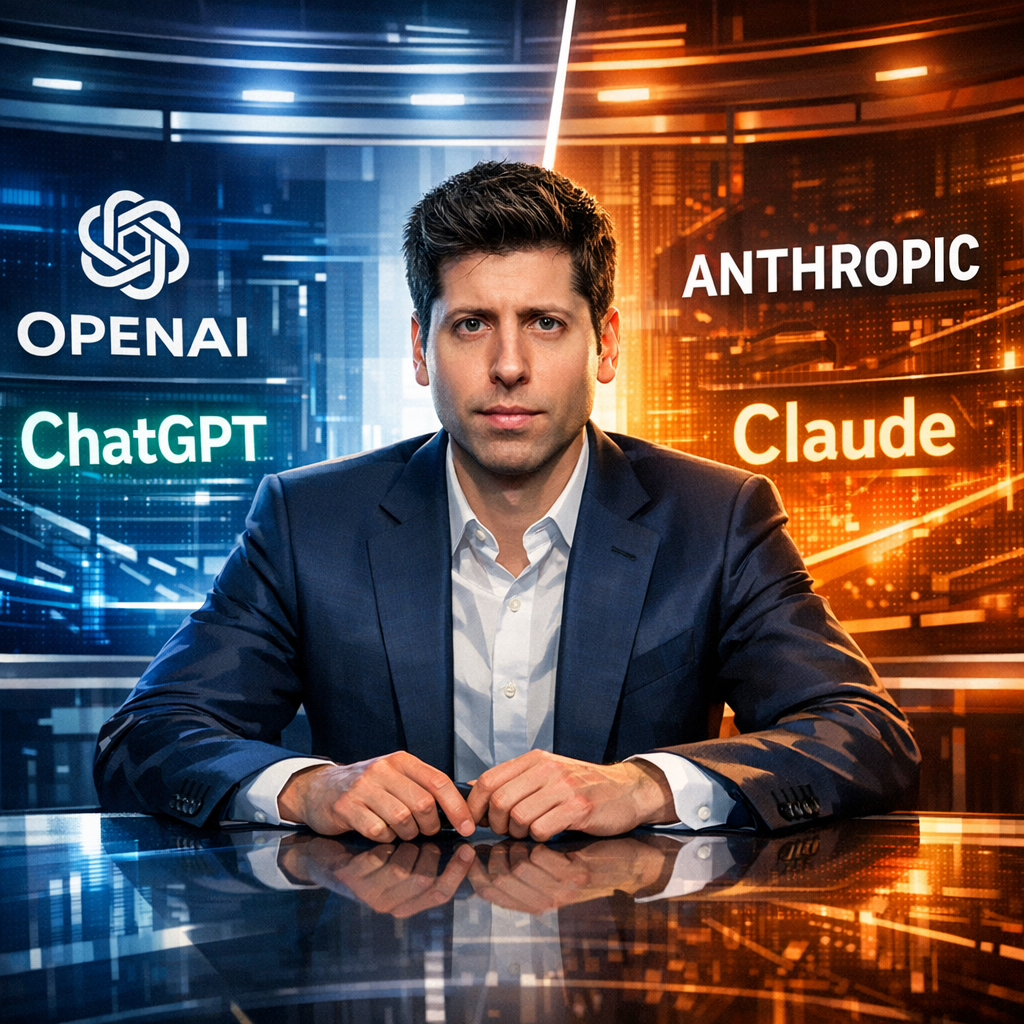
The Trust Deficit: OpenAI’s Hidden Crisis
Why OpenAI Struggle Trust Real analysis is at the center of this update. OpenAI has transformed from a hopeful AI lab into a powerhouse shaping the future of artificial intelligence. But while the world watches its breakthroughs, an uncomfortable question lurks beneath the surface: can OpenAI be trusted? The tension between its mission to ensure safe AI and its commercial ambitions creates a trust deficit that could jeopardize its leadership.
From Lab to Industry Titan: The Evolution of OpenAI
Originally founded on principles of openness and safety, OpenAI’s transformation into a major business player raises doubts. Its partnerships with tech giants, profit-seeking motives, and control over key AI models challenge the narrative of altruistic innovation. This shift is not unique, but it spotlights a fundamental conflict in the AI race: innovation versus trust.
Trust as the Ultimate Currency in the AI Industry
In an era where AI can manipulate, misinform, and automate decision-making at scale, trust isn’t just a nice-to-have; it’s essential. OpenAI’s struggle to balance transparency with competitive advantage fuels skepticism. Are its safety claims genuine or primarily marketing? Does OpenAI’s governance structure really prevent misuse, or is it a facade masking concentrated power?
Why Business Models and Ethics Clash in AI
OpenAI exemplifies the broader industry dilemma: how to monetize advanced AI while adhering to ethical standards. The push for rapid deployment and profit can undermine safety protocols. This tension is not theoretical—it manifests in controversies over data privacy, model biases, and the opacity of AI decision-making.
Can OpenAI Rebuild Trust or Will Its Power Breed Distrust?
As competitors like Anthropic emphasize safety-first approaches and Meta invests in open-source AI alternatives, OpenAI faces pressure to justify its dominance beyond hype. Trust is harder to manufacture than code—it requires consistent accountability, transparency, and public engagement. Without these, OpenAI risks becoming a gatekeeper whose power breeds suspicion rather than confidence.
The Bigger Picture: Trust and the Future of Artificial Intelligence
OpenAI’s struggle mirrors a global challenge: developing AI that serves humanity without compromising democratic values or concentrating control. Governments lag behind in regulation, leaving tech companies as de facto rulers of AI’s future. The question isn’t just whether OpenAI can be trusted, but whether society can trust any single company to dictate the AI era.
Conclusion: Trust Must Be the AI Industry’s North Star
Technology alone will not define AI’s impact—trust will. OpenAI’s trajectory reveals that the most advanced AI models are meaningless without ethical stewardship and public confidence. If OpenAI doesn’t confront its trust issues head-on, it may lose the very influence it fought hard to gain, opening the door for new players to redefine what it means to lead in AI.
Related coverage: AI Chronicle analysis and updates.
Sources consulted
Why it matters
This update influences the AI race across model providers, infrastructure leaders, and enterprise adoption decisions.

 Top AI-Powered Gadgets Revolutionizing Pet Care in 2025
 Anthropic Launches Searchable Library Showcasing Practical Use Cases for Claude AI
 Google Faces Backlash Over Gmail’s Use of Emails for AI Training
 Salesforce Introduces Agentforce Observability for Real-Time Insight into AI Agent Decision-Making