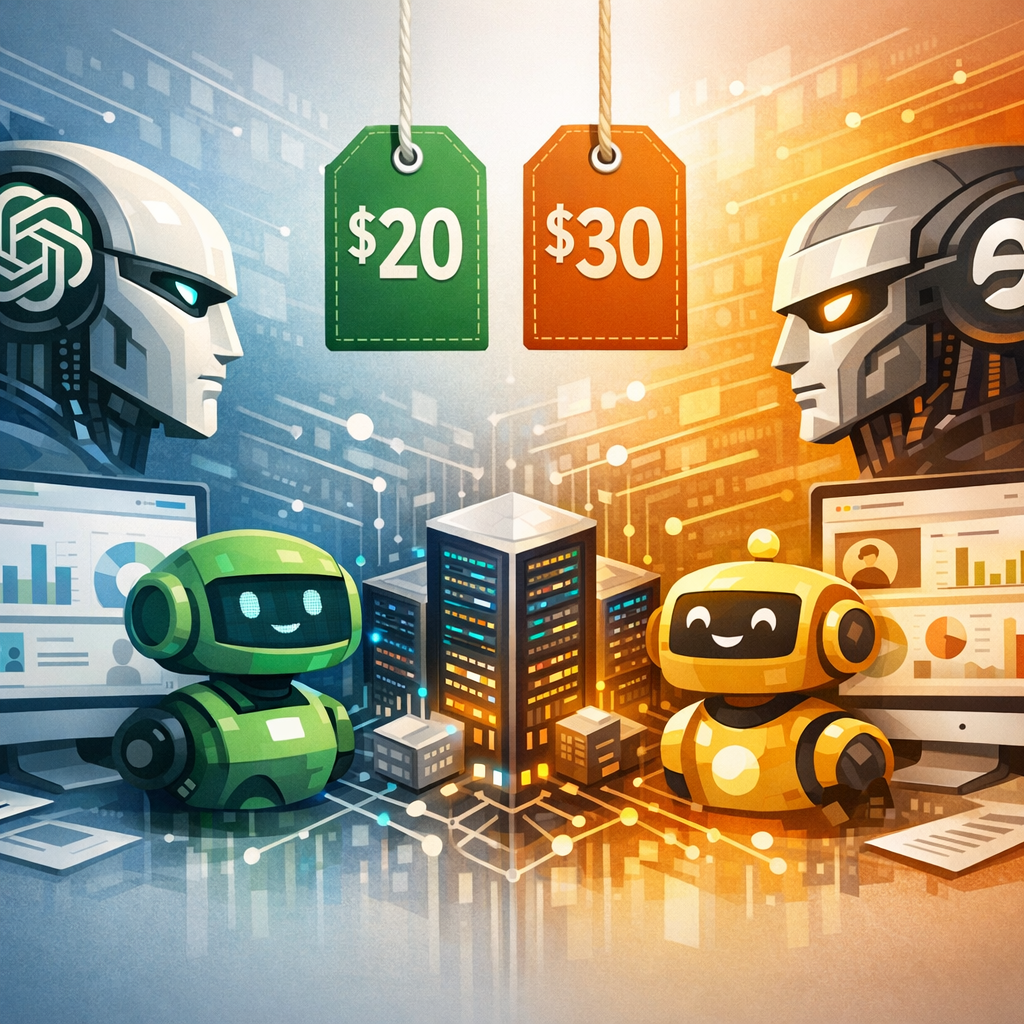
OpenAI versus Anthropic 9782 is at the center of this update. China’s new AI companion rules are not really about China alone. They expose a fault line that runs straight through the global AI race: OpenAI versus Anthropic, ChatGPT versus Claude, and Sam Altman’s platform ambitions versus a more cautious vision of what an AI product should be.
That may sound abstract, but the policy signal is concrete. Beijing is not banning all AI agents. It is targeting services that simulate a persistent human-like relationship, while leaving ordinary assistants, workplace tools, and Q&A systems in a different regulatory bucket. For OpenAI, that distinction matters because ChatGPT is increasingly more than a chatbot, while Anthropic’s Claude has built part of its identity around restraint, safety, and enterprise trust.
ChatGPT wants to be the interface; Claude wants to be the safer default
OpenAI’s strategic problem is that ChatGPT is both a product and a gateway. It is the consumer brand, the developer surface, and the front door to Sam Altman’s broader AI platform push. That creates enormous upside, but also more exposure when regulators start asking whether an AI system is simply useful or psychologically sticky.
Anthropic’s Claude is playing a different game. Its pitch is less about emotional pull and more about reliability, guardrails, and professional use. In a market where governments are increasingly worried about dependence, manipulation, and minors, that posture may become more than a branding choice. It may become a distribution advantage.
Beijing’s line between utility and attachment is the real warning shot
The source makes an important distinction: China is drawing a line between AI that helps users get things done and AI that is designed to sustain attachment. That line is messy, but it is becoming central to how regulators think about generative AI.
For OpenAI, this is the uncomfortable part. ChatGPT’s value comes from memory, continuity, and a sense of ongoing context — the very traits that make a system feel more personal. For Anthropic, the same debate can be turned into a selling point: Claude can be framed as powerful without trying to become emotionally central in the user’s life.
The next AI rivalry is about trust, not just benchmark scores
The industry still talks as if the race is mostly about model quality, speed, and cost. It is not. It is also about who gets to define the social contract around AI. If users, regulators, and enterprise buyers start rewarding products that feel less manipulative, the competitive map changes.
That would not knock ChatGPT out of the race. It would simply force OpenAI to prove that scale and intimacy can coexist with compliance. Anthropic, meanwhile, would have to show that safety-first design can still produce a product people use every day.
Editorial note: This article is editorial analysis, not investment advice.
What to watch as OpenAI and Claude diverge
The most important questions now are practical. Will OpenAI keep expanding ChatGPT’s memory and personality features, or temper them as regulation tightens? Will Anthropic keep turning Claude into the “responsible” alternative, and can that translate into durable market share? And will other regulators decide that companionship-style AI deserves its own rulebook?
If that happens, the AI race will not be decided only by who has the smartest model. It will be decided by who can win trust without losing the product.
Related coverage: AI Chronicle analysis and updates.
Sources and further reading
- http://South%20China%20Morning%20Post%20reporting%20cited%20in%20the%20source%20excerpt
- https://openai.com/news/
- https://www.anthropic.com/news

Related Articles
 Baidu’s Ernie 5.1 Slashes Pre-Training Costs by 94% While Rivaling Leading AI Models
 Super Bowl LX Highlights Bold AI-Driven Advertising Strategies from Svedka to Anthropic
 Navigating the Post-Hype Crypto Market Amid Regulatory Shifts and Emerging AI Trends
 Nvidia CEO Jensen Huang Criticizes Tech Leaders for Reckless AI Job Loss Predictions