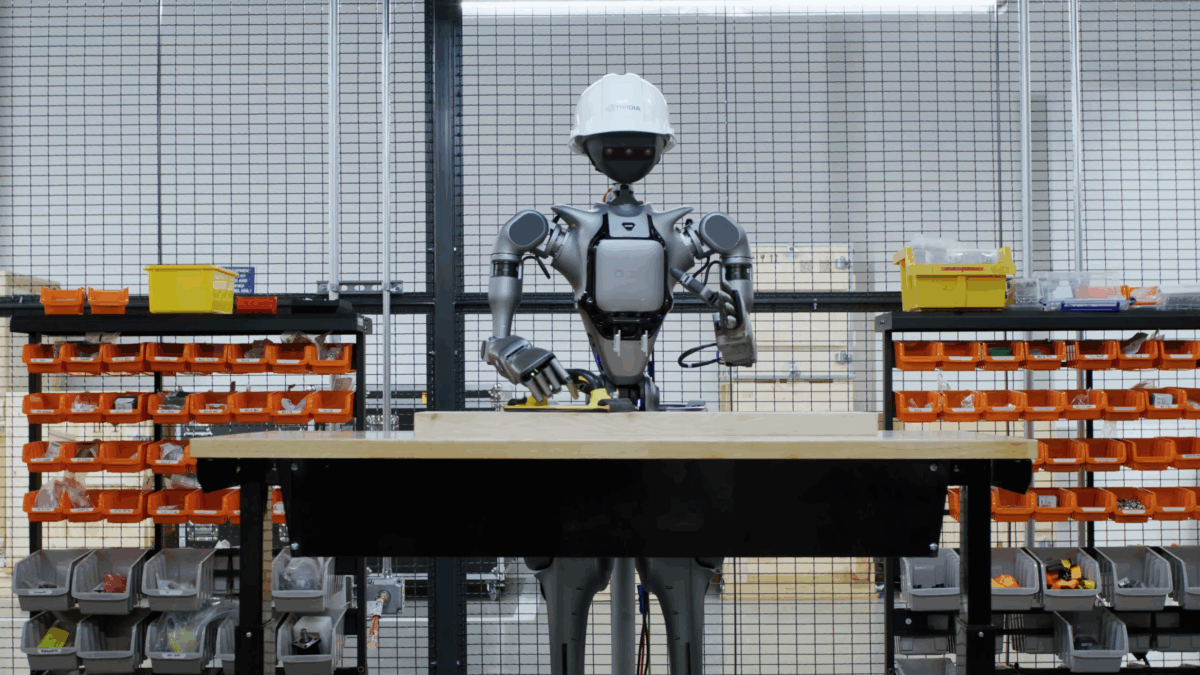
AI in Robot Control Faces Challenges Without Human Input
Recent collaborative research conducted by Nvidia, UC Berkeley, and Stanford University has shed light on the current capabilities and limitations of artificial intelligence models in robot control tasks. The study systematically evaluated how effectively AI models can manage robotic systems through direct code execution, uncovering significant hurdles when human-designed abstractions are absent.
Human-Designed Building Blocks: A Crucial Component
The research revealed that even the most advanced AI models encounter difficulties in controlling robots effectively without the support of human-crafted building blocks or abstractions. These components, designed by experts, provide structured frameworks that guide AI systems in interpreting and executing complex robotic commands, underscoring the importance of human insight in current AI applications.
Agentic Scaffolding and Compute Scaling Help Bridge the Divide
Despite these challenges, the study introduced promising techniques to mitigate AI shortcomings. One such method, known as agentic scaffolding, involves strategically augmenting AI models with targeted test-time compute scaling. This approach enhances the AI’s computational resources during task execution, enabling models to better approximate the performance levels achieved with human-designed frameworks.
By applying these techniques, researchers observed a notable improvement in AI’s ability to control robotic agents, effectively narrowing the performance gap. These findings suggest a pathway for advancing AI autonomy in robotics without relying exclusively on handcrafted human inputs.
Implications for the Future of AI and Robotics
This research highlights the ongoing interplay between human expertise and artificial intelligence in robotics. While AI continues to evolve rapidly, the study emphasizes that human-designed structures remain vital in guiding AI behavior, particularly in complex control tasks.
Moreover, the success of methods like agentic scaffolding points to innovative strategies that may enable AI systems to become more independent and efficient in the near future. Such progress has broad implications for industries reliant on robotic automation, potentially reducing the need for extensive human intervention and accelerating adoption.
Why This Matters Now
As AI technologies become increasingly prevalent in everyday applications, understanding their limitations and strengths is essential. This study from leading institutions underscores that while AI holds great promise, it is not yet capable of fully autonomous robot control without human-designed support systems.
The research also aligns with broader discussions on AI’s role in the workforce and industry, raising questions about how human and AI collaboration will evolve as tools improve.
Conclusion
The new framework developed by Nvidia, UC Berkeley, and Stanford provides valuable insights into the current state of AI-driven robot control. It reveals that human-designed building blocks remain critical, but innovative techniques such as agentic scaffolding and compute scaling are effective in enhancing AI capabilities.
Future research and development will likely focus on refining these methods to enable more autonomous and reliable AI systems in robotics, marking a significant step forward in the integration of AI and physical automation.
Fonte: ver artigo original

Related Articles
 Mundi Ventures Secures €750M for Kembara, Boosting Deep Tech and Climate Innovation
 Jeep Recon All-Electric SUV Launches with 250-Mile Range, Marking a New Era for Jeep
 Salesforce Unveils Advanced AI-Powered Slackbot to Compete with Microsoft and Google in Enterprise AI
 Physical AI Raises Critical Governance Challenges for Autonomous Systems