# Edible Robots: The Future of Biodegradable Technology in Medicine and Wildlife Management
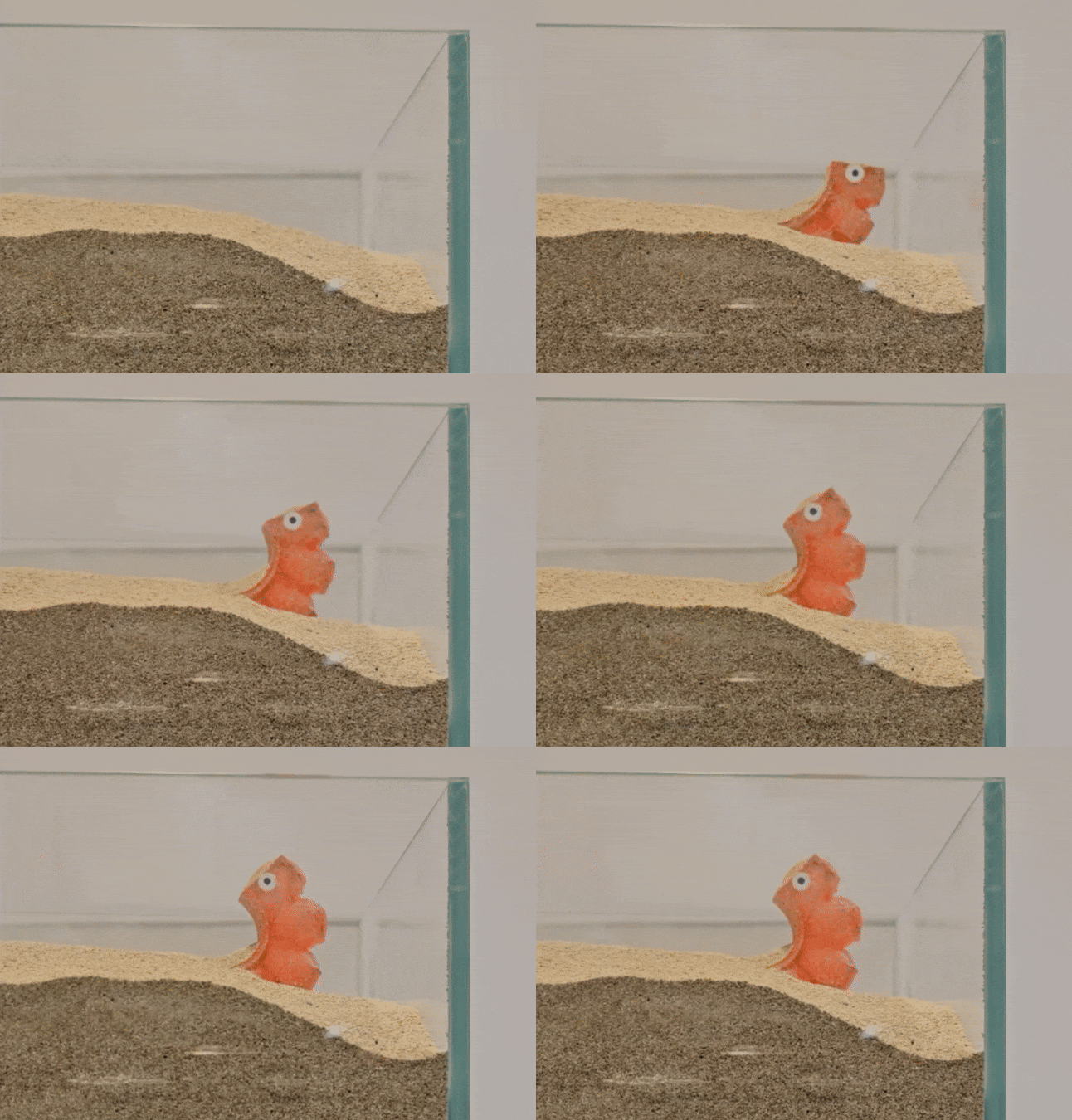
In an exciting development at the intersection of robotics and biotechnology, researchers from the École Polytechnique Fédérale de Lausanne (EPFL) in Switzerland have unveiled an innovative soft robot that is entirely edible. This groundbreaking advancement not only showcases the potential for environmentally friendly robotics but also opens up new avenues for targeted medical applications and wildlife management.
## What Makes This Robot Unique?
Traditionally, robots have been comprised of materials that are not only non-biodegradable but also unsafe for consumption. The latest creation from the lab of Dario Floreano, however, demonstrates that it is possible to create robots that can be safely ingested. Key components of this soft robot include:
– **Edible Battery**: Made from gelatin and wax, it uses safe food ingredients like citric acid and baking soda to generate energy.
– **Ingestible Actuator**: This component mimics conventional soft robot designs but is constructed from edible materials, allowing it to move when activated.
– **Innovative Valve**: A unique snap-buckling mechanism enables the actuator to cycle through movements, adding functionality to the robot.
The robot operates by generating carbon dioxide gas through a chemical reaction, which powers its actuation. This allows it to perform simple movements, essential for its intended applications.
## Potential Applications in Medicine and Wildlife Management
The implications of this technology are broad and varied. The primary focus of this research is on the potential use of edible robots in wildlife management and medical applications. Some notable possibilities include:
– **Targeted Vaccine Delivery**: The researchers propose using these robots to deliver vaccines to elusive wildlife, such as wild boars, which are often difficult to approach. By mimicking the movements of live prey, the edible robot could attract animals while delivering essential medications.
– **Mass Delivery Systems**: The robots could be customized to target various species by adjusting their size, movement, and even scent. This adaptability could enable mass delivery of vaccines or nutrients to specific animal populations.
Such applications could significantly improve the efficiency of wildlife management strategies, making it easier to control disease outbreaks without direct human-animal contact.
## Environmental Benefits of Edible Robots
One of the standout features of these edible robots is their environmental sustainability. Traditional robotic components often contribute to electronic waste, posing a significant environmental challenge. In contrast, these robots are fully biodegradable, offering several benefits:
– **Reduced Waste**: With components made entirely from safe, edible materials, there is no risk of plastic pollution or toxic residues.
– **Eco-Friendly Manufacturing**: The materials used are inexpensive to produce, making them accessible for larger-scale manufacturing and deployment.
As environmental concerns continue to rise, innovations like these could pave the way for more sustainable technology in various sectors.
## Conclusion
The development of entirely edible robots marks a significant milestone in both robotics and biotechnology. With their potential for targeted medication delivery and wildlife management, these biodegradable robots could revolutionize how we interact with nature and address public health challenges. As researchers continue to refine their designs and applications, the future of robotics may very well be not just functional, but also entirely consumable.
As the world grapples with pressing environmental and health issues, innovations like these highlight the potential for technology to adapt in ways that benefit both humanity and the planet.
Based on reporting from spectrum.ieee.org.
Based on external reporting. Original source: spectrum.ieee.org.

 Google Introduces Opal AI: A Rapid Mini-App Creation Tool for Businesses and Creators
 Google Introduces Opal AI: A New Tool for Fast, AI-Powered Mini-App Development
 Anthropic Enhances Claude Cowork with Projects and Folder Integration for Desktop