MiniMax open source trillion parameter is at the center of this update. Editor’s note: This is editorial analysis, not investment advice.
MiniMax’s reported plan to open-source a 2.7 trillion-parameter model is a reminder that the AI race is not only about who has the smartest assistant. It is also about who controls the model layer, who gets to build on top of it, and who can make the ecosystem sticky enough to matter.
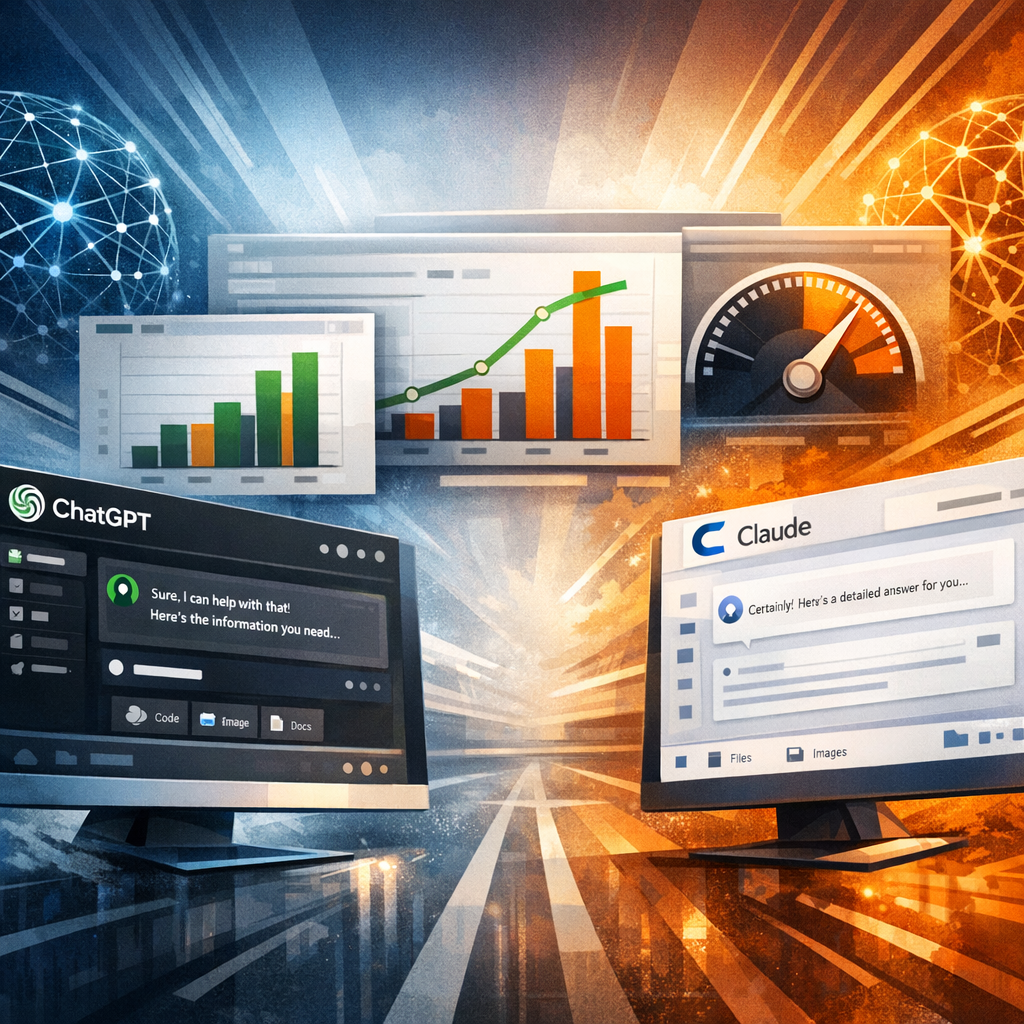
MiniMax is betting on reach, while ChatGPT and Claude bet on control
According to The Decoder, the Chinese AI developer is working on a new large language model with 2.7 trillion parameters and intends to release it as open source later this year. That puts MiniMax on the opposite side of the strategic line from OpenAI’s ChatGPT and Anthropic’s Claude, both of which are built around tightly managed product and API access.
The contrast is the real story. Closed systems monetize convenience, reliability, and brand trust. Open systems try to win by spreading faster through developers, researchers, and companies that want more flexibility than a hosted chatbot can offer.
Sam Altman’s ChatGPT strategy looks cleaner until open models get cheaper to copy
OpenAI’s advantage with ChatGPT has never just been model quality. It has been packaging: a consumer product, a developer platform, and a brand that sits at the center of the AI conversation. But open-source challengers can complicate that advantage by making the underlying technology easier to inspect, adapt, and potentially run outside a vendor’s walls.
That is where the tension with Sam Altman’s strategy becomes visible. If open models keep improving, the premium for a closed assistant has to come from more than raw capability. It has to come from workflow integration, safety controls, uptime, and a user experience that developers cannot easily replicate.
Anthropic and Claude face the same pressure from a different direction
Anthropic has pitched Claude as a serious, enterprise-friendly rival to ChatGPT, but it too depends on a controlled distribution model. A credible open-source alternative from MiniMax would not need to beat Claude on every benchmark to matter. It would only need to offer enough quality at enough flexibility to make procurement teams and builders pause.
That is why open-source releases can be strategically disruptive even when they do not dominate headlines for long. They widen the menu of choices. They also force closed-model companies to justify their pricing and their lock-in more aggressively.
For developers, the real prize is optionality, not parameter count
The 2.7 trillion-parameter figure is attention-grabbing, but developers will care more about what the model actually allows. Can it be fine-tuned? Can it be self-hosted? What does the license permit? Does it run efficiently enough to be practical? The source does not answer those questions, and those gaps matter more than the headline number.
If MiniMax delivers a genuinely usable open model, the effect could be less dramatic than a ChatGPT launch and more consequential in the long run. Open infrastructure tends to compound quietly. It gets embedded into products, research pipelines, and regional ecosystems until it becomes hard for closed platforms to ignore.
What to watch next
Watch for three things: whether MiniMax confirms the launch timing, whether it publishes meaningful technical details, and whether the release is truly open in the way developers expect. Also watch the response from OpenAI and Anthropic. When closed-model leaders start emphasizing deployment flexibility, pricing, or enterprise controls more aggressively, it usually means the open-source pressure is real.
Sources consulted: The Decoder’s report on MiniMax’s planned open-source model.
Suggested internal links: coverage of OpenAI versus Anthropic; coverage of Meta’s Llama and the open-source AI market.
Related coverage: AI Chronicle analysis and updates.
Sources and further reading

Related Articles
 xAI Releases Grok 4.1 with Enhanced Accuracy and Reasoning but Restricts API Access
 Meta Secures 1 Gigawatt of Solar Power to Support AI Data Centers and Reduce Carbon Emissions
 HP Advances Enterprise AI with Innovative Data Solutions and On-Premises Compute
 Google Elevates Chrome with Gemini 3 Integration and New Multitasking Features