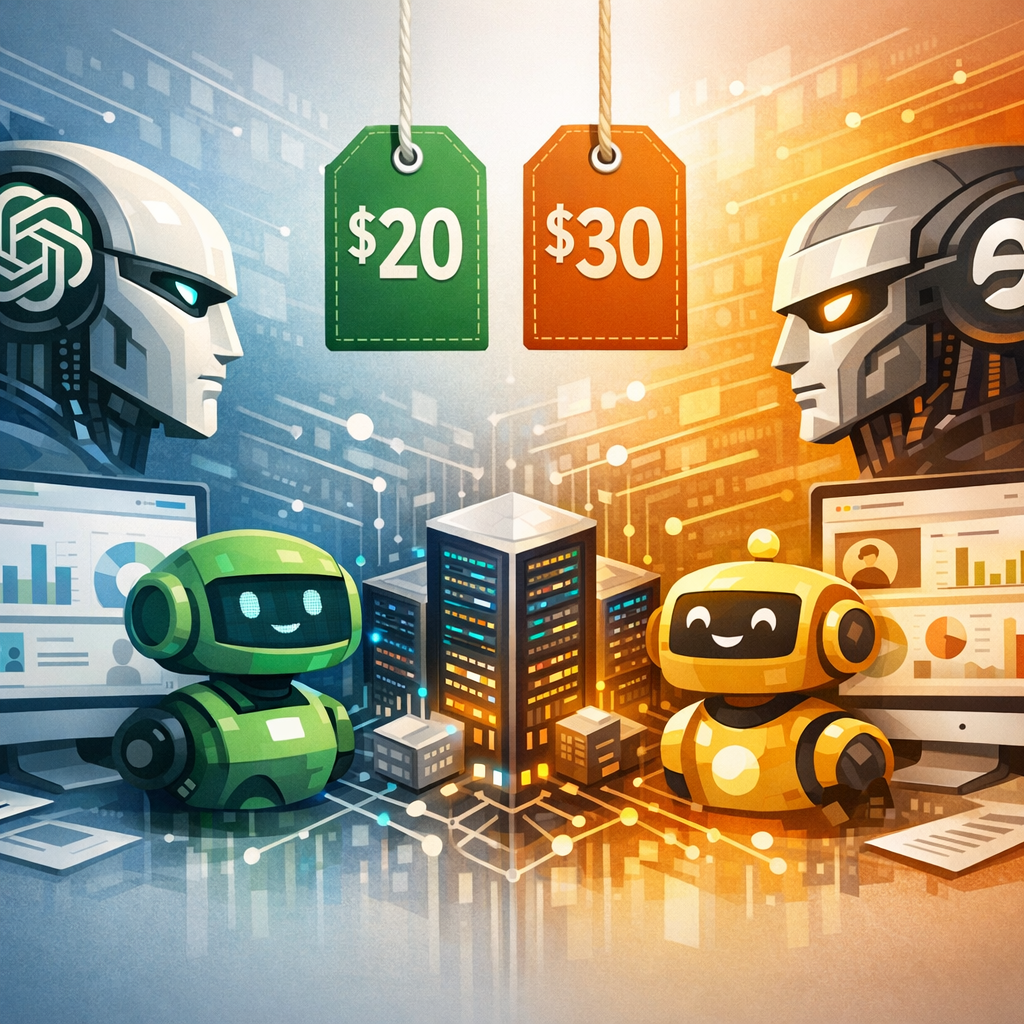
ChatGPT has the brand. Gemini is chasing the workflow.
OpenAI versus Google DeepMind is at the center of this update. Google DeepMind’s latest Gemini API update is not a consumer splashy feature. It is a developer move: Managed Agents can now run in the background, connect to remote MCP servers, combine custom functions with sandbox tools, and refresh credentials without losing state.
That is the kind of change that rarely trends on its own, but it tells you where the AI race is heading. OpenAI’s ChatGPT still owns the most recognizable assistant brand. Google is trying to make Gemini the place developers build the next generation of connected AI agents.
Why agent plumbing is becoming the real rivalry
The strategic difference matters. ChatGPT is the front door for consumers and many teams. Gemini, in this update, looks more like infrastructure: a place where agents can keep working, keep connecting, and keep their state intact.
That is important because agent systems fail in the seams. They need background execution, tool access, credential handling, and reliable connections to outside services. Whoever makes those seams easier to manage can become the default stack for developers.
OpenAI, Google DeepMind, and Anthropic are all chasing the same layer
This is not just a two-company story. Anthropic and Claude are also pressing into the same territory, especially with developers and enterprise teams that want dependable workflows rather than flashy demos.
So the rivalry is really about control of the assistant layer, the API layer, and the agent layer at once. OpenAI has the consumer momentum of ChatGPT. Google has the distribution and infrastructure advantages of a platform company. Anthropic has built a reputation for practical developer utility. The contest is now about which of those strengths turns into durable lock-in.
What users may notice, and what developers will care about more
Most users will not think about MCP servers or credential refresh. They will notice whether AI systems feel more reliable, more persistent, and more useful when they are asked to do real work.
Developers, by contrast, will care about whether Gemini makes it easier to ship agents that do not break when tasks run long, tools change, or credentials expire. If Google lowers that friction, it gets a stronger claim to the agent market. If it does not, ChatGPT and Claude can keep the narrative that the smartest model is not always the easiest platform to build on.
The next test is not who talks best, but who gets embedded first
The AI race is moving away from one-off chatbot comparisons and toward embedded workflows. That is bad news for companies that only win attention and good news for companies that can win defaults.
For OpenAI, the question is whether ChatGPT can remain the center of gravity while the market shifts toward agent infrastructure. For Google DeepMind, the question is whether Gemini can become the layer developers trust to keep agents alive in the background. For Anthropic, the question is whether Claude can keep converting developer trust into enterprise adoption.
Note: This article is editorial analysis, not investment advice.
Related coverage: AI Chronicle analysis and updates.
Sources and further reading
- http://Google%20DeepMind%20/%20Gemini%20API%20documentation%20or%20product%20materials%20referenced%20by%20the%20source%20excerpt
- https://openai.com/news/
- https://www.anthropic.com/news

Related Articles
 Luma AI Unveils Uni-1: A Strong Competitor to Google’s Nano Banana in AI Image Generation
 NVIDIA Launches Agent Toolkit to Enhance Safety and Control in Enterprise AI Deployment
 Scotiabank Advances AI Integration with New Scotia Intelligence Framework
 OpenAI and Molecule.one Harness GPT-5.4 to Advance Medicinal Chemistry