What happened
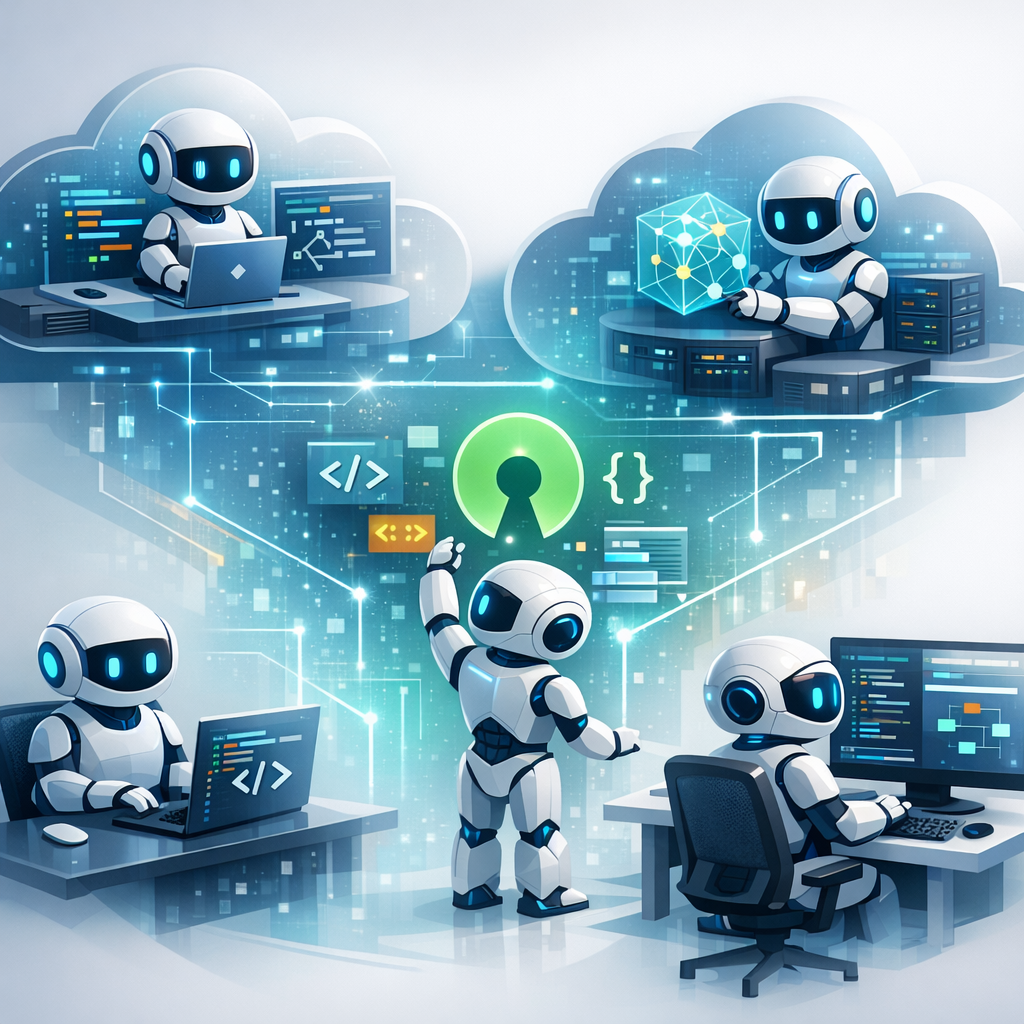
Warp Leverages GPT Revolutionize Open is at the center of this update. Warp integrates OpenAI’s GPT-5.5 to orchestrate coding agents across local environments, cloud platforms, and open-source projects, aiming to enhance developer collaboration and productivity.
Warp’s Innovative Use of GPT-5.5 in Open Source Development
Warp has unveiled a new approach to software development by harnessing the capabilities of OpenAI’s GPT-5.5 model. This strategy focuses on coordinating multiple coding agents to streamline workflows that span local machines, cloud services, and open-source repositories.
Enhancing Developer Collaboration with AI
By employing GPT-5.5, Warp enables intelligent coordination among coding agents, allowing developers to work more efficiently across diverse environments. The model’s advanced natural language understanding and code generation abilities facilitate real-time assistance, debugging, and code integration tasks.
This approach reflects a broader trend in the AI industry, where large language models are increasingly integrated into development tools to accelerate programming and reduce manual overhead.
Bridging Local, Cloud, and Open-Source Ecosystems
Warp’s system is designed to operate seamlessly across different development contexts. Whether developers are coding locally or collaborating on cloud-hosted projects, the AI-powered agents work in concert to maintain synchronization and align workflows. This is particularly significant for open-source projects, which often involve contributors from around the world working asynchronously.
Context Within the AI Industry
Warp’s adoption of GPT-5.5 highlights OpenAI’s expanding influence in the software development sector. As the race for artificial general intelligence (AGI) intensifies, companies like Warp are leveraging advancements in AI models to transform traditional coding practices.
OpenAI’s continuous improvements in language models, exemplified by versions like GPT-5.5, enable new applications that extend beyond conversational AI into complex technical domains.
Future Implications for AI-Driven Development
The integration of AI models such as GPT-5.5 into development workflows signals a shift towards more intelligent, autonomous coding environments. This could lead to faster iteration cycles, improved code quality, and enhanced collaboration across geographically dispersed teams.
As AI models become more capable, the boundaries between human and machine contributions in software creation may blur, opening new possibilities for innovation and productivity.
Related coverage: AI Chronicle analysis and updates.
Sources consulted
- https://openai.com/index/warp
- https://openai.com/news/
- https://www.reuters.com/technology/artificial-intelligence/
Why it matters
This update influences the AI race across model providers, infrastructure leaders, and enterprise adoption decisions.

Related Articles
 Meta Secures 1 GW of Solar Power to Fuel Data Centers and Reduce Carbon Footprint
 Disney Integrates Generative AI into Core Operations to Enhance Content Production and Control
 Chinese AI Startup Minimax Sees Shares Double in Hong Kong Market Debut
 Anthropic’s Claude Fable 5 Surges Past OpenAI’s GPT-5.5 in Advanced Math Benchmark