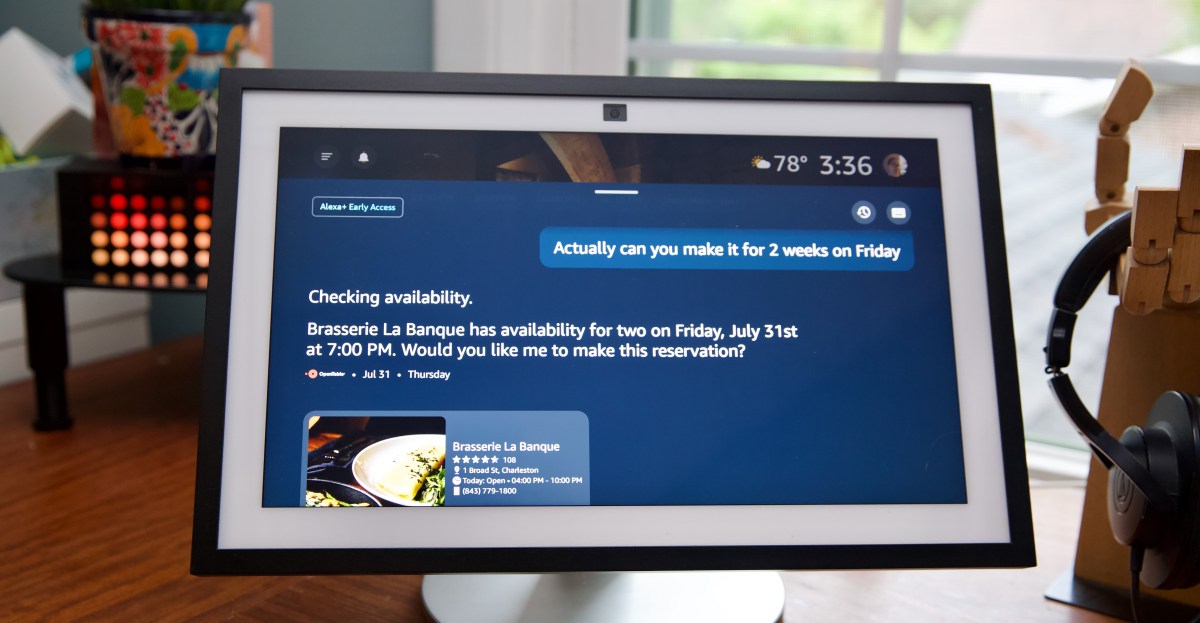
Thinking Machines Lab Introduces a New Era in Voice AI
In a significant development within the AI voice technology landscape, Thinking Machines Lab, founded by AI expert Mira Murati, has launched its inaugural AI model. This new model seeks to redefine voice-based artificial intelligence by moving away from the conventional question-and-answer paradigm that dominates current voice assistants.
Innovative Processing for Enhanced Interactivity
The AI model processes audio, video, and text inputs simultaneously in 200-millisecond segments, enabling a fluid and dynamic interaction that aims to feel more natural and responsive. This parallel processing technique is designed to enhance real-time understanding and response capabilities, setting it apart from existing solutions.
Competing with Industry Giants
Thinking Machines Lab positions its model as a direct competitor to prominent AI systems such as OpenAI’s GPT Realtime 2 and Google’s Gemini Live. The startup asserts that its approach delivers superior interactivity, addressing what it sees as a fundamental limitation in OpenAI’s voice AI strategy.
Challenging the Status Quo in Voice AI
Traditional voice AI systems often rely heavily on structured interactions where users ask questions and receive answers. Thinking Machines Lab argues that this model restricts the potential of voice AI by limiting conversational flow and adaptability. Their new model aims to foster more natural, continuous dialogue, which could revolutionize how AI assistants engage with users across various applications.
Implications for AI in Everyday Life
This breakthrough could have wide-reaching effects on AI tools used in workplaces, education, and daily routines by offering more intuitive and efficient voice interfaces. As AI continues to integrate deeply into everyday life, improvements in interactivity promise to enhance productivity and user experience significantly.
Looking Ahead
While still in its early stages, Thinking Machines Lab’s model highlights the growing emphasis on interactivity and real-time processing in AI development. This shift indicates a broader trend of moving beyond static responses toward more conversational and context-aware AI systems.
Fonte: ver artigo original

Related Articles
 Byju’s Founder Byju Raveendran to Appeal U.S. Court Order Demanding Over $1 Billion Amid Bankruptcy Proceedings
 NeoPrompt: Revolutionizing App Development with AI-Powered No-Code Platform
 Google Expands NotebookLM with Fully Rolled Out Customizable Video Overviews
 OpenAI Develops Autonomous Agent System to Overcome Human Attention Limits in AI Workflows