Sony AI’s Ace Robot Excels in Competitive Table Tennis
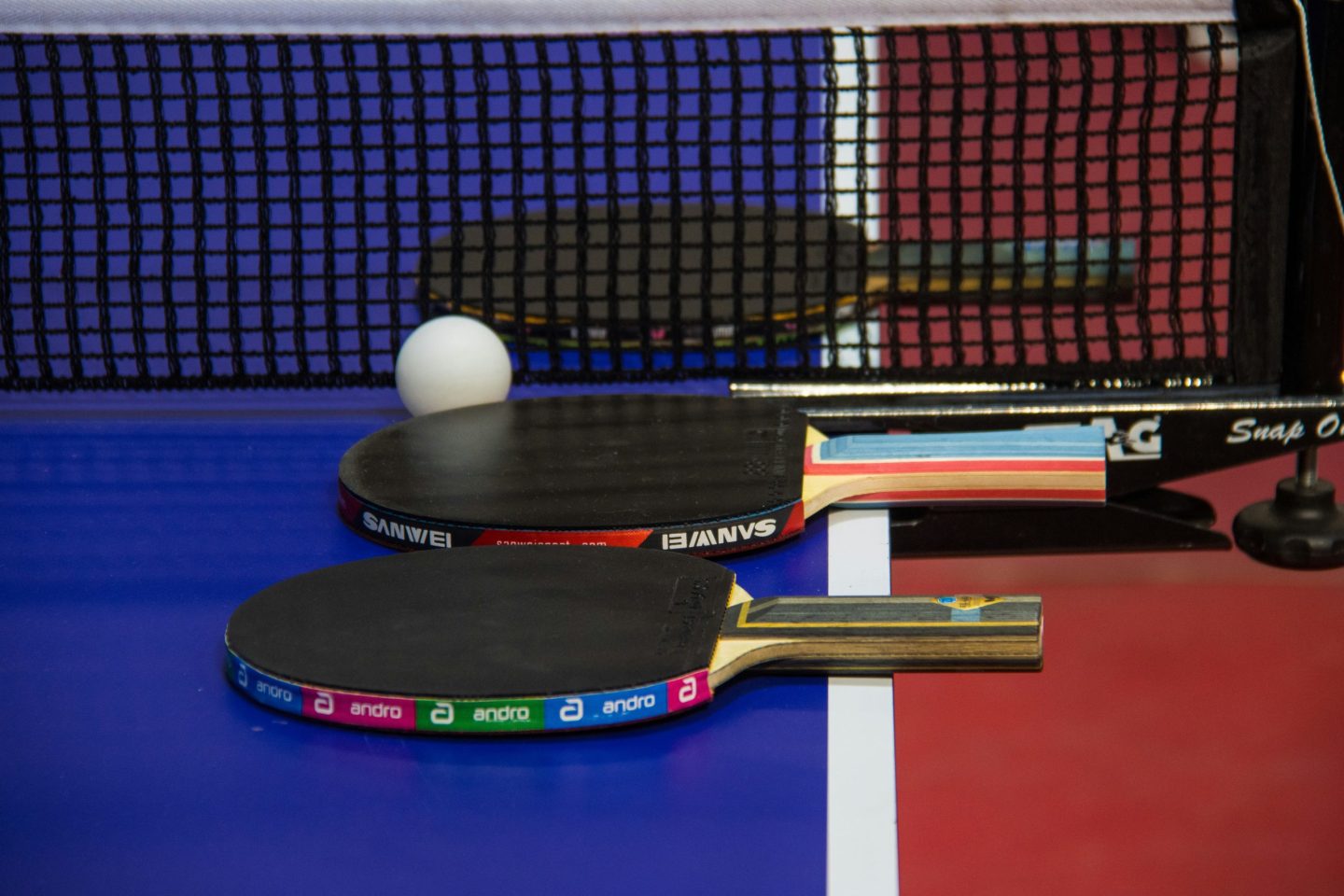
Sony AI has developed an autonomous table tennis robot, named Ace, that has successfully competed against and defeated high-level human players in regulated matches. This achievement highlights significant progress in the field known as physical AI, where artificial intelligence is integrated into machines operating in complex, real-world environments.
Ace was engineered to perform in a sport demanding exceptionally rapid decision-making and precise motor control. It utilizes a combination of high-speed perception systems and AI-driven control to execute shots effectively during match conditions. The robot’s design includes nine synchronized cameras and three vision systems that track the ball’s movement and spin with a speed surpassing human visual capabilities, enabling it to respond to fast and complex ball trajectories.
Performance and Training
The robot competed under the International Table Tennis Federation’s rules and was overseen by licensed umpires. In April 2025 trials, Ace won three out of five matches against elite players, with subsequent matches in late 2025 and early 2026 seeing victories over professional opponents. Unlike previous table tennis robots dating back to the 1980s, Ace approaches the game with a novel training method: it was trained through simulation rather than human demonstration, allowing it to develop unique playing strategies.
Peter Dürr, director at Sony AI Zurich and project lead, emphasized the challenge of applying AI to real-time sports like table tennis, as opposed to fully simulated digital games such as chess or video games where AI has already surpassed human experts. Ace’s architecture includes eight joints controlling the racket’s positioning, orientation, and shot force, designed to meet the minimum mechanical requirements for competitive play.
Player Insights
Professional players who competed against Ace noted its unpredictability and absence of emotional cues, making it difficult to anticipate its next moves. Mayuka Taira, who lost to the robot, remarked on the challenge of reading its reactions. Rui Takenaka, who both won and lost against Ace, highlighted the robot’s skill in handling complex spins but noted that its responses to simpler serves were more predictable.
Humanoid Robots Compete in Beijing E-Town Half Marathon
In a separate demonstration of AI-powered robotics, humanoid robots competed in the 2026 Beijing E-Town Humanoid Robot Half Marathon, a 21-kilometer race featuring over 100 robots alongside approximately 12,000 human runners on separate tracks. The robot named Lightning, developed by Honor, completed the race in 50 minutes and 26 seconds, outperforming Olympic runner Jacob Kiplimo’s half marathon time of 57 minutes and 20 seconds recorded earlier in Lisbon.
Despite a collision with a barricade during the race, Lightning maintained pace and secured first place. Honor’s robots also claimed the second and third positions, marking a significant improvement from the previous year’s event where the fastest robot finished in over two hours and 40 minutes. The race aimed to test humanoid robots’ capabilities in large-scale, real-world conditions.
Another Honor robot completed the course in 48 minutes under remote control, but race regulations favored autonomous navigation, making Lightning the official winner. Engineers at Honor noted that technological advancements from the race, such as structural reliability and liquid-cooling systems, have potential applications in industrial robotics.
Implications and Future Applications
The developments in both the Ace table tennis robot and the humanoid marathon runners illustrate how AI is increasingly capable of operating in dynamic, real-time environments. Sony AI’s project demonstrates potential for applying advanced perception and control algorithms beyond sports, including manufacturing and service robotics. Similarly, the humanoid robots’ performance in endurance racing points to progress in autonomous navigation and mechanical design that could benefit industrial sectors.
These achievements underscore the growing integration of AI into physical tasks, signaling a future where intelligent machines collaborate with humans in diverse real-world scenarios.
Fonte: ver artigo original

Related Articles
 Amazon Integrates Rufus into Alexa for Shopping, Enhancing AI-Powered Retail Experience
 China Approves DeepSeek’s Purchase of NVIDIA’s H200 AI Chips Amid Trade Tensions
 Masumi Network: Enhancing Trust in the Growing AI Agent Economy Through Blockchain Integration
 ZAYA1 Achieves Major Milestone as First AI Model Trained Exclusively on AMD GPUs