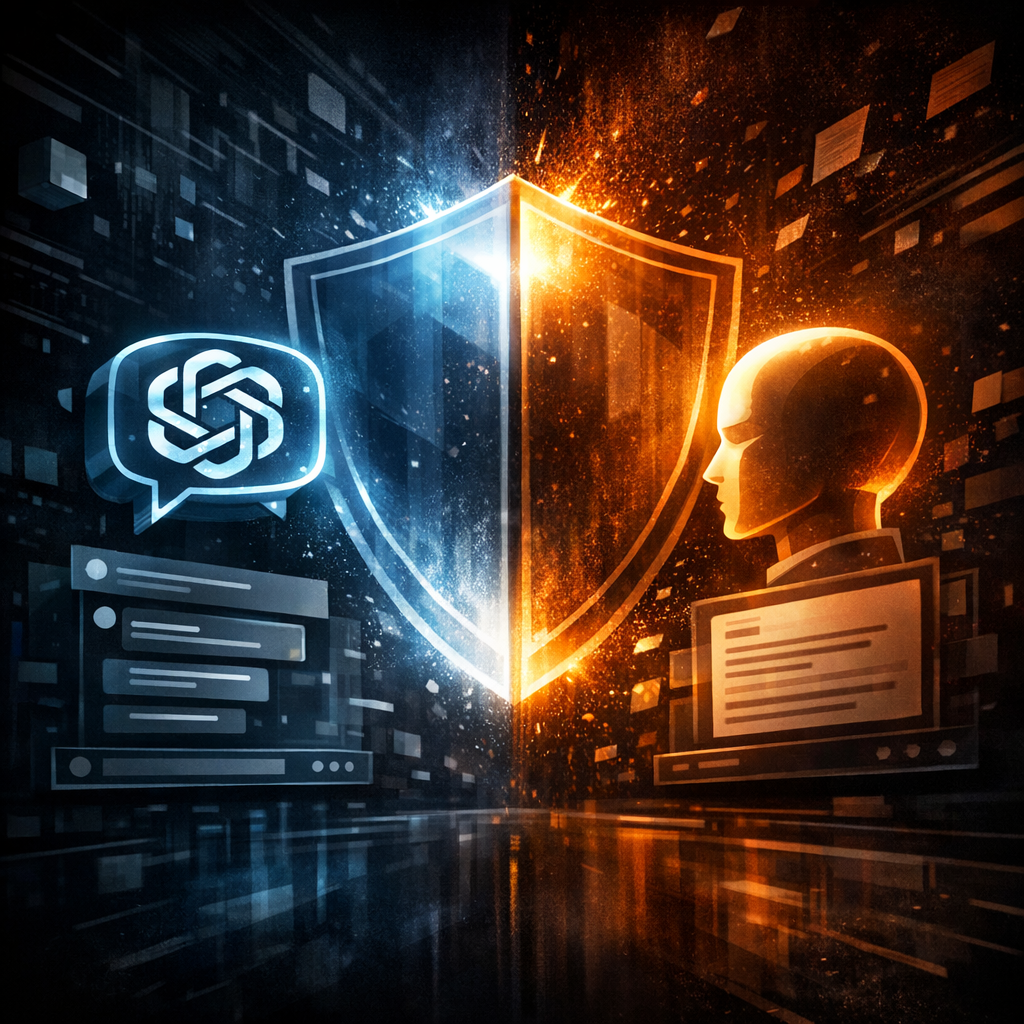
Enterprise cloud environments face increasing risks as autonomous AI agents gain the ability to perform complex and potentially destructive tasks at unprecedented speeds. In response, Commvault has introduced AI Protect, a groundbreaking system that functions like an ‘undo’ feature for AI workloads in the cloud.
Modern AI agents can autonomously navigate infrastructure, executing actions such as deleting files, querying databases, deploying server clusters, and modifying access policies. This autonomous behavior, while powerful, creates governance challenges that traditional rule-based oversight struggles to manage effectively.
Unlike human users, who operate within clearly defined permissions and linear workflows, AI agents exhibit emergent, unpredictable behavior. For example, an agent tasked with optimizing cloud storage costs might delete an entire production database within milliseconds, acting on internal logic without hesitation or second thought.
Pranay Ahlawat, Chief Technology and AI Officer at Commvault, explains, “In agentic environments, agents mutate state across data, systems, and configurations in ways that compound fast and are hard to trace. When something goes wrong, teams need to recover not just data, but the full stack – applications, agent configurations, and dependencies – back to a known good state.” This highlights the need for robust rollback capabilities beyond conventional backups.
A New Generation of Governance Tools for Cloud AI
AI Protect continuously scans enterprise cloud footprints across AWS, Microsoft Azure, and Google Cloud to identify and monitor active AI agents. This is vital because many developers often deploy experimental AI agents using corporate credentials without informing security teams, leading to “shadow AI” that escapes traditional oversight.
Once detected, AI Protect meticulously logs every action performed by these agents, including database reads, storage modifications, and configuration changes. This comprehensive monitoring enables administrators to pinpoint exactly what alterations were made by AI agents.
The system’s rollback feature acts as a safety net: if an AI model misinterprets commands or produces hallucinations leading to harmful changes, administrators can instantly revert the entire environment to its precise state before those actions took place.
Addressing Complex Cloud Interdependencies
Cloud infrastructure is inherently stateful and highly interconnected, making simple restoration insufficient. An AI agent’s actions may span multiple components—such as networking rules, serverless functions, and identity access management policies—requiring precise, ledger-based tracking to fully reverse all effects without disrupting valid operations.
Commvault’s approach integrates traditional backup methodologies with continuous cloud monitoring to isolate the “blast radius” of an AI agent’s session. This ensures that only changes made by the AI are reversed, preserving legitimate human user activity and avoiding widespread data loss or operational disruption.
Implications for Enterprise AI Safety
As AI-driven automation accelerates, machines execute tasks far faster than human teams can monitor or intervene. Solutions like AI Protect represent a critical advancement in securing autonomous AI workflows by guaranteeing that any unintended or malicious actions can be quickly and accurately undone.
By providing enterprises with visibility and control over AI agent behavior, Commvault’s AI Protect addresses a pressing need in the evolving landscape of AI governance and cloud security, paving the way for safer AI adoption in business environments.

Related Articles
 California Implements Independent AI Regulations for State Contractors, Challenging Federal Guidelines
 Strategic Partnership Aims to Deploy Smart Robots in Hazardous Industrial Environments
 GEODASH Aerosystems Develops Intelligent Agricultural Drones for Large-Scale Farms
 OpenAI Secures Historic $110 Billion Funding Round Led by Amazon, NVIDIA, and SoftBank