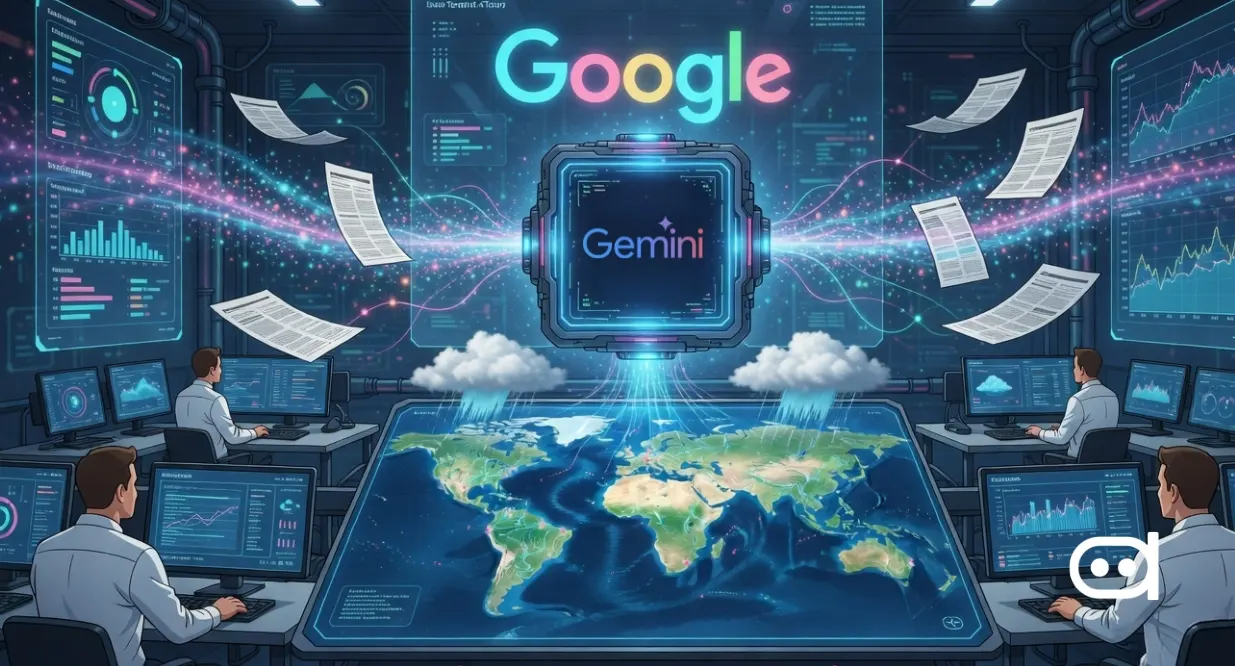
Innovative AI Approach to Flash Flood Forecasting
Flash floods are among the deadliest natural disasters worldwide, causing more than 5,000 fatalities each year. Unlike other weather phenomena, flash floods are notoriously difficult to predict because they develop rapidly and affect very localized areas. Traditional forecasting methods, which rely on tracking river flows or temperature changes, often fall short in providing timely warnings for these sudden events.
The Challenge of Predicting Flash Floods
Deep learning models have significantly improved weather forecasting in recent years; however, they require extensive and reliable data. For flash floods, such data is scarce because these events happen quickly and in confined regions, making it nearly impossible to gather sufficient sensor data, especially in developing countries that lack the infrastructure for widespread environmental monitoring.
Google’s Unconventional Solution: Using Historical News Data
Rather than waiting for expensive sensor networks to be established globally, Google has adopted a novel strategy by utilizing an enormous dataset of over five million past news articles related to weather events. This historical information provides valuable insights into flash flood occurrences around the world, enabling AI models to learn patterns and indicators that precede these dangerous floods.
This approach is powered by Google’s Gemini AI platform, which processes and analyzes the vast text data to identify correlations and predictive signals. By integrating this historical knowledge with current meteorological data, Google’s AI aims to generate more accurate and timely flash flood warnings.
Implications for Disaster Preparedness and Response
The ability to predict flash floods more reliably has significant implications, especially for vulnerable communities in regions without advanced monitoring systems. Early warnings can save lives by enabling faster evacuations and better emergency planning.
Experts believe that Google’s initiative demonstrates how artificial intelligence can transform disaster prediction by leveraging unconventional data sources. This method also exemplifies how AI can support global efforts to mitigate the impacts of climate-related hazards.
Looking Ahead
While challenges remain in refining flash flood forecasts and ensuring AI predictions are actionable, Google’s innovative use of historical news data marks a step forward in disaster management technology. Continued advancements in AI and data integration are expected to further enhance our ability to anticipate and respond to flash floods and other sudden weather events worldwide.

Related Articles
 Microsoft Unveils Maia: A New High-Powered Chip Boosting AI Inference Performance
 Nvidia CEO Jensen Huang Criticizes Tech Leaders for Reckless AI Job Loss Predictions
 Micron Exits Consumer Memory Market Amid AI-Driven Semiconductor Shift
 Claude Code Creator Unveils Revolutionary AI-Powered Coding Workflow, Sparking Industry Buzz