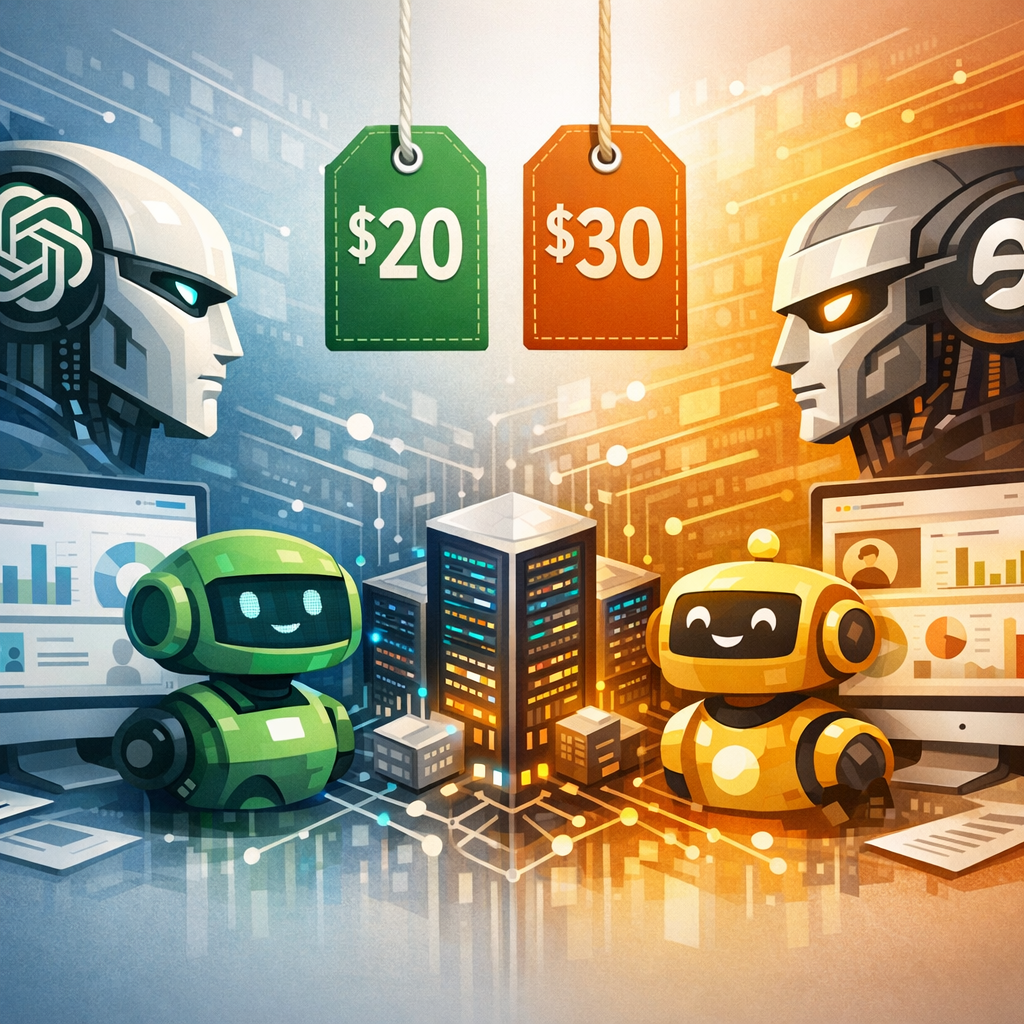
The rapidly evolving landscape of AI-powered coding assistants is witnessing a significant shift as developers seek affordable and flexible solutions. Anthropic’s Claude Code, a terminal-based AI agent designed to autonomously write, debug, and deploy code, has gained popularity but faces criticism due to its steep pricing—ranging from $20 to $200 per month depending on subscription tiers—and restrictive usage limits that frustrate many users.
In contrast, Goose, an open-source AI coding agent developed by fintech company Block (formerly Square), is gaining traction by offering nearly equivalent functionality without subscription fees or cloud dependencies. Goose runs entirely on the user’s local machine, eliminating rate limits and ensuring all data remains private.
Anthropic’s Pricing Controversy Sparks Developer Backlash
Claude Code’s pricing model has become a source of discontent among developers. The free plan offers no access, while the Pro plan costs $20 per month but limits users to 10 to 40 prompts every five hours—insufficient for intensive coding sessions. Higher-priced Max plans ($100 and $200 per month) increase prompt limits and provide access to Anthropic’s most powerful Claude 4.5 Opus model but still impose complex, token-based rate limits that confuse and frustrate users.
Introduced weekly rate limits, which translate token usage into purported “hours,” further complicate usage expectations. Many developers report hitting usage caps within minutes, leading to cancellations and vocal criticism on forums and social media. Anthropic defends these limits as targeting a small fraction of users running the tool continuously, but the lack of clarity fuels ongoing dissatisfaction.
Goose: A Model-Agnostic, Offline AI Agent for Developers
Goose takes a fundamentally different approach. As an “on-machine AI agent,” it operates locally using open-source large language models (LLMs) that developers can download and manage themselves. This design gives users full control over their coding workflows, regardless of internet connectivity, and prevents any code or data from leaving their devices.
Goose supports integration with multiple LLM providers, including Anthropic’s Claude models via API, OpenAI’s GPT-5, Google’s Gemini, and local execution tools like Ollama, which enable running open-source models entirely offline. This model-agnostic architecture allows developers to choose the best fit for their needs without vendor lock-in or recurring fees.
Autonomous Coding with Tool Calling and Function Execution
Unlike conventional code assistants that primarily suggest snippets, Goose autonomously executes complex development tasks. It can create projects from scratch, write and run code, debug errors, manage multi-file workflows, and interact with APIs without requiring constant human input. This is enabled by advanced “tool calling” capabilities, where the AI issues executable commands rather than just textual recommendations.
Currently, Anthropic’s Claude 4 models lead in tool-calling performance, but open-source models from Meta, Alibaba, Google, and others are rapidly improving. Goose also integrates with the emerging Model Context Protocol (MCP), allowing access to databases, search engines, and external services, greatly extending its functionality.
Setting Up Goose Locally: A Step-by-Step Guide
For those interested in a free, privacy-conscious AI assistant, the setup involves three components:
- Install Ollama: A tool simplifying the running of open-source LLMs locally. Available at ollama.com, Ollama downloads and serves models like Qwen 2.5 with strong tool-calling support.
- Install Goose: Available as both a desktop app and command-line interface, Goose can be downloaded from its GitHub releases page with support for macOS, Windows, and Linux.
- Configure Connection: Users link Goose to Ollama by specifying the local API host. This completes the connection, enabling Goose to operate fully offline and free from subscription constraints.
Hardware Considerations
Running large LLMs locally requires substantial RAM and processing power. Block’s documentation recommends 32 GB RAM for larger models, though smaller versions can run on machines with as little as 16 GB. MacBook Pros with 32 GB memory are well suited, whereas entry-level MacBook Air models may struggle.
Trade-Offs Between Goose and Claude Code
While Goose provides freedom from costs and cloud dependencies, it does not yet match the premium model quality of Claude 4.5 Opus, which excels at understanding complex codebases and producing high-quality output. Claude Sonnet 4.5 also offers a massive one-million-token context window, far exceeding the default limits of most local models.
Cloud services like Claude Code run on optimized hardware, delivering faster responses compared to local setups on consumer laptops. Additionally, Claude Code benefits from dedicated engineering, polished features, and prompt caching that reduce costs and improve user experience, areas where Goose relies on community-driven development.
Goose’s Position in the Competitive AI Coding Market
The AI coding tool market includes paid options like Cursor, GitHub Copilot, and Amazon CodeWhisperer, which target different user segments with subscription fees and enterprise features. Goose distinguishes itself through autonomy, local execution, and zero cost, appealing to developers prioritizing privacy, flexibility, and ownership.
The Future of AI Coding Tools and the Potential End of High-Cost Models
Open-source AI models are rapidly advancing, narrowing the gap with proprietary alternatives. Projects like Moonshot AI’s Kimi K2 and z.ai’s GLM 4.5 benchmark near commercial model performance and remain free to use.
If this trend continues, premium-priced products like Claude Code may need to compete increasingly on features and integration rather than raw model power. For developers, the choice is clear: pay for the highest quality and support with usage restrictions or embrace free, flexible, offline tools like Goose.
The emergence of a $0 open-source competitor to a $200 monthly commercial AI coding assistant highlights the maturation of AI infrastructure and a growing demand for developer autonomy in AI workflows.
While Goose requires more technical setup and hardware resources than commercial alternatives and its models still lag slightly on complex tasks, it offers a compelling option for those valuing control and cost savings.
Fonte: ver artigo original

Related Articles
 Google DeepMind’s AlphaProof Nexus Solves Long-Standing Mathematical Problems Efficiently
 Arcee: The Small Startup Making Big Waves with Open Source AI Models
 OpenAI Launches GPT-5.1-Codex-Max, Advancing AI-Assisted Coding with Extended Reasoning and Efficiency
 European Commission Launches Antitrust Investigation Into Google’s Use of Web and YouTube Content for AI