Physical AI Revolutionizing Customer Service Efficiency
In response to shrinking labor pools and the limitations of automating routine workflows, companies are increasingly turning to physical AI solutions that blend digital intelligence with human-like physical interactions. This shift is exemplified by a new collaboration between Japanese firms KDDI and AVITA, which aims to bridge complex operational gaps in customer service through the use of humanoid robots.
Challenges Beyond Traditional Robotics
While conventional industrial robots excel in repetitive, singular tasks, they fall short when dealing with unpredictable scenarios such as equipment malfunctions. Customer-facing roles require nonverbal communication skills—like synchronized nodding, natural eye contact, and empathetic facial expressions—that traditional automation cannot replicate.
Integrating Advanced Hardware and Data Infrastructure
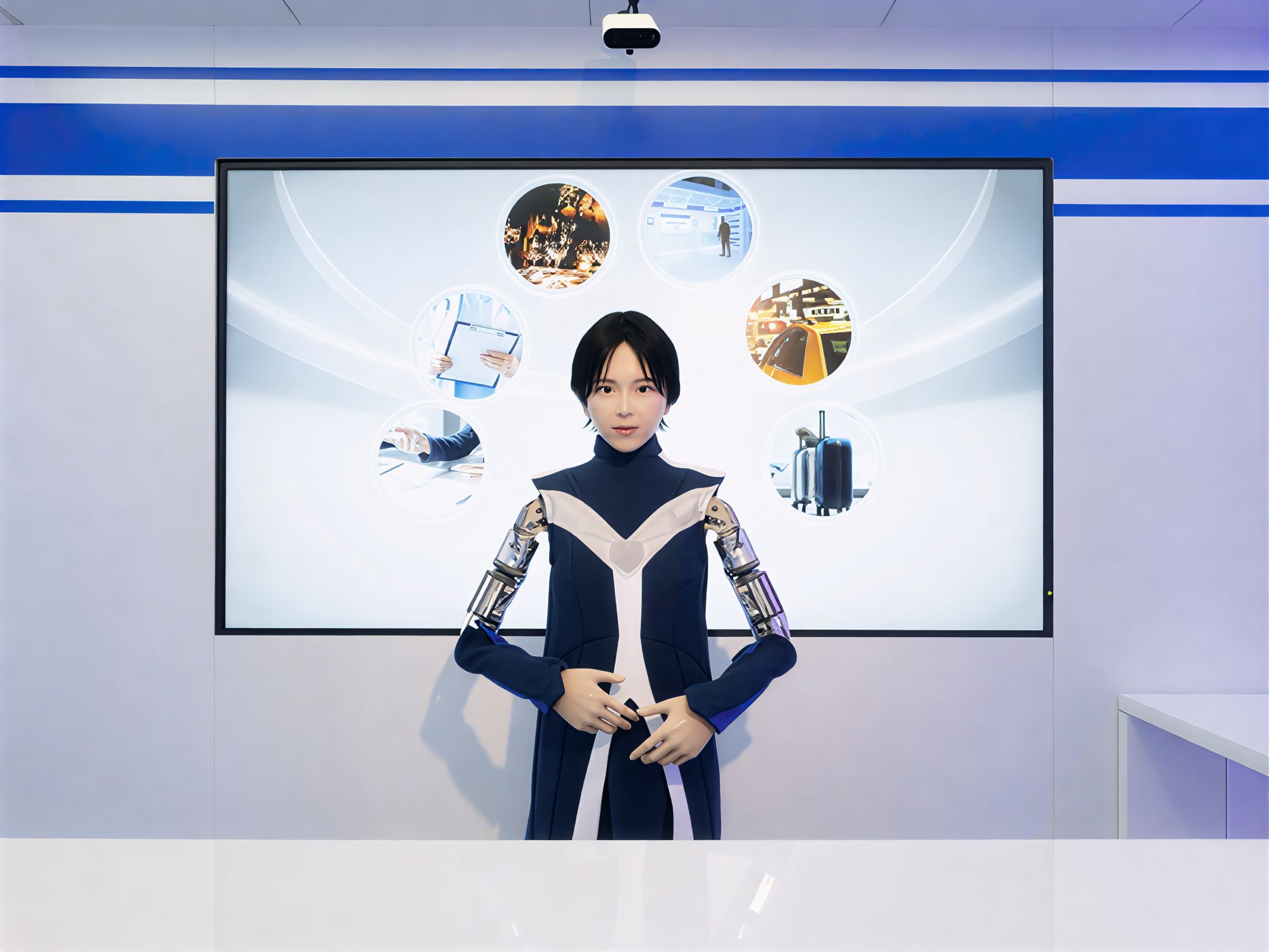
KDDI and AVITA are developing domestically produced humanoids by combining AVITA’s avatar technology with KDDI’s robust communications infrastructure. These humanoids are designed to operate effectively within real-world commercial environments, providing customers with a more natural and reassuring interaction.
Deploying these humanoids demands a high-capacity, low-latency network capable of transmitting real-time visual data and control commands. KDDI supports this requirement with its network backbone, enabling remote control and extensive cloud-based data processing. The continuous feedback of visual and motion data from customer interactions helps train the AI models, enhancing the humanoids’ precision and autonomy.
To meet the computational demands, the project leverages GPUs at the Osaka Sakai Data Center, operational since January 2026. Additionally, integration with Google’s Gemini generative AI model is under exploration to ensure secure and sophisticated data processing for complex dialogues.
Human-Centric Design for Enhanced Interaction
The humanoids feature a compact skeletal frame modeled after a typical Japanese physique, designed by renowned roboticist Hiroshi Ishiguro. Silicone skin and specialized mechanical components allow for warm, approachable facial expressions that synchronize with spoken dialogue. Embedded camera sensors facilitate natural eye contact by tracking objects in motion, while pneumatic actuators enable smooth, continuous movements with subtle micro-variations, overcoming historical challenges in automating hospitality-focused roles.
Pathway to Commercial Deployment
This initiative builds on previous collaborations where KDDI and AVITA introduced remote customer service platforms using digital avatars at retail outlets such as Lawson and au Style shops. Moving from digital avatars to physical humanoids represents a strategic advancement for scaling customer service operations.
Trials of these humanoid deployments are scheduled to begin in actual commercial spaces by Autumn 2026, with plans to integrate them at customer touchpoints like au Style shops.
Infrastructure and Governance Considerations
Successful integration of physical AI requires environments capable of supporting continuous, high-volume data streams without latency. As data from customer interactions becomes critical to machine learning, businesses must adapt governance frameworks to responsibly manage data usage within physical spaces.
Organizations facing workforce challenges are encouraged to assess operational bottlenecks where empathetic, non-verbal engagement is essential. Establishing high-speed network infrastructure and piloting digital AI avatar programs now will prepare enterprises for the broader adoption of humanoid AI as the technology matures.
Fonte: ver artigo original

Related Articles
 Nous Research Launches Open-Source AI Coding Model NousCoder-14B Amid Rising AI Development Competition
 Hackers Exploit Unpatched Windows Defender Vulnerabilities in Active Attacks
 Preply Leverages OpenAI’s Technology to Personalize Language Learning with AI-Generated Lesson Summaries
 UAE Tops Global AI Adoption at 64%, Surpassing US and Europe, Microsoft Reports