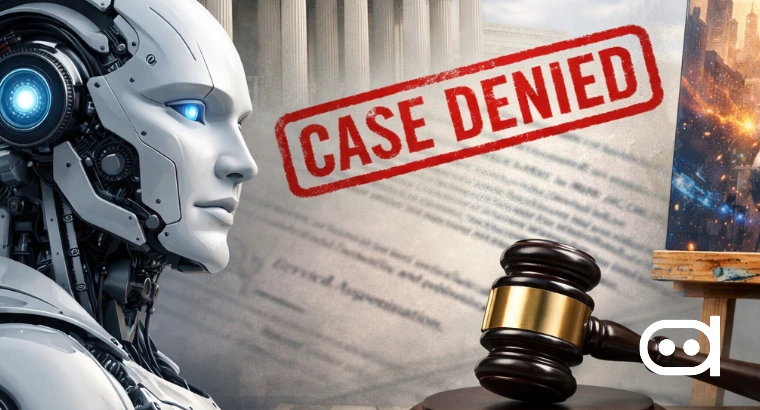
Supreme Court Sidesteps AI Copyright Debate
The rapid advancement of generative artificial intelligence tools that independently create images, text, and music has sparked intense discussion globally about intellectual property rights. Central to this debate is the question of who owns content produced by AI and whether such creations can be protected under existing copyright law.
This week, the United States Supreme Court declined to hear an important case that could have provided legal clarity on these issues. The case involved artwork generated by AI developed by Stephen Thaler, whose work has been at the center of a landmark copyright dispute.
Background: The Thaler AI Artwork Case
Stephen Thaler, an AI researcher, created an artificial intelligence system capable of producing original art. When he sought copyright registration for the AI-generated images, the US Copyright Office denied the claim, citing that copyright law applies only to works created by humans.
The denial led to a legal battle questioning whether AI-generated content could qualify for copyright protection and who—if anyone—should be recognized as the author. The case garnered significant attention as it could set precedent for future intellectual property matters in an era increasingly influenced by AI.
Implications of the Supreme Court’s Decision
By refusing to take up the case, the Supreme Court has effectively left the legal ambiguities intact. This decision means that, for now, AI-generated works remain outside the scope of copyright protection under current US law, limiting creators’ ability to claim ownership or exclusive rights over such content.
This outcome may have broad ramifications for artists, content creators, businesses, and AI developers. As AI tools continue to grow in capability and prevalence, the absence of clear legal guidelines could create challenges around innovation incentives and intellectual property enforcement.
Broader Context: AI and Intellectual Property
The issue of AI and copyright is part of a larger conversation about how artificial intelligence is reshaping creative industries and legal frameworks. With AI applications becoming integral to productivity and content generation across sectors, questions about authorship, liability, and fair use are gaining urgency.
Experts warn that without updated laws and policies, the legal system may struggle to keep pace with technological advancements, potentially stifling creativity and investment in AI-generated works.
Looking Ahead
While the Supreme Court’s refusal to hear the case postpones definitive answers, it also signals a need for legislative bodies and regulatory agencies to address these complexities. Future legal reforms may be necessary to balance protecting human creators’ rights while accommodating the unique aspects of AI-generated content.
For now, creators and companies utilizing AI must navigate a patchwork of existing laws and remain vigilant as the legal landscape evolves.
Fonte: ver artigo original

 Debenhams Launches Agentic AI Shopping Experience via PayPal Integration
 Microsoft’s Rapid Data Center Expansion Poses Threat to Its Sustainability Ambitions
 Google Integrates Gemini AI to Transform Chrome into a Workplace Assistant
 Google Unveils Gemini 3: A Leap Forward in AI for Developers