On Tuesday, Salesforce introduced a completely rebuilt version of Slackbot, its workplace AI assistant, upgrading the tool from a basic notification service to a sophisticated AI agent. This new Slackbot can search through enterprise data, draft documents, and perform actions on behalf of employees, marking a significant step in Salesforce’s AI strategy.
The updated Slackbot is now available for Business+ and Enterprise+ Slack customers and represents Salesforce’s boldest effort to center Slack in the rapidly growing “agentic AI” movement—where intelligent software agents collaborate with humans to complete complex work tasks. This launch comes amid Salesforce’s push to demonstrate how AI enhances rather than replaces its core offerings.
Reimagining Slackbot: From Basic Assistant to AI Powerhouse
Parker Harris, Salesforce co-founder and Slack CTO, described the transformation bluntly: “The old Slackbot was like a tricycle; the new Slackbot is like a Porsche.” Previously, Slackbot handled simple tasks such as reminders and notifications. The new version operates on an advanced architecture utilizing a large language model (LLM) and a robust search engine that can access Salesforce records, Google Drive files, calendar data, and years of Slack conversations.
Harris emphasized that the new Slackbot is fundamentally different from its predecessor and remains branded as Slackbot to leverage existing user familiarity.
Powered by Anthropic’s Claude with Plans for Additional AI Integrations
The new Slackbot runs on Claude, a large language model developed by Anthropic, selected largely due to compliance needs. Slack’s service complies with FedRAMP Moderate certification, required for serving U.S. federal government clients, and Anthropic was the only provider able to meet these standards initially.
However, Salesforce plans to support additional AI providers within the year, including Google’s Gemini model and potentially OpenAI’s offerings. Harris noted the commoditization of large language models, comparing them to CPUs in computing.
On data privacy, Salesforce made clear it does not train AI models on customer data to avoid security risks associated with confidential information exposure.
Internal Testing Yields High Adoption and Productivity Gains
Salesforce internally tested the new Slackbot across its 80,000 employees with remarkable results. Approximately two-thirds of employees tried Slackbot, with 80% maintaining regular use and an internal satisfaction rate of 96%, the highest for any AI feature Slack has deployed. Employees reported saving between two to twenty hours weekly.
Adoption was largely organic, driven by peer sharing of effective Slackbot prompts rather than top-down mandates, highlighting a collaborative culture around the tool.
Integrating and Synthesizing Enterprise Data for Enhanced Decision-Making
Slackbot excels at aggregating and analyzing data from multiple sources. In demonstrations, the AI assistant was shown correlating customer feedback with usage dashboards, querying Salesforce for potential clients, and compiling all insights into Slack’s collaborative Canvas documents. It can also identify calendar availability among stakeholders to facilitate scheduling.
This capability signals Slackbot’s evolution toward becoming a comprehensive workplace assistant that supports collaborative workflows seamlessly.
Pilot Customers Report Significant Time Savings and Ease of Deployment
Among early adopters is Beast Industries, the company behind YouTube star MrBeast. Their CIO, Luis Madrigal, praised Slackbot’s simple deployment and robust security measures, noting that Slackbot respects user permissions strictly, allowing only access to authorized information.
Employees at pilot companies reported productivity gains, with some saving up to 90 minutes daily. Other pilot participants include Slalom, reMarkable, Xero, Mercari, and Engine, all citing Slackbot as a valuable tool for reducing context switching and streamlining tasks.
Competing with Microsoft Copilot and Google Gemini in Enterprise AI
Salesforce’s Slackbot directly challenges Microsoft Copilot, integrated with Teams and Microsoft 365, and Google’s Gemini embedded within Workspace. Slack’s chief product officer, Rob Seaman, highlighted Slackbot’s advantage in context and convenience, stressing its seamless integration within the Slack environment without additional setup or training.
Executives argue that Slackbot’s deep understanding of users’ workflows and data context sets it apart from other AI assistants that often lack nuance and require users to switch between multiple tools.
The Vision: Slackbot as the Central “Super Agent” in Enterprise AI
Salesforce envisions Slackbot evolving into a “super agent” that coordinates with other AI agents across organizations. The platform already supports third-party AI agents, including Anthropic’s Claude Code for Slack, OpenAI, Google, and others, fostering a collaborative ecosystem of human-AI interaction.
Harris foresees Slackbot becoming a Model Context Protocol (MCP) client, integrating diverse software tools to provide comprehensive AI-driven assistance. However, he tempered expectations, noting that widespread multi-agent coordination is still in early stages and likely to develop over the next few years.
Pricing and Potential Cost Implications for Enterprise Customers
Slackbot is available at no extra charge for Business+ and Enterprise+ plan customers. However, some enterprises may face increased costs due to Salesforce’s evolving data access and API pricing policies, which could affect third-party application integrations and data management strategies.
Current Capabilities and Future Roadmap
The rollout of the new Slackbot started immediately and aims to reach all eligible customers by the end of February, with full mobile availability expected by early March. While calendar reading and availability checking are functional at launch, meeting booking is slated for release in the following weeks. Image generation features are under consideration for future updates.
Salesforce declined to detail integrations with competing CRM systems like HubSpot or Microsoft Dynamics, citing competitive sensitivities.
Salesforce Bets on Conversational AI as the Future of Work
Salesforce’s leadership believes the future of enterprise productivity lies in conversational AI interfaces that allow users to interact naturally with their tools. Harris highlighted the immense untapped value in the unstructured data within Slack, emphasizing how LLMs can unlock insights humans cannot easily extract.
Looking forward, Salesforce anticipates AI agents will develop interfaces tailored to user intent beyond simple chat windows, reflecting a broader industry trend shared by Microsoft, Google, and emerging AI startups focused on embedding AI within existing workflows.
Following a challenging year for Salesforce’s stock and concerns about AI’s impact on its business, the company is counting on Slackbot to demonstrate that AI integration enhances its platforms and leverages Slack’s vast daily user base as a strategic asset.
Haley Gault, a Salesforce account executive, summarized the shift succinctly: “I honestly can’t imagine working for another company not having access to these types of tools. This is just how I work now.” This sentiment encapsulates Salesforce’s vision for AI-augmented work.
As Salesforce positions Slackbot as a next-generation enterprise AI assistant, the competition among leading tech giants intensifies, signaling a transformative period for workplace productivity powered by artificial intelligence.
Fonte: ver artigo original

Related Articles
 OpenAI Labels AI Expert Stuart Russell a ‘Doomer’ in Court Despite CEO’s Shared Warnings
 Fetch AI Unveils ASI:One and Business Tier to Pioneer the Agentic Web Era
 Why ‘College Dropout’ Has Become the Top Credential for AI Startup Founders
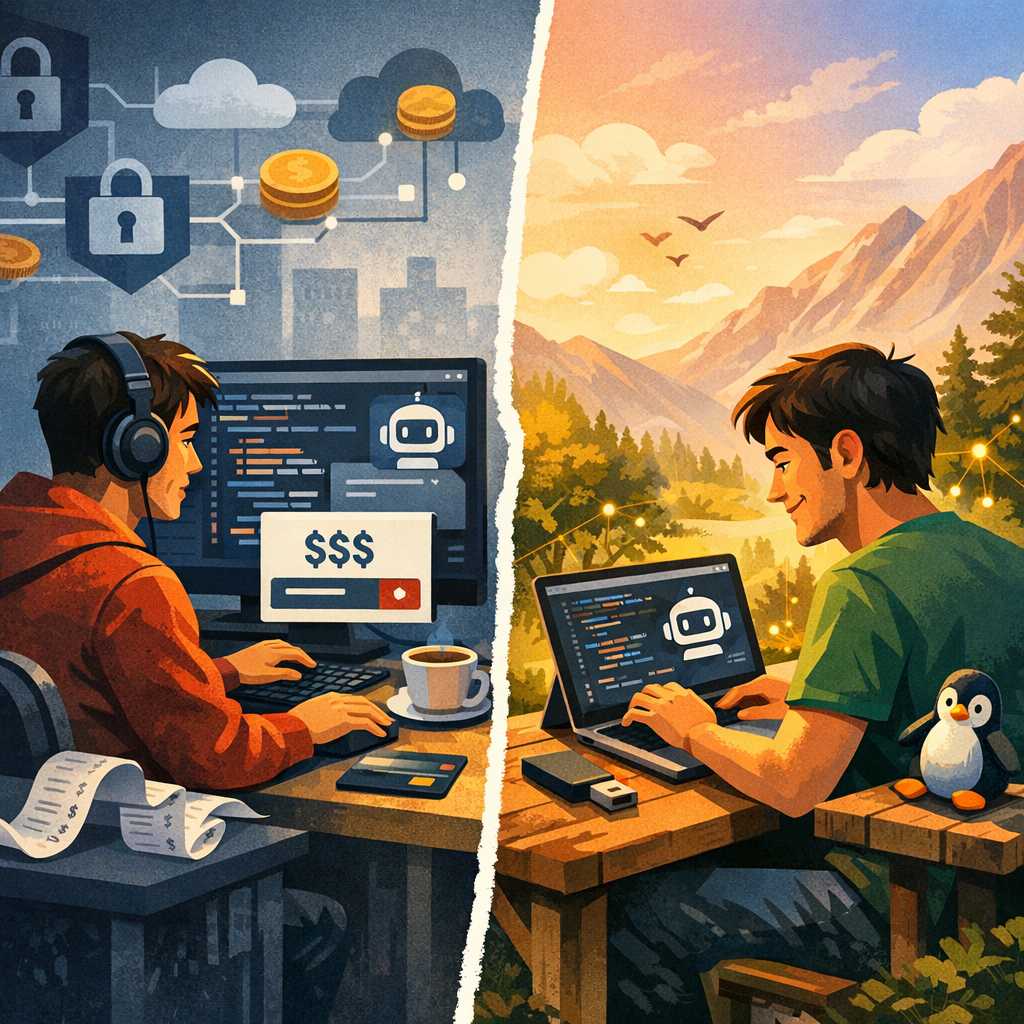 Goose Emerges as a Free, Local Alternative to Anthropic’s $200-a-Month Claude Code AI Coding Tool