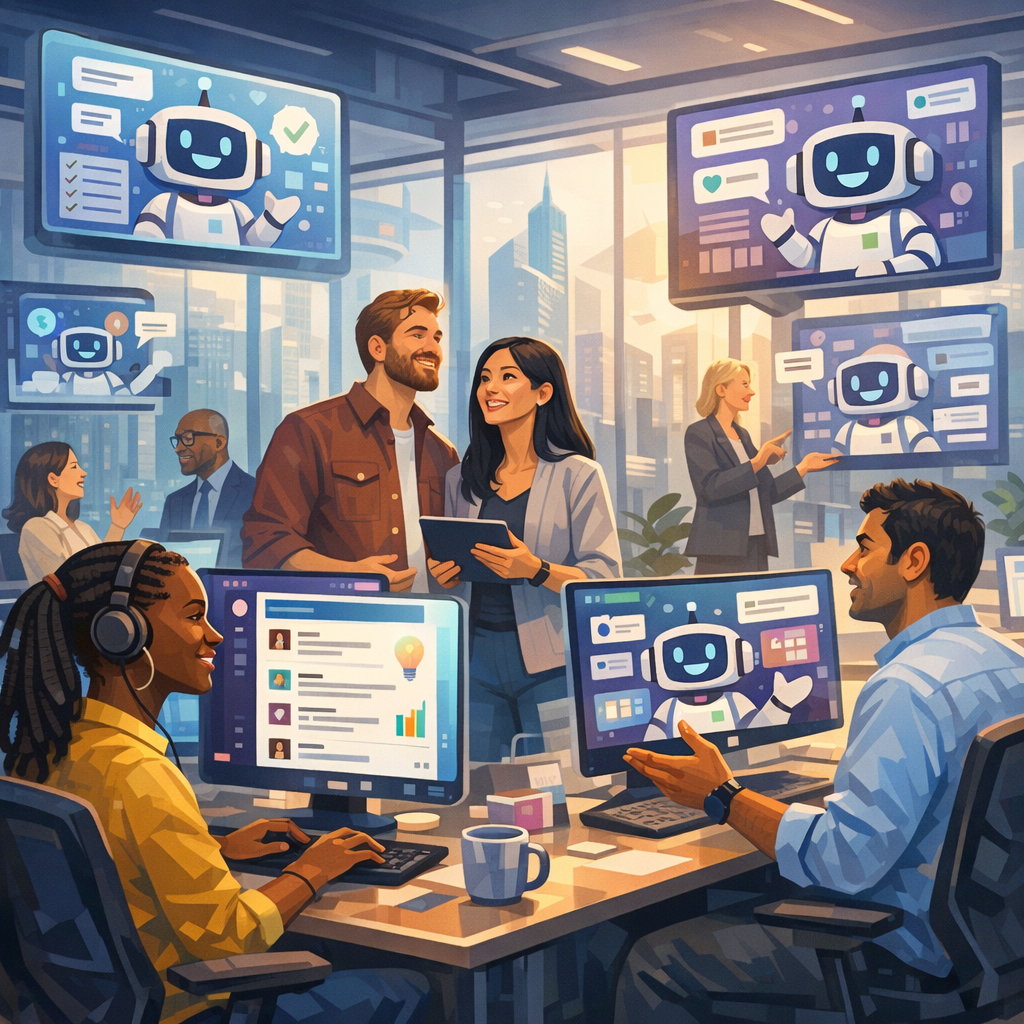
Salesforce announced the release of a fully rebuilt version of Slackbot, evolving the platform’s workplace assistant from a simple notification tool into a sophisticated AI agent. This new Slackbot is designed to search enterprise data, draft documents, and execute tasks on behalf of employees, marking Salesforce’s most ambitious step to place Slack at the center of the “agentic AI” movement, where AI agents collaborate with humans to complete complex work.
Reimagining Slackbot: From Basic Tool to AI-Powered Enterprise Assistant
According to Parker Harris, Salesforce co-founder and Slack CTO, the upgraded Slackbot is a radical transformation. He compared the original Slackbot to “a little tricycle” that performed straightforward functions like reminders and notifications, while the new version is “like a Porsche,” powered by a large language model (LLM) and advanced search capabilities. It connects to Salesforce records, Google Drive files, calendar data, and extensive Slack conversation histories to deliver contextual and actionable insights.
Despite the overhaul, Salesforce retained the Slackbot brand due to its existing recognition among users.
Powered by Anthropic’s Claude with Plans for Multi-Provider Support
The new Slackbot operates on Claude, Anthropic’s LLM, selected primarily for compliance reasons. Slack’s commercial service holds FedRAMP Moderate certification to serve U.S. federal government clients, and Anthropic was the only provider able to meet these stringent requirements at the start of development.
Parker Harris indicated that Salesforce plans to integrate additional AI providers within the year, including Google’s Gemini and potentially OpenAI, reflecting the commoditization of LLMs. Harris emphasized that Salesforce does not train AI models on customer data to maintain confidentiality and security.
Internal Testing Yields High Adoption and Productivity Gains
Before public launch, Salesforce deployed the new Slackbot to its 80,000 employees, achieving what Slack’s Chief Marketing Officer Ryan Gavin described as the fastest product adoption in the company’s history. Two-thirds of employees tried Slackbot, with 80% becoming regular users and a 96% satisfaction rate—the highest for any AI feature Slack has released. Users reported saving between two and 20 hours weekly.
Organic sharing of effective Slackbot prompts fueled adoption, highlighting a collaborative culture within Salesforce where employees actively share tips and hacks.
Transforming Enterprise Data into Actionable Insights
Slackbot can intelligently synthesize data from multiple sources. In demonstrations, it analyzed customer feedback, correlated it with quantitative usage data from dashboards, identified potential enterprise accounts for pilot programs, and organized collaborative workspaces within Slack’s Canvas format. It also assists with scheduling by finding stakeholder availability, streamlining workflows that traditionally require multiple tools.
Real-World Impact: MrBeast’s Company Among Early Adopters
Beast Industries, the parent company of YouTube personality MrBeast, participated in the Slackbot pilot. CIO Luis Madrigal praised the seamless integration and rapid security approval, noting that Slackbot respects individual user permissions, which alleviated typical enterprise AI security concerns. Employees reported saving at least 90 minutes per day, describing Slackbot as an attentive assistant that enhances productivity.
Competitive Landscape: Slackbot vs Microsoft Copilot and Google Gemini
Salesforce’s Slackbot enters a competitive market facing Microsoft’s Copilot, embedded in Teams and Microsoft 365, and Google’s Gemini integrated within Workspace. Slack’s Chief Product Officer Rob Seaman highlighted Slackbot’s advantage: its deep contextual awareness and convenience by being embedded directly in Slack, which users already rely on daily. Unlike many AI tools that require setup or training, Slackbot understands user workflows naturally, improving over time with continued use.
Vision for the Future: Slackbot as a “Super Agent”
Salesforce envisions Slackbot evolving into a “super agent”—a central AI hub coordinating multiple AI agents across an organization. This includes integration with third-party AI tools like Anthropic’s Claude Code for Slack and other agents developed by OpenAI, Google, and Vercel. Parker Harris described a future where Slackbot leverages the Model Context Protocol (MCP) to interface with a broad software ecosystem, enhancing enterprise AI collaboration.
However, Harris tempered expectations about multi-agent coordination, suggesting significant advances may arrive by fiscal year 2026, focusing on practical customer benefits rather than hype.
Pricing and Access Considerations
Slackbot is available at no extra cost for customers on Slack’s Business+ and Enterprise+ plans. However, some enterprises might experience increased costs related to Salesforce’s broader data access strategy, including higher API access fees that could impact third-party integrations. Industry experts warn these changes may drive customers to Salesforce’s own data cloud solutions.
Current Capabilities and Roadmap
The new Slackbot rollout began in late February, with full availability expected soon and mobile support by early March. Features like calendar reading and availability checking are live at launch, while meeting booking and image generation functionalities are planned for upcoming updates. Salesforce has not detailed integration plans with competing CRM platforms such as HubSpot or Microsoft Dynamics.
Salesforce’s Bet on Conversational AI as the Future of Work
Salesforce is positioning conversational AI as central to the future of enterprise work, where natural language interaction replaces traditional software navigation. Emphasizing principles like “don’t make me think,” the company aims for Slackbot to proactively surface valuable information to users, transforming how work is done.
Harris highlighted the unique value of applying LLMs to unstructured Slack data, which encompasses documents, conversations, and decisions that would be difficult for humans to analyze comprehensively.
Looking forward, the interface for AI agents may evolve beyond purely conversational models to more tailored experiences that better align with user intent.
As the enterprise AI landscape heats up, Salesforce’s success with Slackbot will be closely watched as a bellwether for AI’s role in transforming workplace productivity and collaboration.
Fonte: ver artigo original

 Retail Giants Kroger and Lowe’s Explore AI Shopping Agents While Retaining Control from Google
 Trustpilot Strengthens AI Partnerships Amid Decline in Traditional Search Usage
 Why NVIDIA Is Using AI Agents to Speed Up OpenUSD Runtimes
 Meta Develops Hyperagents Capable of Self-Improvement Across Tasks