
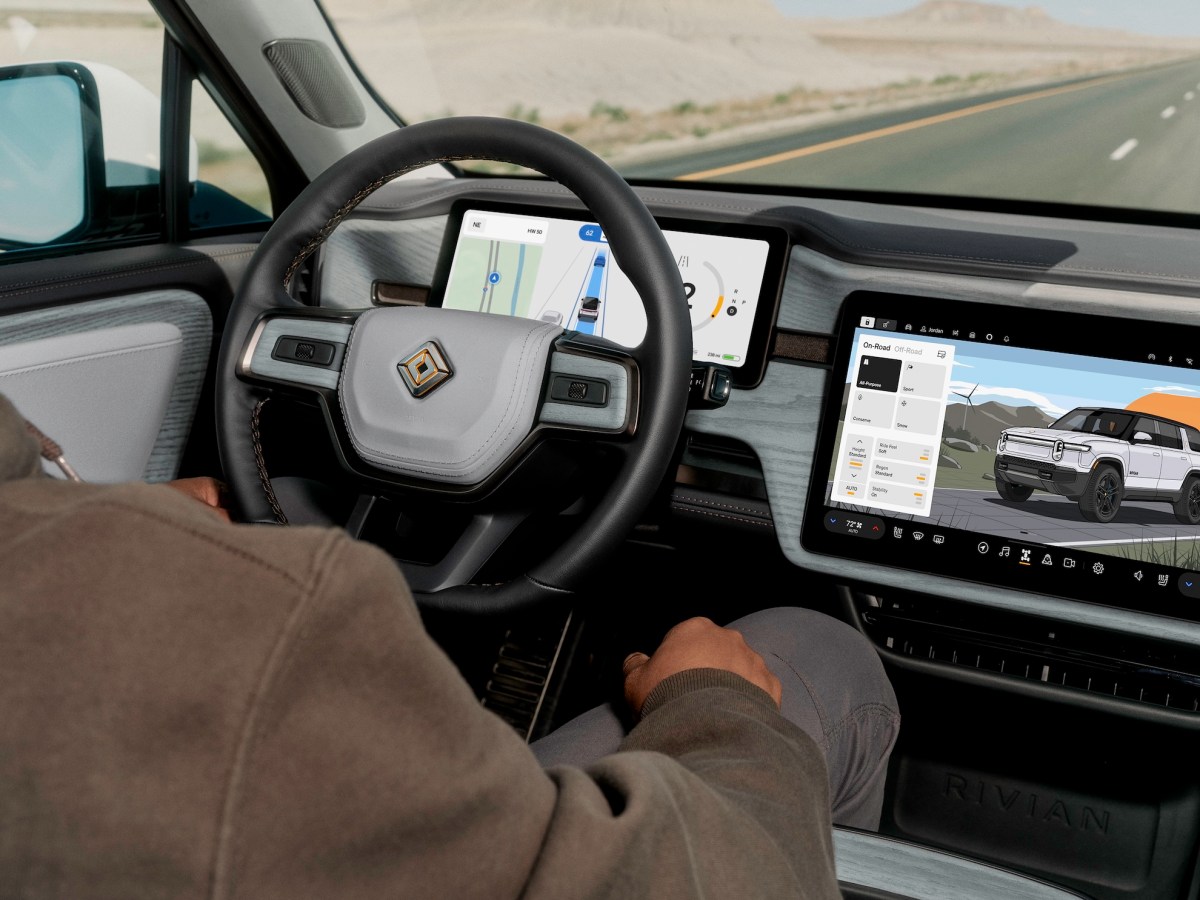
Rivian’s Bold Vision for Autonomous Vehicles
Electric vehicle manufacturer Rivian is making a significant push into autonomous driving technology, with CEO RJ Scaringe revealing plans to equip its vehicles with increasingly sophisticated self-driving capabilities. This strategic move is intended to position Rivian alongside, or even ahead of, established automakers and autonomous vehicle (AV) technology firms.
Custom Silicon and Advanced Lidar Integration
One of the centerpiece innovations in Rivian’s autonomy strategy is the development of bespoke silicon chips designed specifically to optimize AI processing for driving tasks. These custom chips are expected to enhance computational efficiency and real-time decision-making, crucial for safe and reliable autonomous operation.
Complementing the silicon advancements, Rivian is investing heavily in lidar technology, which provides high-resolution 3D mapping of the vehicle’s surroundings. This sensor technology is critical for precise environmental perception, enabling better obstacle detection, navigation, and overall situational awareness.
Toward a Robotaxi Future
Beyond individual consumer vehicles, Scaringe hinted at ambitions to enter the robotaxi market. This suggests Rivian is exploring the deployment of fully autonomous ride-hailing services, a rapidly growing segment within the autonomous mobility landscape. Such services could dramatically reshape urban transportation by reducing reliance on human drivers and lowering operational costs.
Competitive Landscape and Industry Context
Rivian’s autonomous driving initiative comes amid intensifying competition among automakers and technology companies striving to develop viable self-driving solutions. Rivian’s approach—leveraging proprietary hardware alongside advanced AI software—reflects a broader industry trend emphasizing vertical integration to achieve superior performance and safety standards.
As regulatory frameworks evolve and consumer expectations for autonomous features grow, Rivian aims to carve out a distinct position by combining its electric vehicle expertise with cutting-edge autonomy capabilities.
Implications for AI and Mobility Sectors
This development underscores the growing convergence of artificial intelligence, custom semiconductor design, and sensor technology within the automotive industry. Rivian’s investments signal increased demand for specialized AI infrastructure tailored to mobility applications, contributing to the broader narrative of AI-driven transformation in transportation.
With the integration of multimodal AI systems—processing visual, spatial, and contextual data—Rivian strives to advance the state of autonomous driving, potentially setting new benchmarks for safety and user experience.

Related Articles
 TechEx North America Highlights Power, Infrastructure, and Security as Pillars for AI Deployment
 London Advances Toward First Robotaxi Service as Waymo Starts Testing
 Apple Reportedly Developing AI-Powered Wearable Device Set for 2027 Release
 Luma AI Introduces Uni-1: A Potential Rival to Google’s Nano Banana in AI Image Generation



