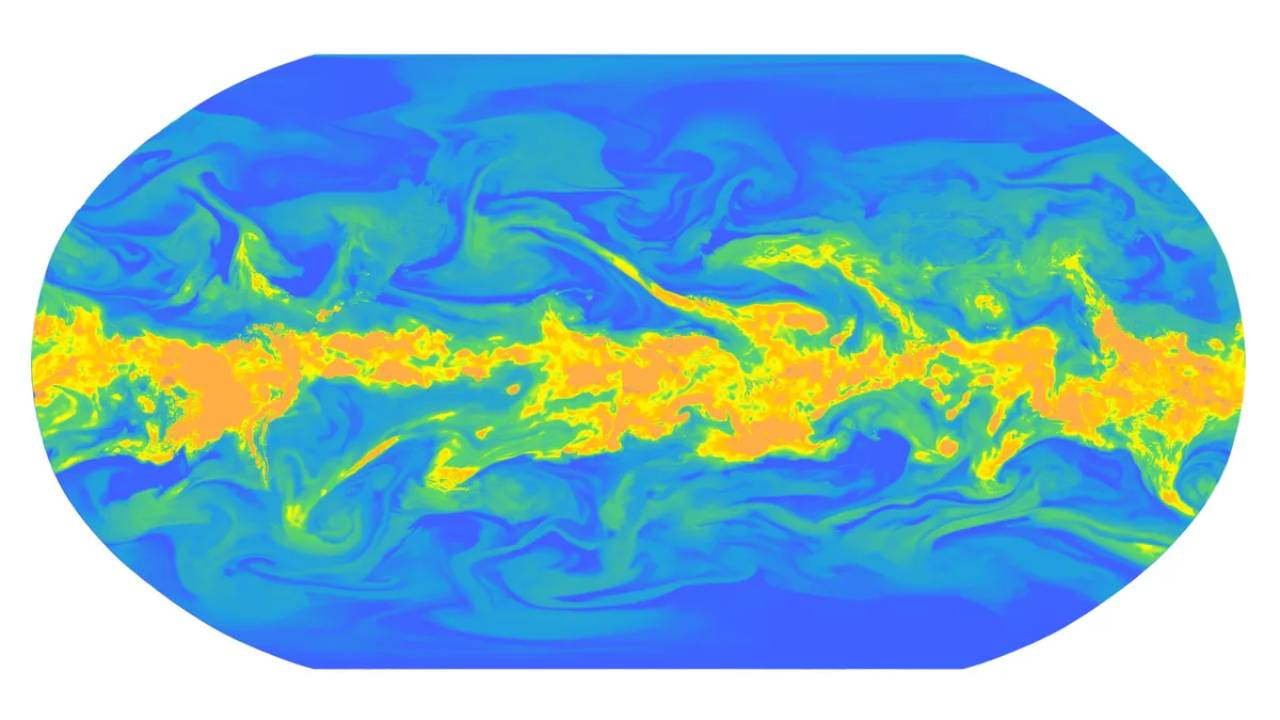
Google DeepMind has announced the release of WeatherNext 2, the latest iteration of its artificial intelligence-powered weather prediction system. This new model represents a substantial improvement over its predecessor, delivering superior accuracy in 99.9% of meteorological variables and forecast horizons, according to the company.
Advancements in AI Weather Forecasting
Weather forecasting is a complex scientific challenge that requires processing vast amounts of atmospheric data. Traditional numerical weather prediction models depend on physics-based simulations, which can be computationally intensive and limited in resolution. By contrast, WeatherNext 2 leverages advanced machine learning techniques to analyze and predict atmospheric conditions more efficiently and with greater precision.
Performance Improvements Across the Board
WeatherNext 2 builds on the foundation laid by the original WeatherNext model, incorporating enhanced neural network architectures and refined training datasets. Google DeepMind reports that the new model outperforms its predecessor across nearly all evaluated meteorological variables, including temperature, humidity, wind patterns, and precipitation forecasts.
The system’s ability to provide more accurate and reliable forecasts over various time scales—from short-term nowcasting to longer-range predictions—marks a significant step forward in AI-driven meteorology.
Implications for Industry and Society
Enhanced weather prediction capabilities have far-reaching implications for sectors such as agriculture, disaster management, transportation, and energy. More reliable forecasts can improve preparedness for extreme weather events, optimize resource allocation, and reduce economic losses.
Google DeepMind’s investment in WeatherNext 2 reflects a broader trend of integrating AI into critical infrastructure and environmental monitoring systems, highlighting the technology’s potential to address global challenges.
Looking Ahead
The launch of WeatherNext 2 underscores the ongoing evolution of AI in scientific applications. As models continue to improve, we can expect further breakthroughs in weather forecasting accuracy and computational efficiency, paving the way for more resilient and informed communities worldwide.
Fonte: ver artigo original

Related Articles
 Claude AI Now Integrates Seamlessly with WordPress to Enhance Site Analytics
 Newsweek CEO Dev Pragad Urges Publishers to Adapt as AI Becomes the New Gateway to News
 Black Forest Labs Unveils FLUX.2 AI Image Models to Rival Nano Banana Pro and Midjourney
 OpenAI Highlights Limited Self-Control in AI Reasoning as a Positive for Safety