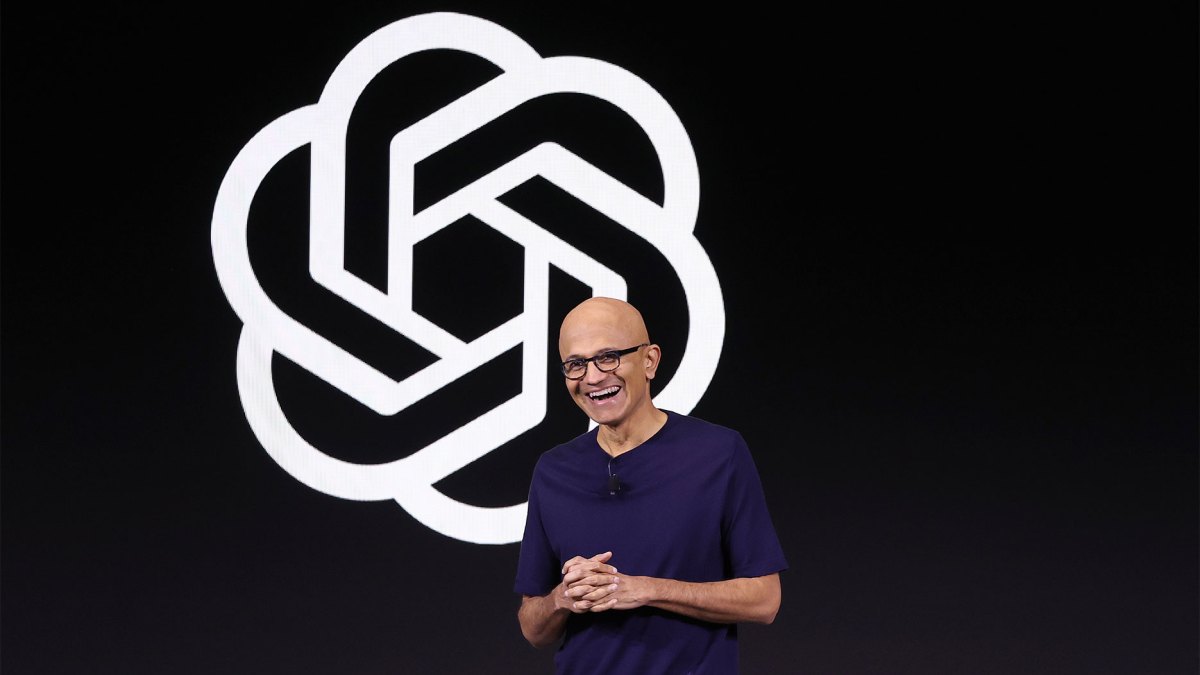
Satya Nadella says companies that is at the center of this update. Editorial note: This is analysis, not investment advice.
Satya Nadella’s warning that companies that trust one AI for everything may not survive is more than a comment on model quality. It is a statement about where power is moving in the AI stack: away from a single chatbot answer and toward the infrastructure that decides which model gets the job.
In the source excerpt, Nadella says companies without their own models — or without an AI gateway layer that separates prompts from the model itself — will be in trouble. That puts Microsoft’s Copilot strategy in a familiar position: not as a one-model bet, but as an enterprise system built around control, routing, and choice.
Microsoft Copilot is betting on orchestration, not a single model
The practical message behind Nadella’s comment is that enterprises should not treat AI like a monolith. Different tasks may require different models, different policies, and different levels of access. In that world, the value is not only in the model’s raw output, but in the layer that decides how work flows through it.
That is a strong fit for Microsoft, which has spent the AI era positioning Copilot as an interface across productivity software, cloud services, and enterprise controls. The company’s pitch is increasingly about making AI usable inside business systems, not just impressive in a demo.
Why AI gateways matter more than the chatbot headline
An AI gateway is a simple idea with big implications: it sits between a user prompt and the underlying model, helping separate, route, and govern requests. That can make it easier to swap models, enforce policy, and avoid locking a business into one provider.
For companies buying AI, that matters because the risk is no longer just whether a model is smart enough. The risk is operational dependence. If one model fails, changes pricing, or becomes a compliance problem, the business needs a way out.
What this says about OpenAI, Anthropic, and the enterprise race
Nadella’s framing also has a competitive edge. If enterprises move toward multi-model setups, then OpenAI, Anthropic, and other model makers are competing not only to be the best model, but to remain relevant inside larger platforms.
That is the strategic tension behind much of the AI race: model companies want direct user relationships, while platform companies want to own the workflow layer. Microsoft’s message suggests that the workflow layer may become the more durable business.
What customers and developers will watch next
The big question is whether buyers actually adopt this architecture at scale. Developers may like flexibility, but they also want simplicity. Enterprises may want control, but they often move slowly. If AI gateways become standard, they could reshape procurement, compliance, and model selection across the market.
For now, the key takeaway is straightforward: Nadella is arguing that AI strategy is becoming an infrastructure problem. The companies that survive may be the ones that can swap models, route work intelligently, and avoid putting everything behind one AI door.
Sources consulted: TechCrunch source excerpt provided by the user.
Related coverage: AI Chronicle analysis and updates.
Sources and further reading

Related Articles
 Android 16 Introduces AI Notification Summaries and Enhanced Customization with Frequent Updates
 Rapid Expansion of Microsoft’s Data Centers Poses Challenges to Sustainability Goals
 Australia Expands Teen Social Media Ban to Include Twitch, Exempts Pinterest
 Meta Secures Tens of Millions of AWS Graviton 5 Processor Cores from Amazon in Major AI Infrastructure Move