OpenAI versus xAI is at the center of this update. Editorial analysis note: This piece is analysis, not investment advice.
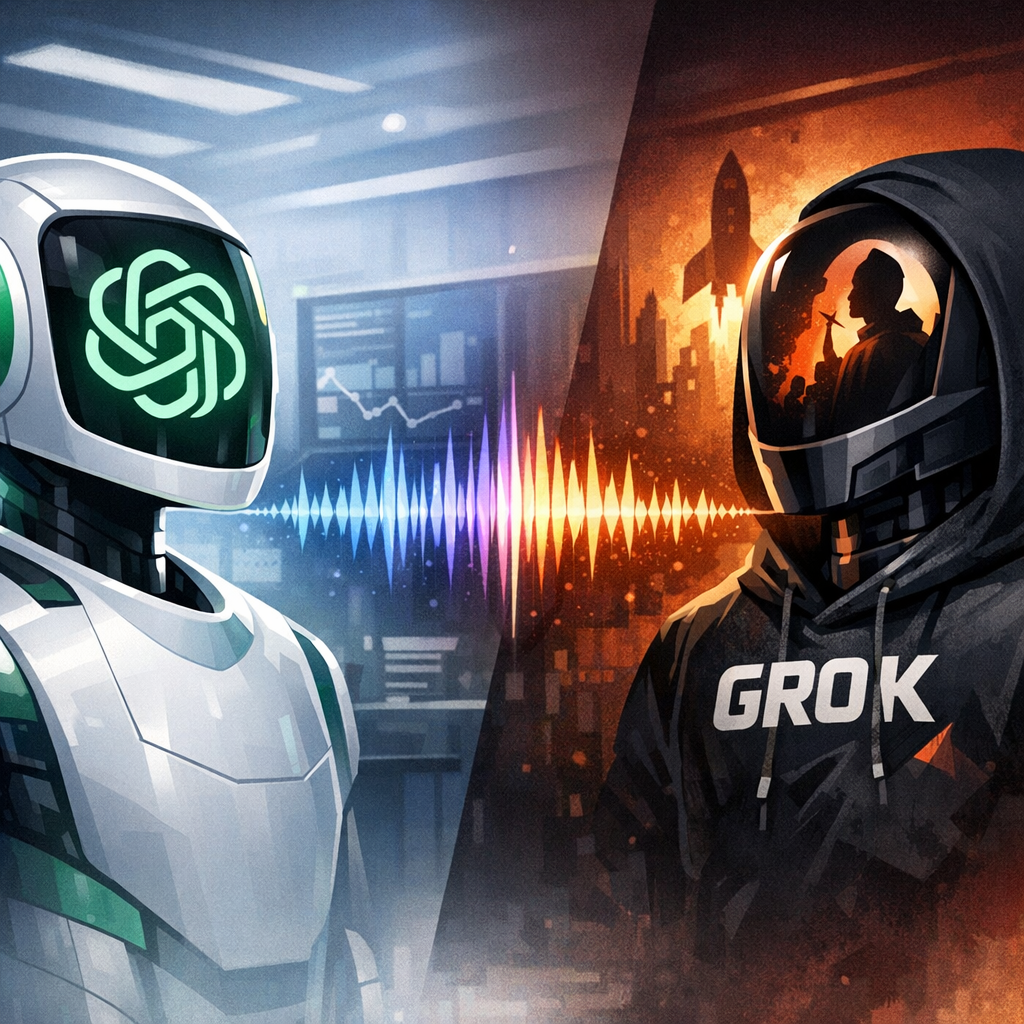
Every new Grok update is really a referendum on OpenAI versus xAI. The latest claim that xAI has launched a Grok Voice Think Fast 2.0 upgrade is a reminder that the AI race is no longer just about model quality. It is about which company can turn an assistant into a habit, a brand, and eventually a platform.
ChatGPT’s scale versus Grok’s Musk-shaped identity
OpenAI’s ChatGPT has the advantage that matters most in AI: broad distribution and a product people already treat as a default assistant. xAI’s Grok is chasing that position, but it is doing so with a different playbook. The Musk-led company leans on personality, speed, and differentiation rather than trying to look like a generic chatbot clone.
That strategic split is the real rivalry. OpenAI is building a general-purpose AI platform around ChatGPT and Sam Altman’s ecosystem ambitions. xAI is trying to make Grok feel distinct enough that users choose it for tone as much as for capability.
Why a voice feature can still signal a bigger contest
On the surface, a voice upgrade sounds incremental. In practice, voice is one of the clearest ways AI assistants can become sticky. If a user talks to an assistant instead of typing, the product starts competing for daily attention, not just occasional queries.
That is why the competitive question is not whether Grok has a new label on a feature. It is whether xAI can make the assistant feel faster, more useful, or more entertaining than ChatGPT in real use.
OpenAI’s advantage is breadth; xAI’s bet is sharpness
OpenAI’s challenge is that leadership in one format does not guarantee dominance in every interface. ChatGPT has to keep proving that it can stay ahead as assistants expand into voice, memory, agents, and workplace workflows.
xAI’s challenge is the opposite. It needs a reason for users to switch or split attention, and that usually requires a sharper identity than a feature checklist. Grok’s appeal has to come from a product experience that feels meaningfully different from ChatGPT and, increasingly, from Claude and other rivals.
What users and developers should watch next
The most important question is whether xAI pairs product updates with clearer documentation, wider availability, or evidence that people actually use the feature. Without that, the launch risks becoming another attention cycle rather than a durable competitive move.
For users, the practical issue is simple: which assistant is better at fast, natural conversation. For developers, the question is which platform becomes the more reliable foundation for apps, integrations, and recurring workflows.
In other words, the rivalry is not about one voice mode. It is about which company gets to define the default interface for AI.
Sources consulted: NewsBytes via Google News RSS excerpt provided by the user.
Related coverage: AI Chronicle analysis and updates.
Sources and further reading
- http://NewsBytes%20via%20Google%20News%20RSS%20excerpt%20provided%20by%20the%20user
- https://openai.com/news/
- https://www.anthropic.com/news

Related Articles
 Google’s AI Edge: Leveraging User Data to Enhance Personalized Assistance
 OpenAI’s Cars24 case study shows ChatGPT’s real battleground is the workflow, not the demo
 OpenAI Teases New Hardware Device Dedicated to Codex AI Coding Tool
 OpenAI Secures Historic $110 Billion Funding Amid Rising Cash Burn Forecast