NVIDIA OpenUSD lightweight USD runtimes is at the center of this update. Note: This article is editorial analysis, not investment advice.
In the AI race, the loudest battles usually happen in chatbots. But NVIDIA’s latest OpenUSD post points to a quieter contest: who controls the software layer that turns physical AI from demo into deployment. The company says AI agents can help developers build lightweight USD runtimes faster, and that is less a tooling update than a strategic signal.
OpenUSD, in NVIDIA’s framing, is not just a 3D standard. It is a common scene description language for physical AI, one that lets teams combine CAD data, simulation assets, and real-world telemetry into a physically accurate view of the world. That makes the runtime layer important because it determines how easily robotics and simulation teams can adapt the stack to specific memory and performance constraints.
NVIDIA’s OpenUSD pitch is really about control of the physical AI stack
The immediate claim in the source is narrow: building a USD implementation has often meant adapting a large existing codebase, even when teams need a smaller footprint. NVIDIA’s answer is to use AI agents to speed that work up. But the broader implication is more interesting. If NVIDIA can make OpenUSD easier to implement and customize, it strengthens its position as an infrastructure provider for robotics, digital twins, and other physical AI systems.
ChatGPT and Claude dominate the narrative, but the next fight is below the model layer
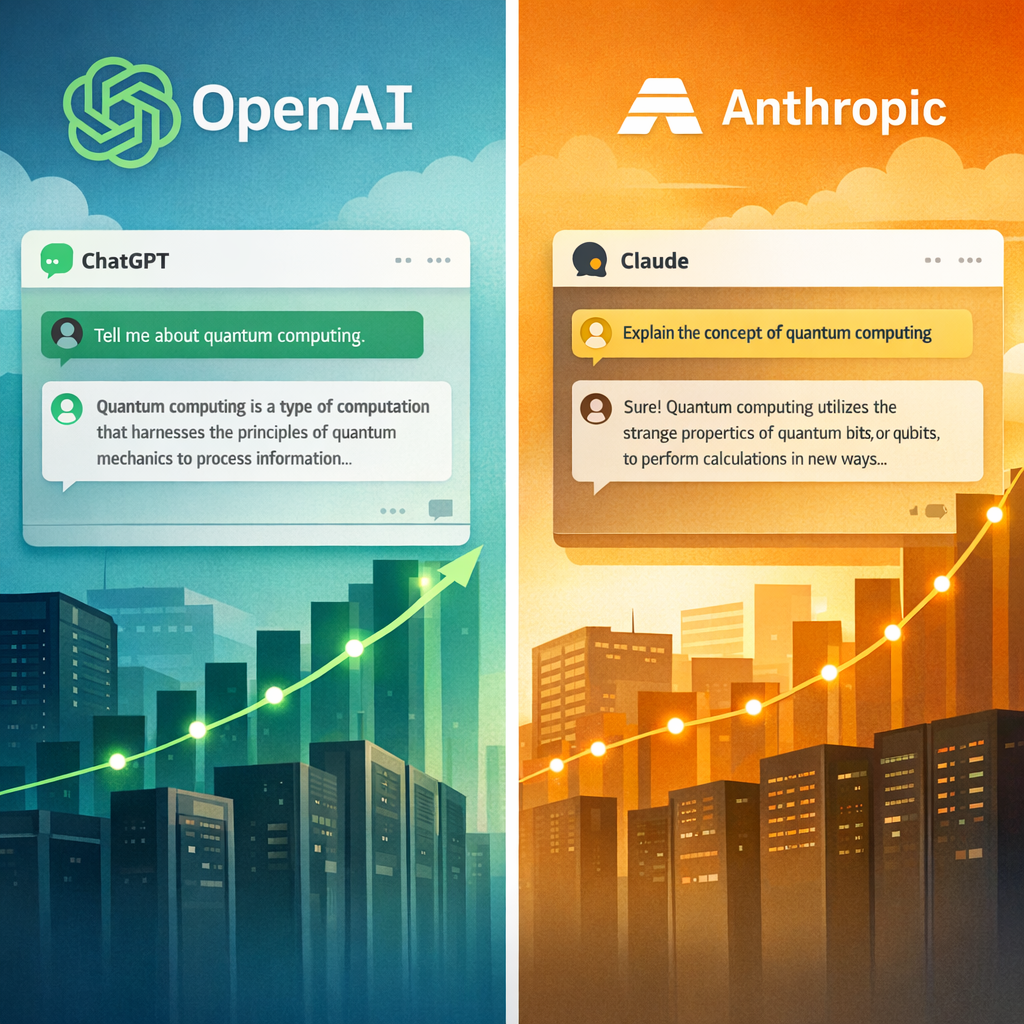
This is where the contrast with the more familiar AI rivalry matters. OpenAI, ChatGPT, Sam Altman, Anthropic, and Claude tend to compete in the public eye over model quality, product behavior, and consumer mindshare. NVIDIA’s OpenUSD move lives in a different part of the stack: the plumbing that developers use before a robot ever receives a prompt or a policy decision.
That difference is strategic. Model companies are fighting for user attention and enterprise adoption. Infrastructure companies are fighting for dependency. If the runtime becomes the default way physical AI teams move data through simulation and deployment, the winner may be the company that owns the workflow, not the headline model.
What developers gain if lightweight runtimes become easier to build
For developers, the promise is practical. Smaller runtimes can be easier to tailor for constrained systems, which matters in robotics and edge environments where memory, performance, and portability are not abstract concerns. If AI agents reduce the cost of adapting OpenUSD, teams may be able to move faster from simulation to working systems.
That could also widen OpenUSD’s appeal beyond large platform players. The more modular the runtime path becomes, the more accessible the stack may be for startups and industrial teams that do not want to inherit a massive codebase just to get scene data into the right shape.
What to watch as NVIDIA turns developer tooling into a moat
The key question is whether this is a one-off productivity story or the start of a broader ecosystem push. Watch for NVIDIA to show more concrete examples, partner announcements, or benchmarks that explain how much AI agents actually speed up runtime development. Also watch whether robotics and simulation teams treat OpenUSD as a must-have layer or just one option among many.
For now, the source supports a clear conclusion: NVIDIA is trying to make physical AI feel less like a bespoke engineering project and more like an integrated platform. That is a different kind of rivalry from ChatGPT versus Claude, but it may prove just as consequential.
Sources consulted
NVIDIA developer blog, Develop Lightweight USD Runtimes Faster with AI Agents.
Related coverage: AI Chronicle analysis and updates.

Related Articles
 OpenAI’s GPT-5 Pro Cracks 3-Year Immunology Mystery, Showcasing AI’s Research Potential
 Runway Launches Gen-4.5, Setting New Standards in AI-Powered Video Generation
 Salesforce Executives Report Declining Confidence in Large Language Models in 2025
 Nvidia Unveils RTX Spark Chip to Boost Local AI Agents on Windows Devices by 2026