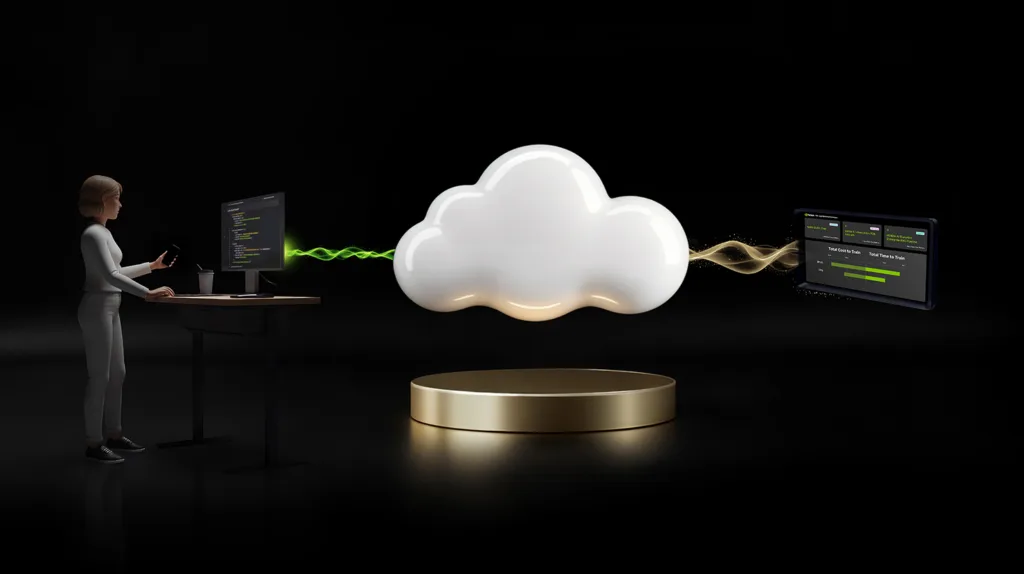
Cloudflare’s new rules turn OpenAI’s web access into a permission problem
OpenAI ChatGPT analysis is at the center of this update. Cloudflare’s crawler policy is not really about bots. It is about the power balance around OpenAI and ChatGPT as AI assistants move from static answers to live web retrieval.
The company’s new system separates Search, Agent and Training crawlers, then blocks Agent and Training by default on ad-supported pages from September 15. That means the next phase of the AI race is not only about who has the strongest model, but who can still reach the web without asking first.
For OpenAI, that matters because the source explicitly places ChatGPT’s fetch bot in the Agent category. For Anthropic and Claude, the same rule applies to any assistant that depends on real-time browsing. The rivalry is now partly about infrastructure access, not just product quality.
Search crawlers still get the referral deal; agent crawlers do not
Cloudflare’s logic draws a hard line between two kinds of web behavior. Search crawlers index pages and send users back later. Agent crawlers read pages now and answer on the user’s behalf.
That distinction sounds technical, but it is strategically loaded. Search preserves the publisher’s traffic funnel. Agent behavior can short-circuit it. In Cloudflare’s framing, that is why ad-supported pages should default to blocking agent and training crawlers while leaving search open.
This is the key tension for OpenAI and its rivals: the more useful an assistant becomes, the more it may depend on access that publishers no longer want to give away for free.
Sam Altman’s ChatGPT problem is really a web-economics problem
Sam Altman has helped make ChatGPT the public face of the AI race, but the source shows that the next bottleneck is not brand recognition. It is whether agentic systems can keep using the open web as an always-available input layer.
Cloudflare says its controls operate at the network level, not as a polite robots.txt suggestion. That makes the policy harder to ignore than older crawler norms. It also gives publishers more leverage: access becomes something to negotiate, not something to assume.
For OpenAI, that raises a strategic question. If ChatGPT is increasingly expected to act like an assistant that can browse, summarize and complete tasks, then the product’s usefulness may depend on agreements, not just model capability.
Claude, ChatGPT and the next round of agent competition
Anthropic’s Claude sits in the same broad race, even if its positioning differs. The source does not say Claude is directly singled out, but it does show that any real-time agent faces the same structural constraint: the web is becoming permissioned in places that matter most.
That could favor companies that are better at publisher partnerships, licensing, or controlled retrieval. It could also disadvantage products that rely on broad, low-friction access to ad-supported content such as news, reviews, pricing and product pages.
In other words, the rivalry is shifting from “whose model is smarter?” to “whose assistant can still reach the answer?”
What developers and publishers should watch next
Developers building agents should watch whether Cloudflare’s defaults become a template beyond its network. The source also points to a larger trend: Pay Per Crawl-style access is turning into Pay Per Use, with publishers and AI companies experimenting with payment for AI search and agent access.
Publishers should watch how much blocking Training costs them in search visibility, since the source notes that blocking Training can also block Googlebot under some conditions. That creates a trade-off between protecting content and preserving discovery.
Editorial note: this article is editorial analysis, not investment advice.
The bigger conclusion is simple: OpenAI, ChatGPT, Anthropic and Claude are no longer competing only on intelligence. They are competing on permission, distribution and the right to use the web in real time.
Related coverage: AI Chronicle analysis and updates.
Sources and further reading
- http://Cloudflare%20press%20release%20on%20its%20agentic%20internet%20policy,%20July%201,%202026
- https://openai.com/news/
- https://www.anthropic.com/news

 Courtroom Clash Between Elon Musk and Sam Altman Could Reshape OpenAI’s Future
 Lyria 3 AI Music Tool: A Game-Changer for Content Creators
 Spotify Expands Music Discovery with Acquisition of WhoSampled Database
 Gridcare Secures $13.3M to Uncover Hidden 100GW Data Center Capacity in Electrical Grid