ChatGPT’s broad reach meets Claude’s scientific bet
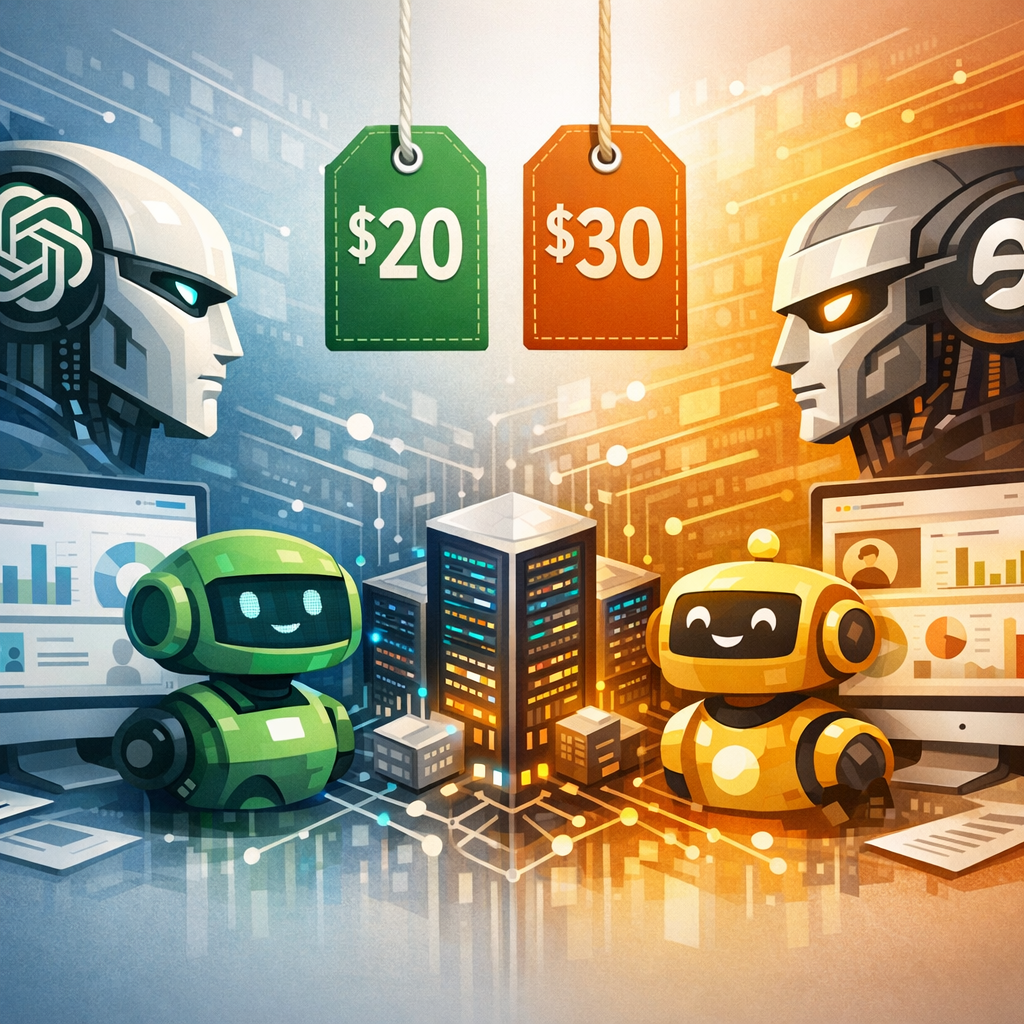
ChatGPT versus Claude analysis is at the center of this update. Anthropic’s new Claude Science beta, paired with NVIDIA’s BioNeMo Agent Toolkit, is a useful reminder that the ChatGPT versus Claude rivalry is no longer just about who writes better answers. It is about who can become the default interface for real work.
OpenAI’s ChatGPT still represents the broad, general-purpose side of the market: the product most people think of when they think of consumer AI. Anthropic, by contrast, is pushing Claude deeper into a narrower but potentially more valuable lane — scientific research workflows where the model is only one part of a larger system.
Anthropic’s Claude Science is built around workflow control, not just conversation
According to Anthropic’s announcement, Claude Science is a public beta AI workbench for scientific research. The system lets scientists use natural language to direct digital agents that can carry out end-to-end research tasks.
The important part is not the chat interface itself. It is the orchestration layer underneath it. Anthropic says Claude Science connects to NVIDIA BioNeMo so the system can expose accelerated models, libraries, and NIM microservices as callable tools inside the workbench.
NVIDIA turns the rivalry into an infrastructure story
This is where the competition widens beyond OpenAI and Anthropic. NVIDIA is not just supplying chips in the background; it is helping define the practical limits of what these AI products can do. If Claude Science works well, part of the credit belongs to the software and compute stack underneath it.
That matters because the AI race increasingly rewards companies that can bundle model, tool, and infrastructure into one workflow. OpenAI has strong distribution through ChatGPT. Anthropic is trying to prove that a narrower, more specialized product can create deeper loyalty among professionals.
What this split could mean for users and developers
For scientists, the promise is speed and less setup friction. For developers, the more interesting question is whether this becomes a repeatable playbook: take a frontier model, wrap it in domain-specific agents, and connect it to specialized compute services.
If that pattern spreads, the rivalry between OpenAI and Anthropic may look less like a winner-take-all chatbot contest and more like a race to own different layers of the AI stack. ChatGPT can remain the broad front door, while Claude tries to become the better room for serious work.
What to watch as Claude Science leaves beta
The next test is adoption. The source does not provide independent usage data, pricing, or performance benchmarks, so it is too early to say whether Claude Science is a breakout product or a targeted experiment.
What is clear is the strategic signal: Anthropic is leaning into specialization, and that puts pressure on OpenAI to keep proving that ChatGPT can stay both general and indispensable.
Editorial analysis only; not investment advice.
Related coverage: AI Chronicle analysis and updates.
Sources and further reading
- http://NVIDIA%20BioNeMo%20Agent%20Toolkit%20GitHub%20repository
- https://openai.com/news/
- https://www.anthropic.com/news

Related Articles
 OpenAI CEO Sam Altman Highlights ‘Proactive AI’ as the Next Evolution Beyond Chatbots
 Meta Delays Launch of Avocado AI Model, May License Google’s Gemini Instead
 L’Oréal Integrates AI to Enhance Digital Advertising Production Efficiency
 Samsung Reaches Agreement with Semiconductor Workers on $340,000 Average Bonuses Amid AI Chip Demand Surge