

LG and NVIDIA Initiate Talks on Physical AI and Autonomous Systems
LG and NVIDIA have entered exploratory discussions aimed at advancing physical AI, data center technologies, and mobility solutions. Following a high-level meeting in Seoul between LG CEO Ryu Jae-cheol and Madison Huang, Senior Director of Product Marketing for Omniverse and Robotics at NVIDIA, both companies are identifying the essential operational requirements to develop complex automated systems effectively.
Addressing Infrastructure Challenges in AI Data Centers
Although no formal agreements on investments or timelines have been disclosed, the talks emphasize the significant capital expenditures necessary to deploy autonomous systems beyond simulation environments. A key challenge is the densification of compute clusters that power advanced machine learning models. NVIDIA’s data center segment is experiencing record revenues, but operating these high-density servers strains traditional cooling infrastructures, pushing them beyond safe limits.
At CES 2026, LG showcased its commercial divisions’ capabilities in delivering high-efficiency HVAC and thermal management solutions tailored for AI data centers. As power density becomes increasingly critical, conventional air cooling methods prove insufficient. Excessive temperatures in server farms cause compute nodes to throttle performance, undermining the value of high-end silicon investments. Integrating LG’s thermal hardware directly into NVIDIA’s infrastructure ecosystem offers a solution by enabling facility operators to increase processing power density without damaging hardware.
This collaboration positions LG as a key infrastructure provider within a lucrative technology ecosystem, generating steady enterprise revenues by complementing rather than competing with compute layers. LG’s subsidiary, LG CNS, further signals the company’s expansion into connected enterprise systems by sponsoring the IoT Tech Expo North America.
Optimizing Hardware Actuation and Edge Inference
Beyond data centers, the discussions aim to tackle latency issues in autonomous consumer hardware. LG’s growth strategy heavily depends on automating both manual and cognitive household tasks. Recently, LG introduced CLOiD, a home robot equipped with dual arms featuring multiple degrees of freedom and individually actuated fingers. Powered by LG’s ‘Affectionate Intelligence’ platform, CLOiD is designed for contextual awareness and continuous environmental learning.
Executing physical movements based on computational commands requires a seamless zero-latency inference pipeline. For instance, when the robot reaches for an object, the system must process real-time visual inputs, query local databases to understand object properties, and compute the precise grip force. Any error could result in damage to the user’s environment.
LG currently lacks the necessary digital twin infrastructure, pre-trained manipulation models, and simulation platforms to securely accelerate deployment. NVIDIA’s Omniverse and Isaac robotics stack provide these capabilities, optimized for real-time physical AI inference. Leveraging NVIDIA’s edge compute reduces reliance on cloud resources for continuous spatial mapping and video processing, accelerating the transition from prototype to commercial product.
Leveraging Mass Market Data and Simulation Environments
NVIDIA recently completed a two-week trial of its robotics stack in a Siemens factory, demonstrating live logistics operations. While industrial environments are structured, consumer settings like living rooms present greater variability and unpredictability. Integrating LG’s ThinQ ecosystem offers NVIDIA access to extensive real-world data, essential for training AI models to handle domestic complexities rather than relying solely on simulations.
This collaboration could enable NVIDIA’s Omniverse platform to become the universal development environment for real-world autonomous systems, mirroring its success in GPU cloud processing.
Advancing Automotive Integration
LG’s automotive division, a rapidly growing segment, produces in-vehicle infotainment, electric vehicle components, and in-cabin generative technologies such as gaze tracking and adaptive displays. NVIDIA’s DRIVE platform dominates autonomous vehicle computing. Automakers often face challenges integrating legacy infotainment with advanced autonomous systems. A partnership between LG and NVIDIA could unify the vehicle interior experience with core compute platforms, helping fleet operators standardize architectures, reduce custom integration efforts, and enable streamlined over-the-air machine learning updates.
Outlook on Physical AI from LG and NVIDIA Talks
These ongoing discussions between LG and NVIDIA highlight the critical hardware and processing requirements necessary to reliably implement physical AI across multiple domains, including data centers, consumer robotics, and automotive applications. The collaboration aims to overcome current technological bottlenecks and unlock the potential of autonomous systems in everyday life.
Fonte: ver artigo original

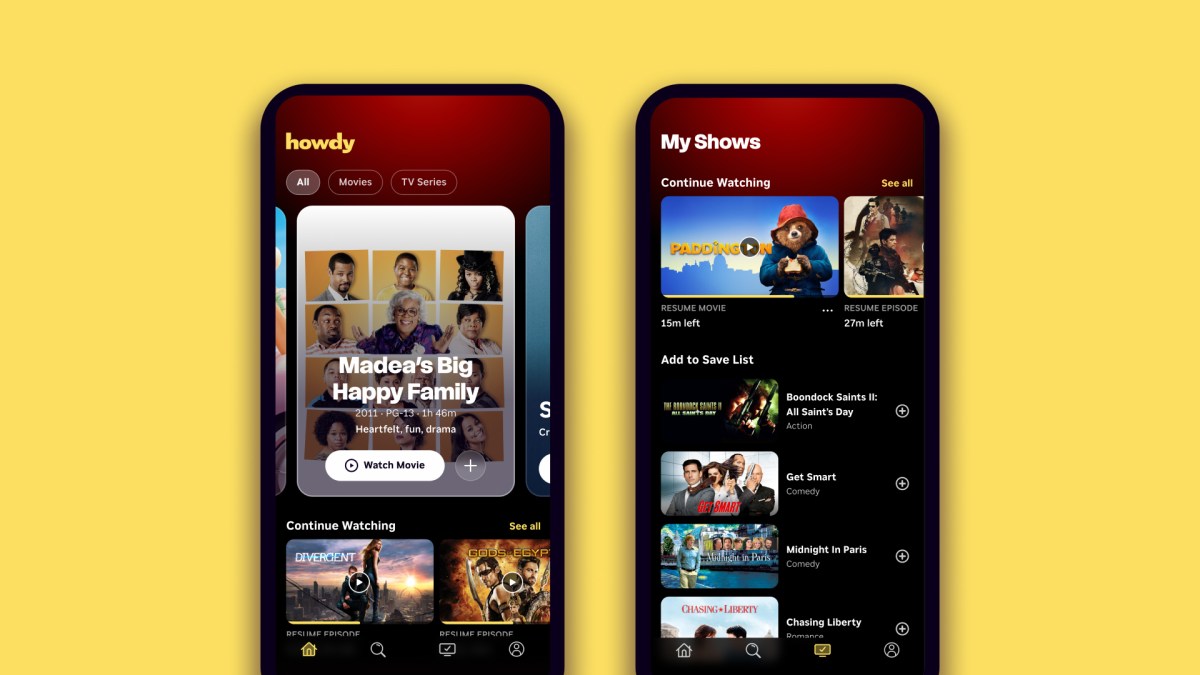 Roku’s Affordable Streaming Service Howdy Surpasses 1 Million Subscribers
 Obvio Deploys AI-Powered Cameras at Stop Signs to Enhance Pedestrian Safety
 Malaysia Leads Southeast Asia with 32% Share of AI Funding in 2024-2025
 OpenAI Enhances AI Content Provenance with New Verification Technologies


