Sony AI’s Ace Robot Excels in Competitive Table Tennis
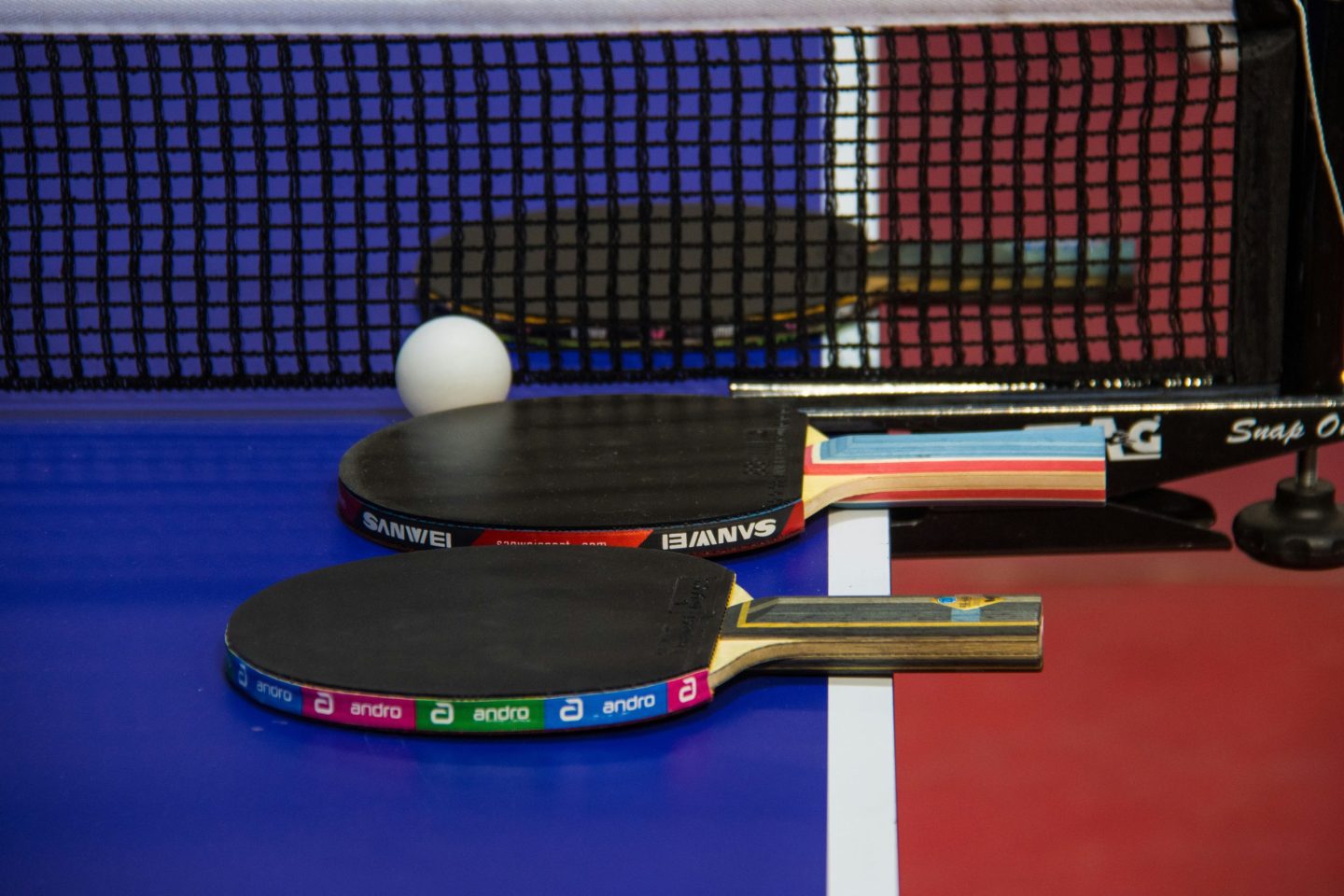
Sony AI has unveiled a breakthrough in physical artificial intelligence with its autonomous table tennis robot named Ace. Designed to operate in fast-paced, dynamic environments, Ace has competed under official International Table Tennis Federation (ITTF) rules and emerged victorious against some of the world’s best players.
Unlike earlier table tennis robots dating back to the 1980s, Ace combines high-speed perception and AI-driven control to respond quickly and accurately to the ball’s complex spins and trajectories. Equipped with nine synchronized cameras and three advanced vision systems, the robot processes visual data at speeds beyond human capability, allowing it to track the ball’s movement and spin with exceptional precision.
Its robotic arm, featuring eight joints controlling racket position, orientation, and shot force, meets the mechanical demands required for competitive play. Ace was uniquely trained through self-learning in simulated environments rather than human demonstration, enabling it to develop novel strategies distinct from traditional human playstyles.
Competitive Results and Player Feedback
In April 2025 trials, Ace won three out of five matches against elite opponents and continued to secure victories against professionals in subsequent matches through early 2026. Professional players such as Mayuka Taira and Rui Takenaka noted the robot’s unpredictability, citing its lack of emotional cues and distinctive shot patterns as challenges in anticipating its moves.
Peter Dürr, project lead at Sony AI Zurich, emphasized that Ace represents a significant step forward in physical AI, addressing the longstanding challenge of real-time decision-making and motor control in sports. The technology underlying Ace has broader applications, potentially benefiting manufacturing and service robotics through enhanced perception and control.
Honor’s Humanoid Robots Dominate Beijing E-Town Half Marathon
In a separate milestone for robotics, humanoid robots developed by the company Honor excelled at the 2026 Beijing E-Town Humanoid Robot Half Marathon. The event featured over 100 robots and approximately 12,000 human runners competing on parallel tracks in a 21-kilometer race.
Honor’s robot Lightning completed the course in an impressive 50 minutes and 26 seconds, outperforming Olympic runner Jacob Kiplimo’s 57-minute mark set earlier the same year. Despite colliding with a barricade during the race, Lightning persevered to finish first, with other Honor robots taking second and third places. This was a marked improvement from the previous year, when the fastest robot finished in over two hours and 40 minutes.
Another Honor robot, operating under remote control, completed the race even faster at 48 minutes. However, race rules prioritized autonomous navigation, validating Lightning’s win as the official champion. Engineers from Honor highlighted that technologies developed for these humanoid robots, including structural durability and liquid cooling, hold promise for industrial applications.
Implications for AI and Robotics Development
These achievements illustrate the rapid advancements in AI-driven robotics within both controlled sports environments and large-scale real-world challenges. Sony AI’s Ace demonstrates how AI can master complex tasks requiring split-second decisions and precision, while Honor’s humanoid robots showcase endurance and autonomous navigation capabilities.
Such progress underscores the potential for AI and robotics to transform industries ranging from manufacturing and logistics to competitive sports and beyond. The continuous improvement of physical AI systems paves the way for increasingly sophisticated interactions between humans and machines in everyday life.
Fonte: ver artigo original

Related Articles
 ChatGPT Maintains Lead in Chatbot Market but Google Gemini Rapidly Narrows Gap
 Meta Unveils Plans for Advanced AI Models ‘Mango’ and ‘Avocado’ Targeted for 2026
 OpenAI Secures $122 Billion Funding and Launches ChatGPT Super App, Shifting Focus to Enterprise Solutions
 Inside the Revolutionary Workflow Behind Claude Code: How AI Is Transforming Software Development