Stanford’s 2026 AI Index Report Challenges US AI Dominance Assumptions
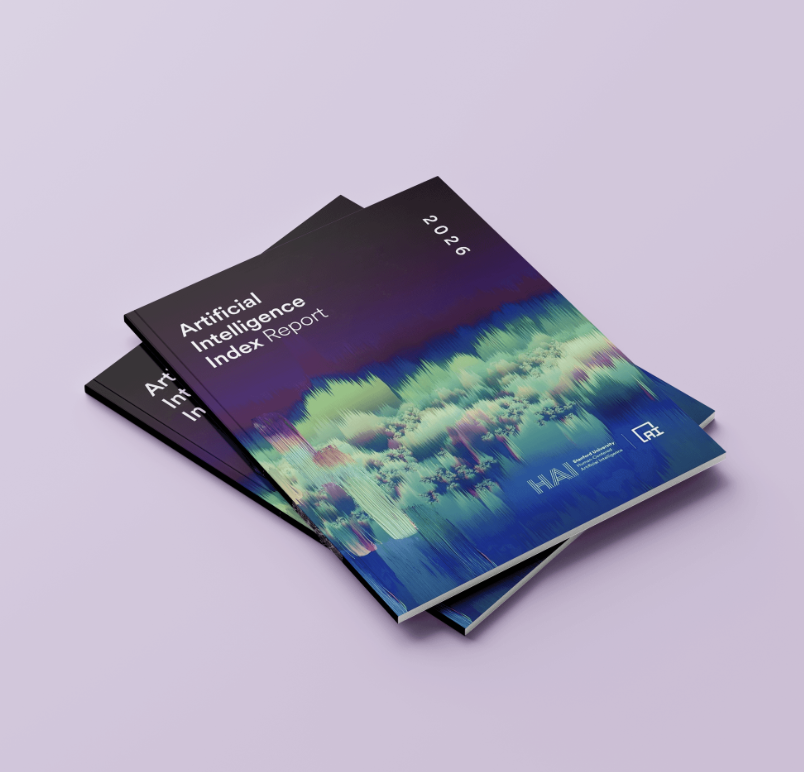
Recent data from Stanford University’s Institute for Human-Centred Artificial Intelligence reveals that the long-assumed US lead in artificial intelligence (AI) model performance is no longer as clear-cut. The comprehensive 423-page 2026 AI Index Report, released this week, provides an extensive evaluation of global AI progress across research, investment, public perception, and responsible AI practices.
US and China Now Neck and Neck in AI Model Performance
One of the report’s most significant findings is that the performance gap between AI models developed in the US and China has effectively closed. Since early 2025, top AI models from both countries have alternated in leading positions. For instance, China’s DeepSeek-R1 matched leading US models briefly in February 2025, and as of March 2026, the US-based Anthropic’s model leads by a narrow 2.7% margin.
While the US still produces more top-tier models (50 compared to China’s 30 in 2025) and holds more high-impact patents, China now surpasses the US in research paper volume, citation share, and patent grants. Notably, China’s share of the 100 most-cited AI papers increased from 33 in 2021 to 41 in 2024. Additionally, South Korea leads globally on AI patents per capita.
This evolving landscape challenges the previous narrative of a durable US technological lead in AI and highlights a competitive race where leadership shifts with each major model release.
Hardware Supply Chain Vulnerabilities Highlighted
The report also identifies a structural risk in the global AI ecosystem. Although the US hosts over 5,400 data centers—far more than any other nation—almost all leading AI chips used within them are fabricated by a single company, Taiwan Semiconductor Manufacturing Company (TSMC). This concentration of AI hardware manufacturing in one foundry in Taiwan underscores supply chain vulnerabilities, despite TSMC’s recent expansion in the US starting operations in 2025.
AI Safety and Responsible AI Benchmarks Lag Behind Capability Advances
While AI developers regularly report benchmark results on model capabilities, the report highlights a significant shortfall in transparency and progress on responsible AI benchmarks, including safety, fairness, and human agency. Most leading AI models provide little to no externally comparable data on these critical areas.
For example, only Claude Opus 4.5 reports on more than two responsible AI benchmarks, and GPT-5.2 is the sole model providing data on the StrongREJECT safety benchmark. This lack of standardization and disclosure makes it difficult to evaluate and compare AI safety rigor across models externally.
Despite ongoing internal safety efforts such as red-teaming and alignment testing, these are seldom shared publicly in a way that enables meaningful external scrutiny.
Rise in Documented AI Incidents Reflects Growing Risks
AI-related incidents documented by the AI Incident Database surged to 362 in 2025, up from 233 in 2024, indicating increasing challenges in managing AI risks. The OECD’s AI Incidents and Hazards Monitor reported a peak of 435 incidents in January 2026 with a sustained average of over 300 monthly incidents.
Yet organizational preparedness is declining: surveys show that only 18% of organizations rated their AI incident response as “excellent” in 2025, down from 28% in 2024, with more organizations experiencing multiple incidents.
The report also underscores a fundamental challenge in improving responsible AI: enhancing one aspect such as safety may degrade others like accuracy or fairness. Currently, no standardized framework exists for managing these complex trade-offs effectively.
Public Perception: Growing Use Coupled With Rising Anxiety
Public attitudes towards AI are increasingly nuanced. A global survey showed that 59% of people believe AI’s benefits outweigh its drawbacks—up from 55% in 2024—while 52% also report feeling nervous about AI products and services, reflecting simultaneous adoption and apprehension.
A stark divide exists between AI experts and the general public on AI’s impact on employment and the economy. While 73% of experts anticipate positive job impacts, only 23% of the public agree. Similar disparities exist regarding AI’s economic and healthcare effects.
Trust in government regulation of AI varies widely, with the US ranking lowest among surveyed countries at 31%, compared to a global average of 54%. Southeast Asian countries, such as Singapore and Indonesia, exhibited the highest trust levels, above 75%. The European Union also ranks higher in public trust than both the US and China.
Looking Ahead
Stanford’s 2026 AI Index Report provides a sobering yet insightful snapshot of AI’s evolving global landscape. It highlights the closing US-China AI performance gap, exposes critical shortcomings in AI safety benchmarking, and reveals growing public ambivalence towards AI’s rapid integration into society. These findings underscore the urgent need for enhanced transparency, robust governance frameworks, and international cooperation to ensure AI’s benefits are realized safely and equitably.
Fonte: ver artigo original

 Anthropic Confirms Claude Mythos Leak Due to Human Error in Security Setup
 Pseudoscientific Emotion-Detecting AI Quietly Enters Workplace Environments
 Agentic Coding in 2026: The Future of AI-Driven Software Development
 AWS AI Coding Tool Reportedly Caused 13-Hour Outage by Deleting Customer System