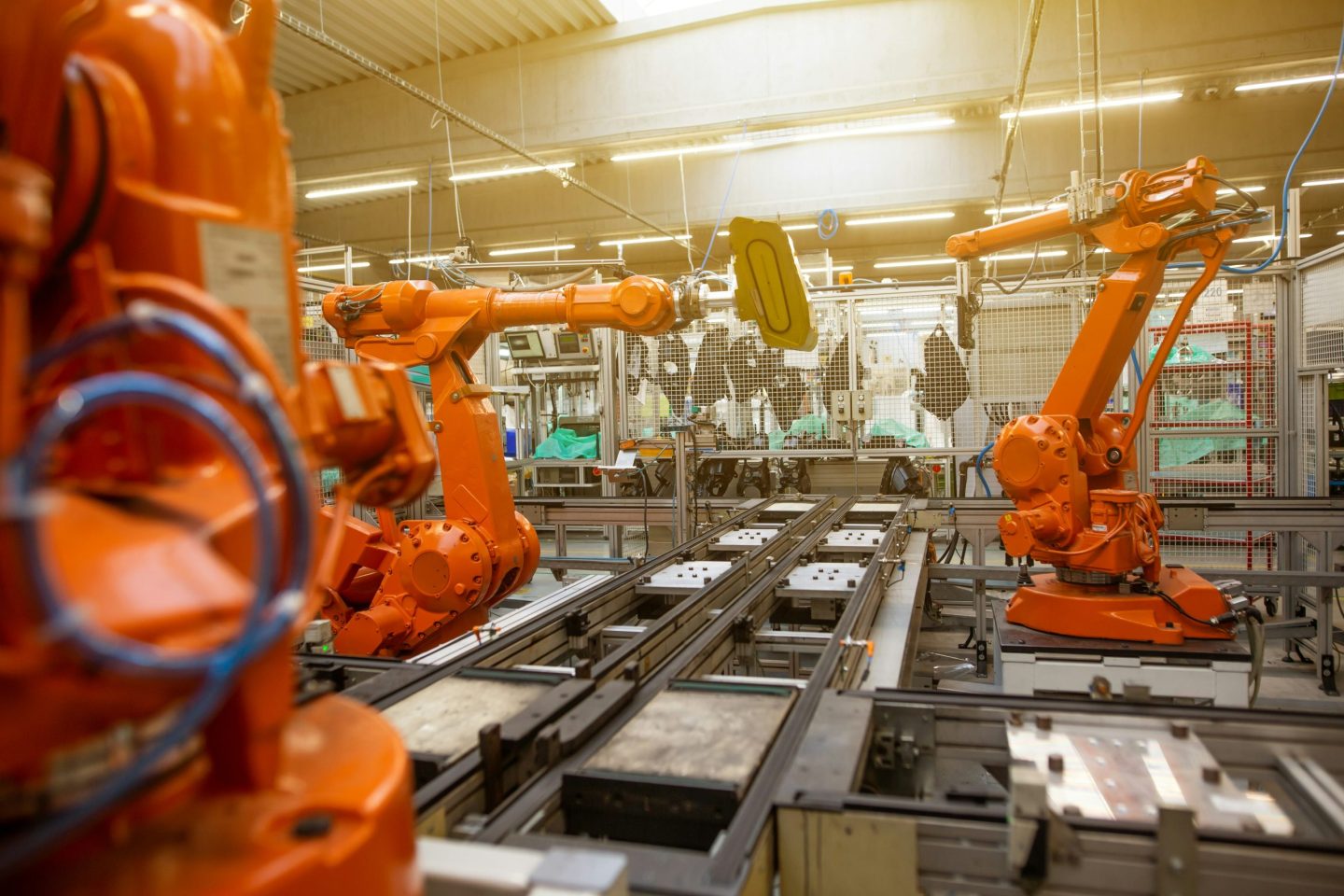
The Enduring Role of RPA in Business Automation
Robotic Process Automation (RPA) has long provided a reliable solution for reducing manual labor in business processes without the need for artificial intelligence. By deploying software bots programmed with fixed rules, companies have successfully automated repetitive tasks such as data entry, invoice processing, and report generation. The adoption of RPA accelerated rapidly across sectors like finance, operations, and customer support, where workflows tend to be stable and well-defined.
Challenges of Traditional RPA in Complex Environments
Despite its proven benefits, traditional RPA faces limitations when confronted with unstructured data such as emails, documents, or images. These inputs require interpretation beyond predefined rules, which RPA bots cannot effectively handle. Consequently, RPA performs best in environments where processes remain consistent; any variation or change in input formats often leads to bot failures or costly maintenance updates, undermining automation efficiency over time.
AI-Driven Automation: Adding Flexibility and Intelligence
Recent advancements in artificial intelligence have reshaped how businesses approach automation. Leading RPA vendors like Appian and Blue Prism are integrating AI capabilities — including machine learning and natural language processing — to build automation systems that adapt to diverse and unpredictable inputs.
Large language models, for example, can summarize documents, extract key information, and respond to natural language queries, enabling automation of decision-making and communication tasks previously considered too complex. According to McKinsey & Company, generative AI has the potential to automate not only routine data handling but also higher-value cognitive tasks.
Combining RPA and AI for Intelligent Automation
The evolution does not render RPA obsolete but transforms it. Instead of relying solely on rigid rule chains, businesses can now leverage AI to interpret varied input types, making automation more versatile and reducing the need for constant reconfiguration.
However, AI systems can produce inconsistent outputs and unpredictable behavior, so organizations often integrate AI with traditional RPA tools, applying each technology where it performs best. This hybrid model, known as intelligent automation, is a major focus at industry conferences and in technology discussions.
Where RPA Continues to Excel
RPA remains indispensable for tasks involving structured data and stable, repeatable workflows. Payroll processing, compliance verification, and system integrations are prime examples where predictable, rule-based bots provide consistent, traceable results — critical in regulated sectors such as finance and auditing.
Rather than replacing existing systems, AI often enhances them. Workflows may start with AI interpreting unstructured inputs, then hand off structured data to RPA bots for precise execution, extending automation capabilities without discarding prior investments.
Industry Adaptations and the Future of Automation
Companies like Blue Prism, now part of SS&C Technologies, have evolved their platforms towards intelligent automation, combining RPA with AI-powered document processing and decision support tools. These integrated platforms enable streamlined workflows that unify data ingestion, analysis, and automated execution.
Nonetheless, many organizations maintain their existing RPA deployments where processes are well understood and stable. Transitioning fully to AI-driven models involves substantial time and cost, making a gradual integration approach more practical.
Conclusion: A Gradual Transformation Rather Than Replacement
The future of automation lies in balancing RPA’s reliability with AI’s adaptability. As businesses increasingly combine these technologies, automation will become smarter and more capable, yet rule-based systems will continue to play a vital role where consistency and control are paramount.
Related Reading: AI Agents Enter Banking Roles at Bank of America
Fonte: ver artigo original

Related Articles
 Perplexity Accused of Ignoring AI Scraping Blocks on Websites, Cloudflare Reports
 xAI Launches Grok 4.1 Fast API Amid Controversy Over AI’s Flattering Responses About Elon Musk
 NVIDIA CEO Urges Companywide Embrace of AI to Drive Innovation
 Chinese AI Companies Accelerate Model Releases Ahead of Lunar New Year