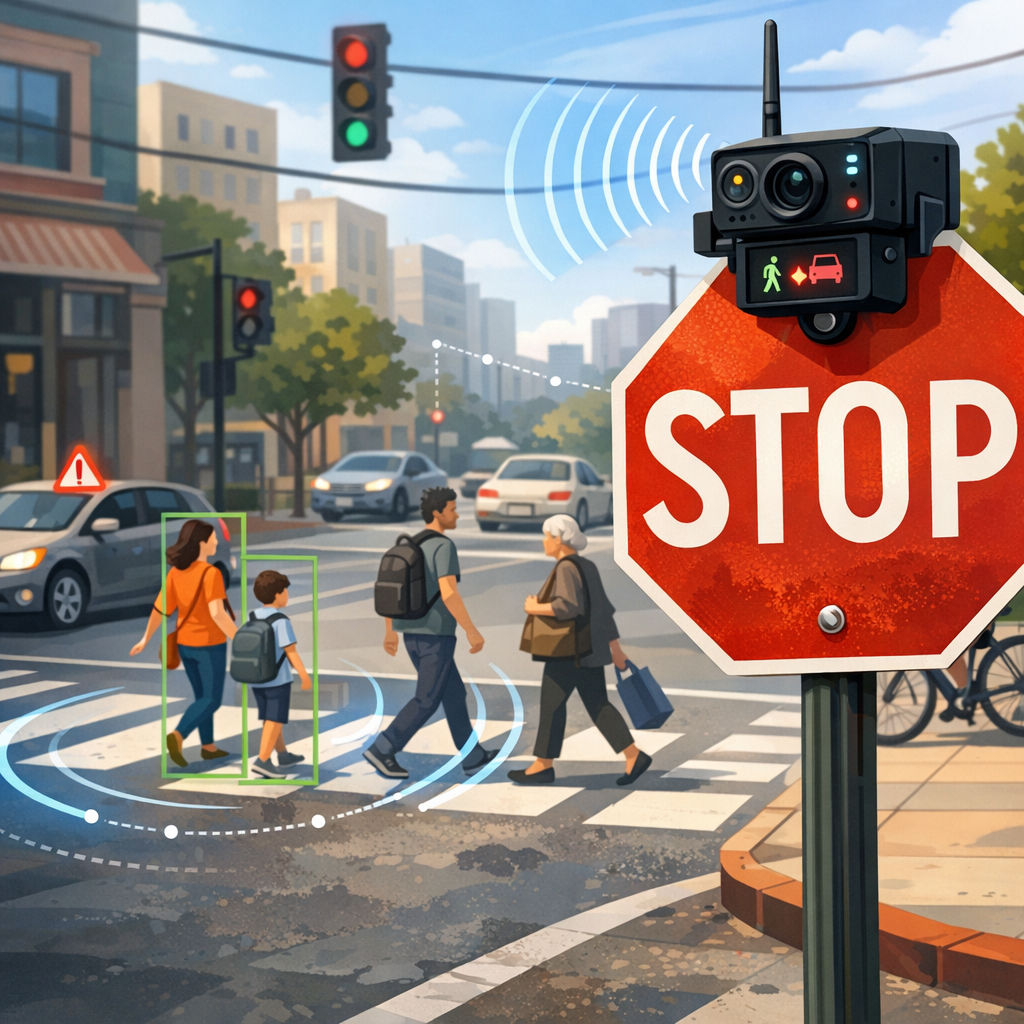
Innovative AI Solution for Safer Streets
Pedestrian safety remains a critical concern on American roads, where accidents involving pedestrians occur frequently. In response, Obvio, a San Carlos-based technology startup, has developed an AI-powered system that uses cameras installed at stop signs to monitor driver behavior and identify those who pose a risk to pedestrian safety.
How the Technology Works
The system utilizes advanced artificial intelligence algorithms to analyze video footage captured at stop signs, detecting unsafe driving practices such as rolling through stop signs or failing to yield to pedestrians. Unlike traditional surveillance methods, Obvio emphasizes that their approach is designed to respect privacy and avoid creating a pervasive surveillance environment often described as a panopticon.
Balancing Safety and Privacy
Obvio’s founders highlight the importance of maintaining a balance between enhancing public safety and protecting individual privacy rights. The cameras focus solely on capturing traffic violations relevant to pedestrian safety, and the AI processes data to flag unsafe behavior without extensive personal surveillance. This measured approach aims to foster safer communities while addressing common privacy concerns associated with camera monitoring.
Implications for Urban Safety and AI Integration
By leveraging AI tools in traffic monitoring, Obvio demonstrates how artificial intelligence can play a pivotal role in everyday life, particularly in public safety applications. The deployment of AI in this context aligns with broader trends of integrating intelligent technologies to improve urban infrastructure and reduce accidents.
As cities continue to explore smart solutions, Obvio’s model presents a compelling example of how AI can be practically applied to address persistent challenges like pedestrian safety, all while maintaining ethical considerations.

Related Articles
 SK hynix’s US IPO Could Ease Global Memory Chip Shortage Amid Growing AI Demand
 SpaceX Plans Merger with xAI to Combine Grok, Starlink, and X Platforms
 Nvidia CEO Jensen Huang Voices Reservations on Major OpenAI Investment
 OpenAI vs. ChatGPT, Sam Altman, Anthropic and Claude: the rivalry is really about who owns the AI default