When Boris Cherny, the mind behind Claude Code—the world’s most advanced AI coding agent—shared his personal workflow, the software engineering community took notice. Over the past week, developers and industry insiders have been extensively analyzing Cherny’s approach, describing it as a transformative moment for Anthropic and the future of programming.
What started as a casual post on X (formerly Twitter) quickly evolved into a viral discussion highlighting how Cherny’s innovative setup multiplies human productivity by leveraging multiple AI agents simultaneously. Experts suggest this could mark a turning point comparable to the rise of ChatGPT in the AI space.
Parallel AI Agents: Managing Coding Like a Real-Time Strategy Game
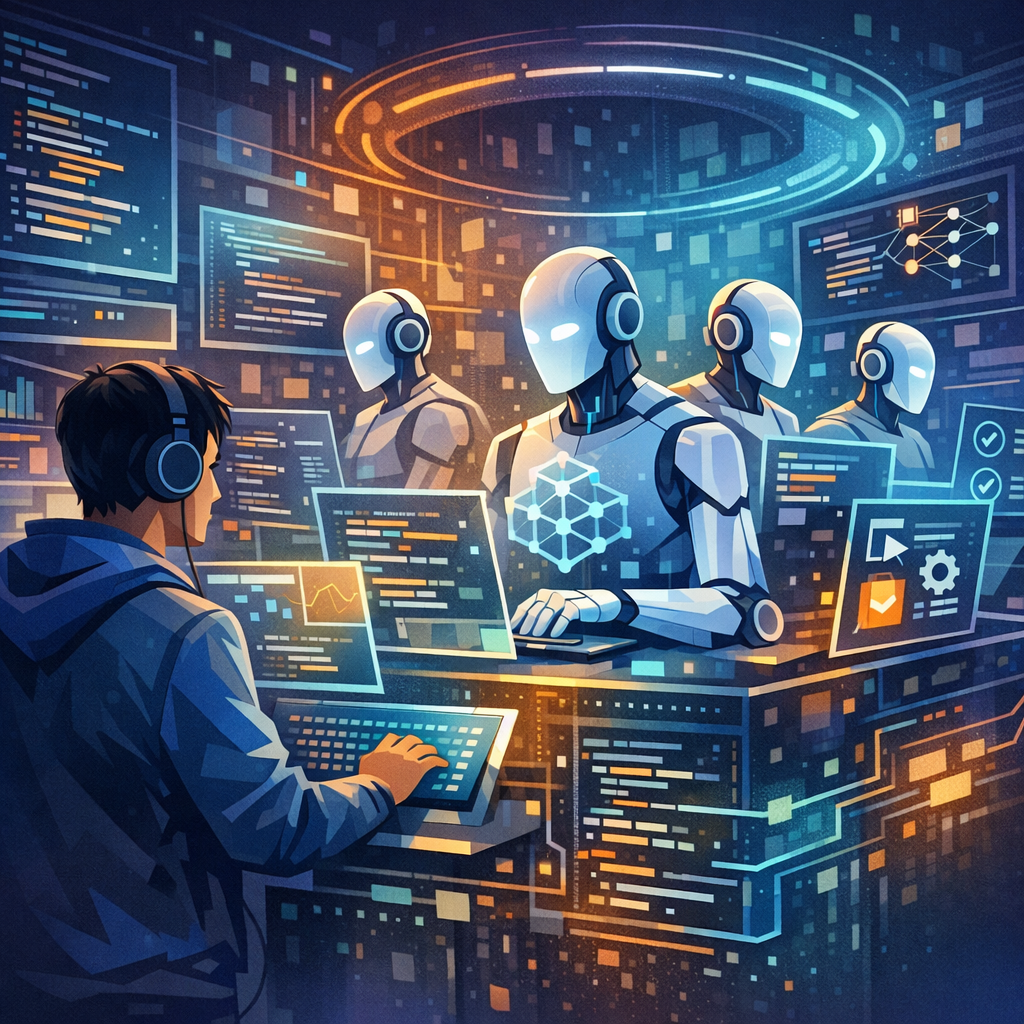
Unlike traditional linear coding workflows, Cherny operates multiple AI agents—specifically five instances of Claude—in parallel within his terminal. He numbers each agent’s tab and uses system notifications to monitor when input is required. This multitasking approach allows him to simultaneously run test suites, refactor legacy code, draft documentation, and more.
Additionally, he manages another 5 to 10 AI agents through a web interface, seamlessly transferring sessions between local and online environments via a custom “teleport” command. This method exemplifies Anthropic’s “do more with less” philosophy, prioritizing efficient orchestration of existing AI models over costly infrastructure expansions pursued by competitors.
Choosing Intelligence Over Speed: The Power of a Smarter, Slower Model
Counter to the industry trend favoring low-latency models, Cherny exclusively uses Anthropic’s heaviest and slowest AI model, Opus 4.5. He explains that despite its slower response time, Opus 4.5 requires less human intervention due to its superior coding capabilities and tool use.
This strategy reduces the time developers spend correcting AI errors, ultimately accelerating the overall development process. The insight highlights a key bottleneck in AI-assisted coding: human correction time, not token generation speed.
Eliminating AI Amnesia with a Shared Learning File
Cherny addresses the common problem of AI models forgetting company-specific coding styles or architectural decisions between sessions by maintaining a file named CLAUDE.md within their git repository. Whenever an AI mistake is detected, it is documented in this file to prevent repetition in future interactions.
This practice turns the codebase into a self-improving system, where every error correction by a human developer updates the AI’s instructions, making the agent progressively smarter over time.
Slash Commands and Specialized Subagents Streamline Development
To automate repetitive tasks, Cherny relies on custom slash commands embedded in the project repository. One notable command, /commit-push-pr, automates the entire version control process—committing code, pushing changes, and opening pull requests—without manual input.
He also uses specialized AI subagents dedicated to specific stages such as code simplification and end-to-end application testing, further enhancing efficiency and quality assurance.
Verification Loops: The Key to Reliable AI-Generated Code
A defining feature of Claude Code’s success is its robust verification loop. Unlike typical AI text generators, Claude autonomously tests every code change through browser automation and test suites until it meets quality and user experience standards.
Cherny notes that this self-verification improves final code quality by two to three times, effectively transforming the AI from a mere coder to a comprehensive developer and tester.
Implications for the Future of Software Engineering
The reaction to Cherny’s workflow signals a pivotal change in software development paradigms. Whereas AI-assisted coding was once viewed as simple autocomplete, this new approach positions AI as an operating system for programming labor itself.
As Jeff Tang, a respected developer voice, summarized: “Read this if you’re already an engineer… and want more power.” The tools to multiply individual productivity by fivefold are already available, requiring only a mindset shift—treating AI as an autonomous workforce rather than just an assistant.
The programmers who adopt this new model first will redefine the coding landscape, moving beyond traditional typing to commanding AI agents that execute complex development tasks in parallel.
Fonte: ver artigo original

Related Articles
 Claude Code Creator Unveils Revolutionary AI-Powered Coding Workflow Transforming Software Development
 Walmart-Backed PhonePe Discontinues Pincode App Amid E-Commerce Retrenchment
 Microsoft’s Rapid Data Center Expansion Puts Sustainability Ambitions at Risk Amid AI Boom
 Pro-Iranian Hackers Claim Breach of FBI Director Kash Patel’s Personal Email