Motorola’s Bold Step into AI Wearables
The Consumer Electronics Show (CES) 2026 has once again become a hub for innovative product launches, particularly in the field of artificial intelligence. Among the most attention-grabbing reveals is Motorola’s latest prototype: a minimalist wearable AI device designed as a pendant. This move marks the company’s intent to expand its portfolio beyond traditional smartphones and laptops, entering the growing market of AI-powered wearables.
A Screenless Pendant with AI Capabilities
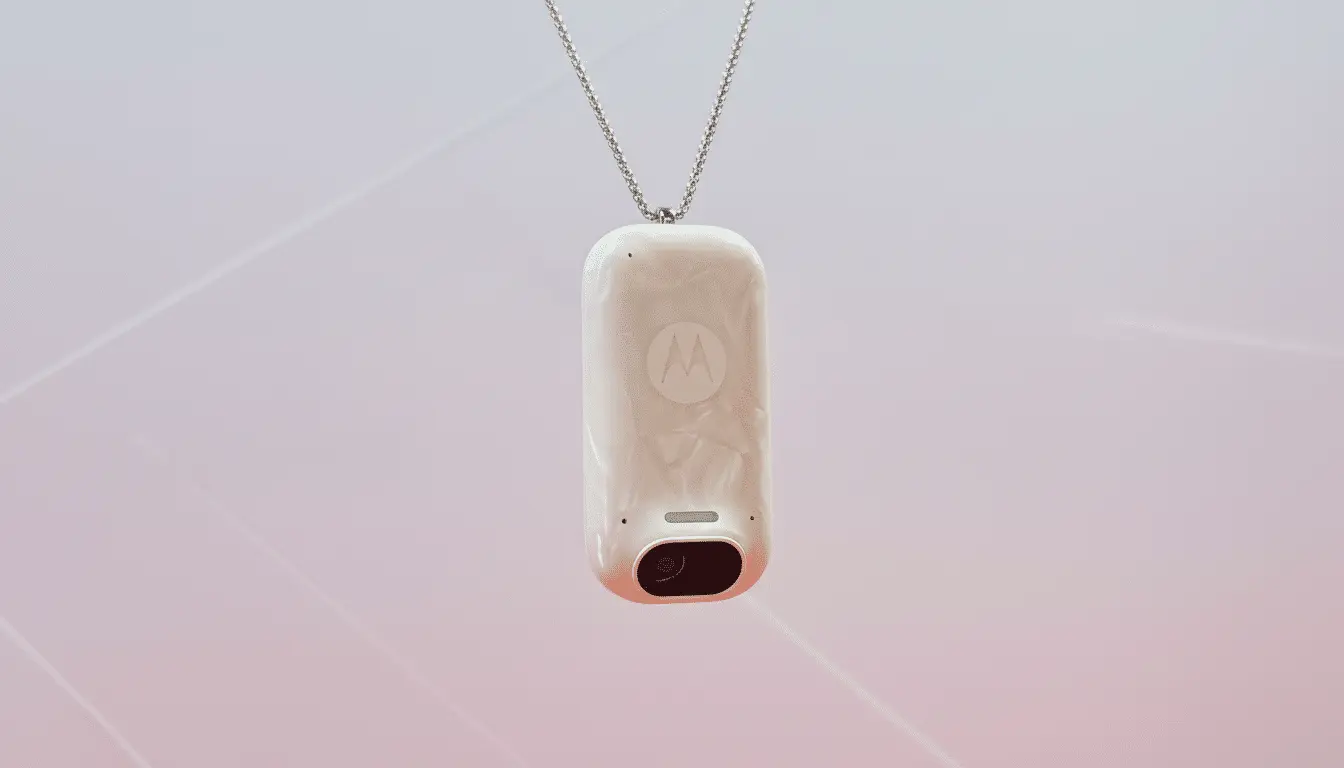
Owned by Lenovo, Motorola showcased this unique AI companion that distinguishes itself by foregoing a traditional display. Instead, the pendant integrates a camera and AI functionalities into a compact, unobtrusive design. This approach reflects a shift towards discreet, always-available AI assistants that blend seamlessly into daily life without relying on screens.
Implications for Everyday AI Interaction
Motorola’s prototype suggests a future where AI tools are more accessible and less intrusive. By removing the screen, the device potentially offers voice-activated assistance, on-the-go productivity enhancements, and real-time contextual support, aligning with emerging trends in AI integration for everyday use. It also raises questions about privacy, user interaction, and the evolving role of AI companions in personal and professional settings.
Positioning in the Competitive AI Landscape
This development underscores the intensifying competition among tech giants to innovate AI-driven products. As companies like Microsoft, Google, and Meta invest heavily in AI research and deployment, Motorola’s venture into wearable AI devices reflects a strategic effort to capitalize on new market opportunities and user demands for hands-free, intelligent assistants.
Looking Ahead
While still a prototype, Motorola’s AI pendant prototype is a glimpse into how AI could become more intimately integrated into daily life. Its success will depend on factors such as user experience, privacy safeguards, and the practical utility of AI in a wearable form factor. Nonetheless, this announcement at CES 2026 signals a noteworthy evolution in AI technology and wearable innovation.
Fonte: ver artigo original

 Anthropic Confirms Data Leak of Claude Mythos, Highlighting AI Security Risks
 Family Offices Embrace AI to Enhance Financial Data Insights and Operations
 Micron Exits Consumer Memory Market Amid AI-Driven Semiconductor Shift
 Perplexity Introduces AI-Powered Shopping Experience Ahead of Holiday Season