New AI Compute Alliance Sets Industry Benchmark
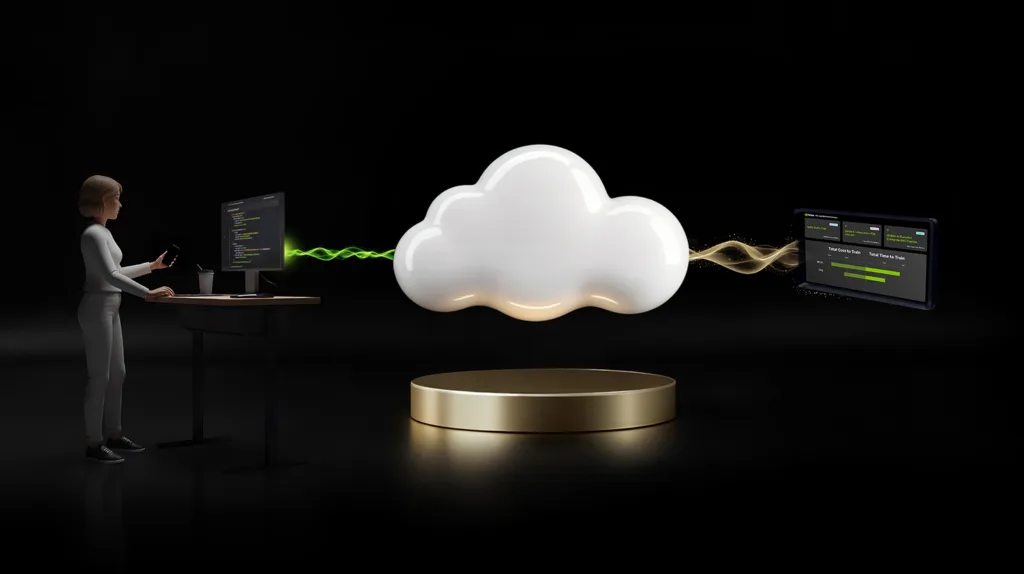
Microsoft, Anthropic, and NVIDIA have announced a strategic partnership to enhance cloud infrastructure investment and expand AI model availability. This alliance represents a decisive move away from dependency on single AI models, promoting a diversified ecosystem optimized for cutting-edge hardware. The collaboration is expected to influence governance strategies among senior technology executives across the sector.
Reciprocal Integration Between Industry Leaders
Microsoft CEO Satya Nadella described the alliance as a “reciprocal integration,” emphasizing that the companies will increasingly serve as customers to one another. Anthropic will utilize Microsoft’s Azure cloud infrastructure extensively, committing to $30 billion in compute capacity purchases. In return, Microsoft plans to integrate Anthropic’s AI models, such as Claude, across its product portfolio to enhance functionality and performance.
Hardware Innovation and Performance Advances
The infrastructure trajectory of the alliance begins with NVIDIA’s Grace Blackwell systems, progressing toward the upcoming Vera Rubin architecture. NVIDIA CEO Jensen Huang highlighted that the Grace Blackwell architecture, featuring NVLink, is expected to deliver an “order of magnitude speed up,” a critical advancement to reduce AI inference costs and token economics.
Huang also explained the concept of a “shift-left” engineering approach, where NVIDIA’s latest technologies will be available on Azure immediately upon release. This approach allows enterprises leveraging Anthropic’s Claude model on Azure to benefit from unique performance characteristics, influencing decisions about latency-sensitive and high-throughput applications.
Financial and Operational Implications
Huang identified three simultaneous scaling laws impacting AI compute costs: pre-training, post-training, and inference-time scaling. Traditionally, training dominated expenses, but with increasing model complexity and reasoning times, inference costs are rising significantly. This shift necessitates more dynamic budget forecasting for AI workflows, especially those involving agentic capabilities.
To facilitate adoption, Microsoft has committed to maintaining Claude’s availability across its Copilot product family, ensuring seamless integration into enterprise workflows.
Advancements in AI Agents and Security
The alliance places strong emphasis on agentic AI features. Huang praised Anthropic’s Model Context Protocol (MCP) as a transformative development in the agentic AI domain. NVIDIA engineers have already begun leveraging Claude Code to modernize legacy software, signaling practical applications of this technology.
From a security standpoint, integrating Claude within Microsoft 365’s compliance framework simplifies data governance and reduces risks associated with third-party API vetting. This consolidation keeps interaction logs and data handling within Microsoft’s established tenant agreements, streamlining enterprise compliance.
Addressing Vendor Lock-In and Market Positioning
Vendor lock-in remains a concern for Chief Data Officers and risk professionals. However, this alliance mitigates those worries by making Anthropic’s Claude the only frontier AI model accessible across the three leading global cloud platforms. Nadella emphasized that this multi-model strategy complements Microsoft’s ongoing partnership with OpenAI, which continues to be a central element of their AI roadmap.
For Anthropic, the partnership overcomes the significant challenge of building enterprise sales channels. Huang noted that developing such channels typically requires decades, but Anthropic benefits from Microsoft’s established networks, accelerating its market penetration.
Implications for Enterprise AI Strategy
This trilateral agreement is poised to reshape AI procurement strategies. Nadella urged the industry to move beyond zero-sum thinking, advocating for a future with diverse, durable AI capabilities.
Enterprises are encouraged to reassess their AI model portfolios in light of Claude Sonnet 4.5 and Opus 4.1’s availability on Azure, conducting total cost of ownership comparisons with existing deployments. The alliance’s commitment to substantial compute capacity suggests that resource constraints affecting previous hardware cycles may be alleviated.
Going forward, organizations must focus on optimizing AI infrastructure by aligning model versions with specific business processes to maximize returns on expanded computational resources.

Related Articles
 Digital India 2026: The 43rd Transformation Summit Kicks Off to Accelerate AI-Driven Digital Economy
 Microsoft Reports Over 20 Million Paid Users Actively Engaging with Copilot AI
 OpenAI Introduces Advanced Voice Intelligence Features in Its API
 President Trump Postpones AI Security Order Over Concerns About Wording